In peptide research, compounds are rarely examined in isolation. Many research questions revolve precisely around the combination of peptides that act on complementary mechanisms — colloquially called "stacking". In this in-depth guide we explain what peptide stacking involves, why it happens in research, which known research combinations exist and what the difference is between separate peptides and a ready-made blend. All strictly research-only.
"Stacking" is combining peptides with complementary mechanisms within one research design. This can be done with separate vials or with a ready-made blend with a fixed ratio. Known research combinations are BPC-157 + TB-500 (recovery) and CJC-1295 + Ipamorelin (growth hormone axis). All blends for research only.
What does peptide stacking mean?
Stacking means the simultaneous use of two or more peptides within one research design because their mechanisms of action complement each other. The idea comes from the observation that many biological processes are driven by multiple signalling routes at once. By combining peptides that each touch a different route, a researcher can study a broader mechanistic picture than with a single compound. New to peptides? First read what peptides are for the basics.
Why do researchers combine peptides?
The main reason is synergy between complementary mechanisms: two peptides that engage different parts of the same axis can together give a different research picture than separately. A classic example is the growth hormone axis, where a GHRH analogue and a GHRP act on different receptors. At the same time, combining brings an interpretation challenge: an observed effect can come from one or several components. That is why a good stack design is always also a comparative design — more on that below.
Known research combination 1: BPC-157 + TB-500
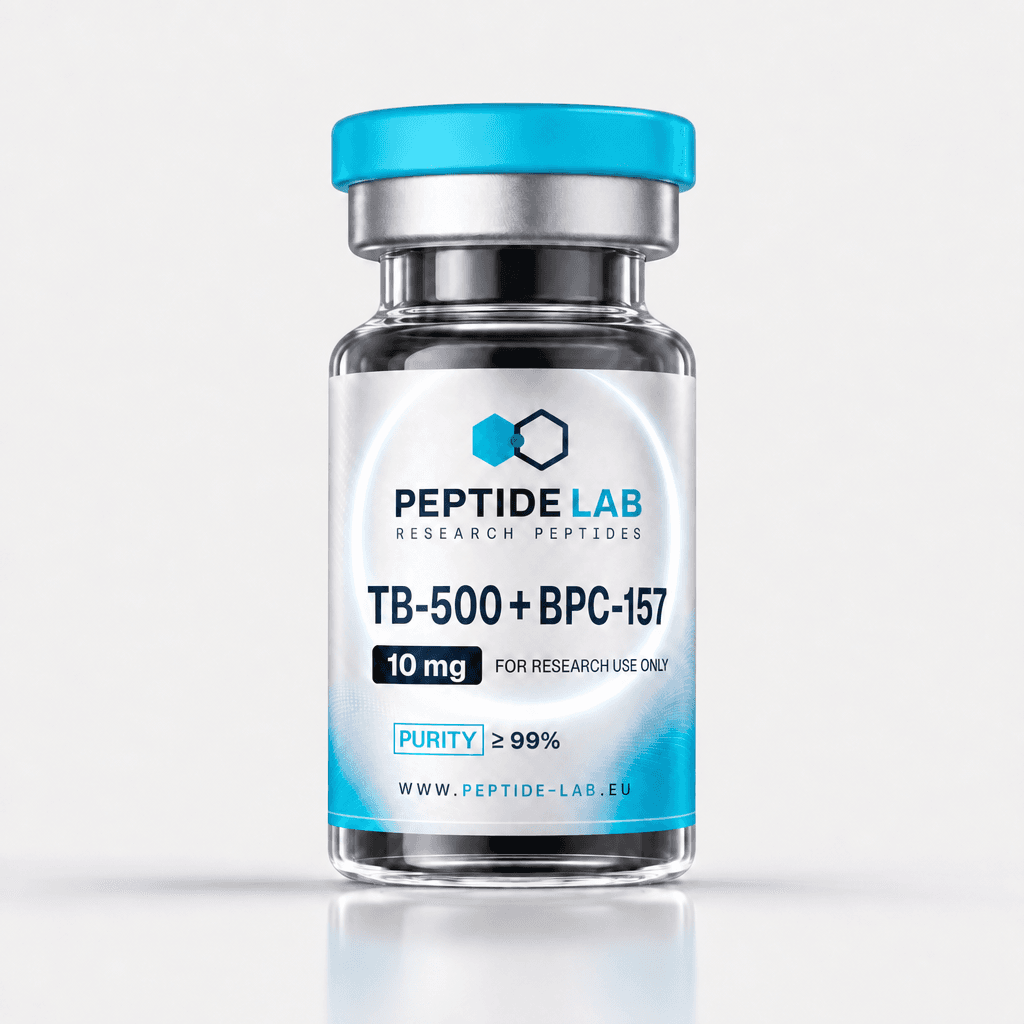
The most studied recovery combination is BPC-157 together with TB-500 — two peptides each examined in recovery research for different aspects of tissue repair. BPC-157 is studied in relation to digestive and tendon tissue, while TB-500 (Thymosin Beta-4) is more often associated with cell migration and flexibility. The full explanation of why these two are examined together is in combining BPC-157 and TB-500.
Known research combination 2: CJC-1295 + Ipamorelin
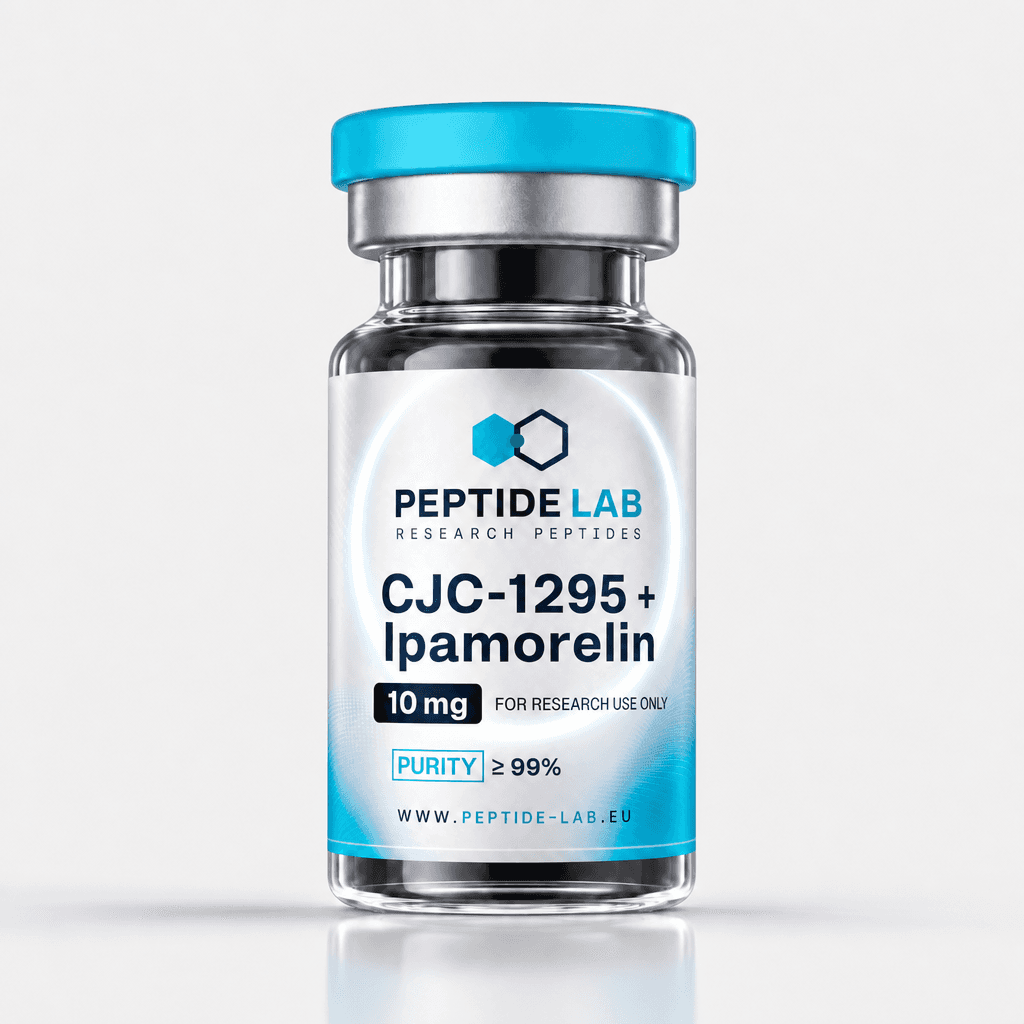
In growth hormone research, the combination of CJC-1295 and Ipamorelin is a classic because the two act on different receptors of the same axis. CJC-1295 is a GHRH analogue and Ipamorelin a selective GHRP (ghrelin mimetic). Because they engage different signalling routes, they are considered complementary in research. Read the full difference in Ipamorelin vs CJC-1295 and about the ready-made variant in the CJC-1295 + Ipamorelin blend.
Known research combination 3: multi-peptide skin blends (KLOW and Glow)
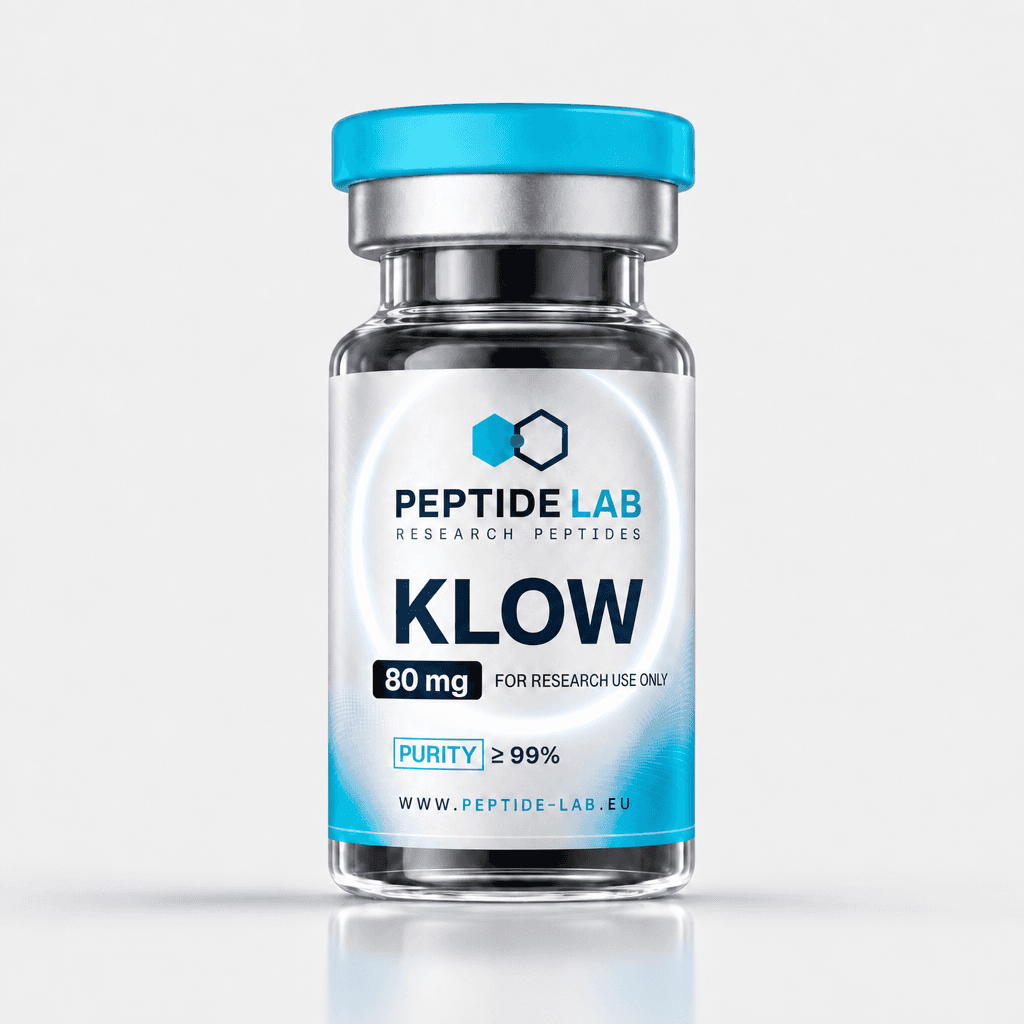
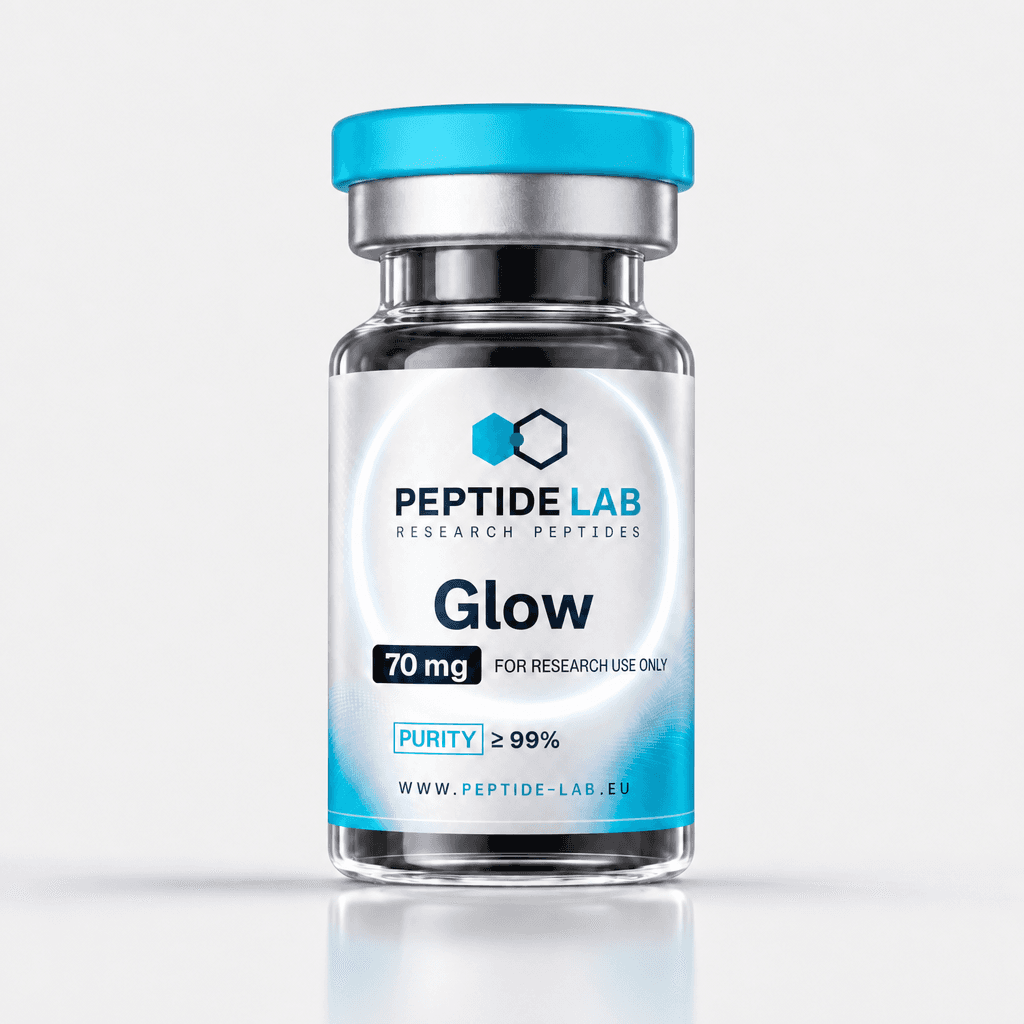
Some stacks combine not two but several peptides — the multi-peptide skin blends are the clearest example. The KLOW blend combines, among others, GHK-Cu, KPV and TB-500 in one vial, while the Glow blend uses a different composition of complementary skin peptides. These blends show why a standardised ratio is valuable: with multiple components, manual mixing quickly becomes inaccurate.
Blend versus separate peptides: the trade-off
A ready-made blend offers a fixed, documented ratio; stacking separate peptides gives more control and flexibility. A blend is standardised, convenient and makes experiments more comparable — the ratio is fixed and on the COA. Separate components, by contrast, let you vary the dose of each peptide independently, which is needed to untangle the contribution of each part. For many research questions the ideal design is therefore: start with the blend for an overview, and verify with the separate components. Browse the full blends & combinations category.
Common mistakes when stacking
The most common mistake is assuming that "more peptides" automatically means "more effect" — an assumption that is not scientifically tenable. Complementary mechanisms can reinforce each other, but also overlap or counteract. Two peptides that both act on the same route give no synergy; they compete for the same target instead. A second mistake is combining without a control measurement: without a reference for each component separately, you cannot establish whether the combination actually adds anything. A third pitfall is ignoring the purity of each separate peptide in the stack — one weak link makes the whole combination unreliable. Good stacking is therefore mainly a matter of discipline.
Timing, reconstitution and stability in stacks
When working with several peptides at once, reconstitution and stability need extra attention because each peptide has its own properties. Peptides differ in half-life and stability after reconstitution, which is relevant to the design of a stack experiment. If you work with separate components, you reconstitute each peptide separately and calculate the ratio per vial with the reconstitution calculator. With a ready-made blend that step is already done for you and the ratio is fixed — precisely the added value of a blend for standardised research. Always store reconstituted peptides according to the recommended refrigeration conditions.
A practical workflow: from blend to separate components
For many researchers the most efficient approach is a phased one: start broad with a standardised blend and then refine with separate components. In the first phase a ready-made blend gives a quick, standardised overview of the combined action — ideal for determining whether a direction is worth pursuing at all. If that yields an interesting signal, the second phase follows: studying the separate peptides individually to untangle which component contributes what, and in what ratio. This approach combines the convenience and reproducibility of a blend with the mechanistic precision of separate components.
Documentation: the foundation under every stack
Regardless of whether you work with a blend or separate components, reliable stack research stands or falls with the documentation per batch. Each component — whether separate or part of a blend — should have a verified purity and a traceable lot number. At Peptide Lab that is public per certificate per lot number, supplemented by independent lab verification. Learn how to read one in how to read a COA.
This guide is for information and a research context only. The mentioned peptides and blends at Peptide Lab are intended for laboratory and research purposes — not a medicine, not for human or animal consumption and not medical advice. No dosing or usage advice for consumption is given.
Frequently asked questions about stacking peptides
What does it mean to 'stack' peptides?
Stacking means combining two or more peptides within one research design because they act on complementary mechanisms. This can be done with separate peptides or with a ready-made blend in which the ratio is already fixed.
Why are peptides combined instead of used separately?
In research, peptides are combined when their mechanisms complement each other — for example a GHRH analogue with a GHRP, or two recovery peptides. A fixed, documented ratio makes experiments more comparable to each other.
What is the difference between a blend and stacking separate peptides?
A blend is a pre-combined vial with a fixed ratio; stacking separate peptides you do yourself with separate vials. A blend is standardised and convenient; separate components give more control and make it easier to untangle the contribution of each part.
Are Peptide Lab's blends pure?
Yes, each blend is lab-verified with a public COA per batch covering the purity of the full composition. For research purposes only.
Can I compare a blend with the separate components?
Yes, and that is scientifically the strongest design: by comparing a blend with the separate peptides you untangle which component causes which observed effect.
Can I make a blend myself from separate peptides?
In research it is common to use separate peptides side by side, but manually combining them into one solution requires accurate reconstitution and ratio calculation per component. A ready-made blend removes that error-prone step with a fixed, documented ratio.
How many peptides can you responsibly combine?
There is no fixed maximum, but scientifically: the more components, the harder it becomes to untangle cause and effect. Each additional component increases the number of possible interactions and makes interpretation more complex.