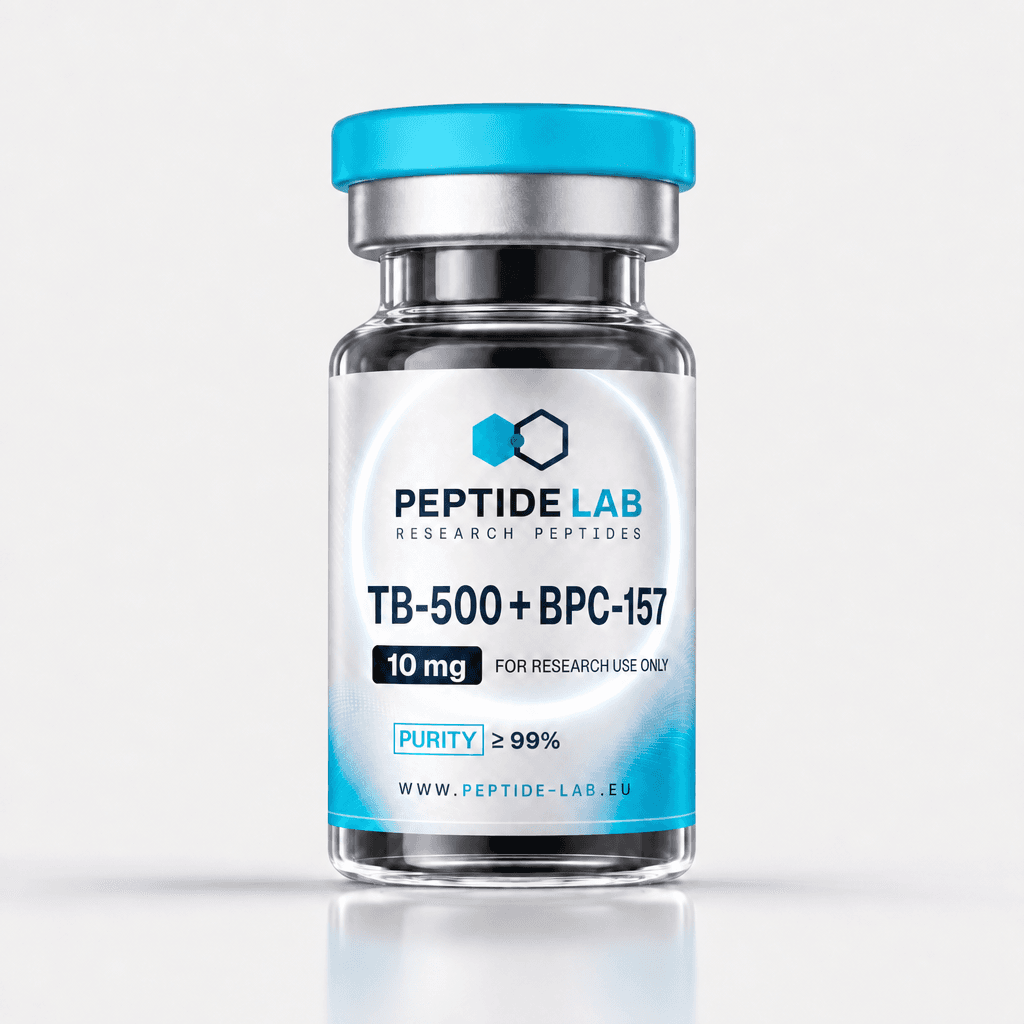
BPC-157 and TB-500 are often mentioned in the same breath within recovery research. In this guide we explain, research-only, why they are studied together, what the blend is and how you work with it.
BPC-157 and TB-500 act through different mechanisms, which makes them complementary in research and sometimes combined. The BPC-157 & TB-500 blend brings both into one vial with a fixed, documented ratio. Every batch is lab-verified. For research purposes only.
Why study BPC-157 and TB-500 together?
BPC-157 and TB-500 are studied together because they act through different pathways and therefore complement each other in recovery research. BPC-157 is a pentadecapeptide derived from a gastroprotective protein; TB-500 is a fragment of Thymosin Beta-4 studied for actin regulation and cell migration. For background, read what BPC-157 is and what TB-500 is.

Two different mechanisms
The idea behind combining BPC-157 and TB-500 is that each peptide covers a different part of the research. The table below sets the two side by side.
What is the BPC-157 + TB-500 stack?
The blend is a ready-to-use research product in which BPC-157 and TB-500 are brought together in a single vial, sometimes called the “Wolverine” blend. The major advantage for researchers is the fixed, documented ratio between the two components: this makes experiments more comparable with one another than when you mix two separate peptides each time. View the blend on the product page.
This information describes solely the research context of the combination. No statements are made about effect or safety in humans. Peptide Lab supplies these products exclusively for laboratory and research purposes — not for human or animal consumption, not a medicine and not medical advice.
Blend or buy separately?
Choose the blend if you want to study the combination in one standardised product, and individual peptides if you want to research them in separate setups. Separately you will find BPC-157 and TB-500; together in the BPC-157 & TB-500 blend. Everything is in the Recovery & healing category.
Preparing the blend in the lab
The blend is supplied as a freeze-dried powder and reconstituted in the lab with bacteriostatic water, just like individual peptides. Because there are two components in one vial, you account for the fixed ratio in your calculations. The step-by-step procedure is set out in our guide on reconstituting peptides, and you calculate the exact units with the peptide calculator.
Frequently asked questions about the BPC-157 + TB-500 combination
Why are BPC-157 and TB-500 studied together?
Because they act through different mechanisms. BPC-157 is a pentadecapeptide derived from a gastroprotective protein; TB-500 is a fragment of Thymosin Beta-4 studied for actin regulation. In some research setups they are combined to look at both pathways at once. For research purposes only.
What is the BPC-157 + TB-500 stack?
It is a ready-to-use research product in which both peptides are brought together in a single vial, sometimes called the 'Wolverine' blend. The advantage is a fixed, documented ratio, which makes experiments more comparable with one another.
Can I also buy BPC-157 and TB-500 separately?
Yes. Both are available separately if you want to study them in individual setups. The blend is convenient when you specifically want to research the combination in one standardised product.
How do I prepare the blend in the lab?
The blend is supplied as a freeze-dried powder and reconstituted in the lab with bacteriostatic water, just like individual peptides. The step-by-step procedure is set out in our guide on reconstituting peptides.
Sources & further reading
Independent third-party references — for further reading, not an endorsement or partnership.
- Dr. William Seeds, MD — Peptide Protocols — Medical references on peptides in cellular medicine (SSRP Institute)