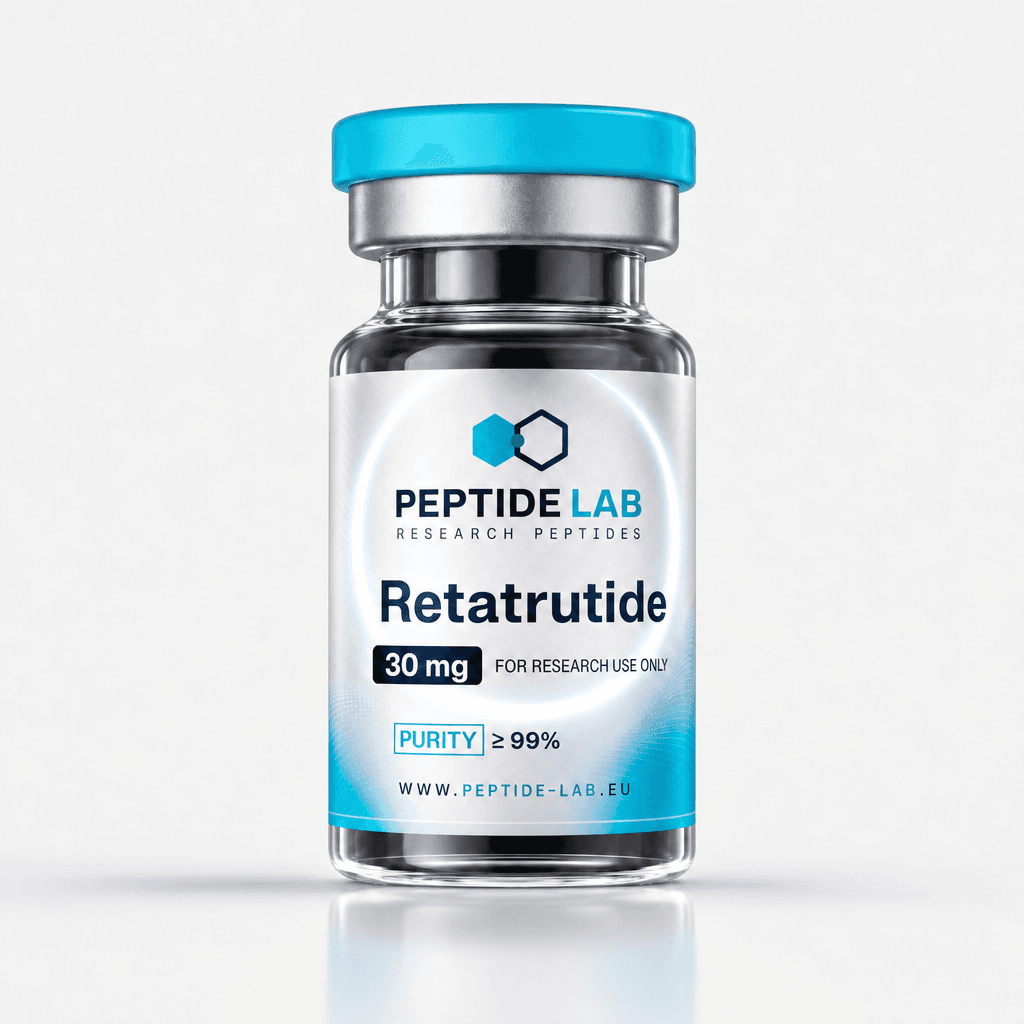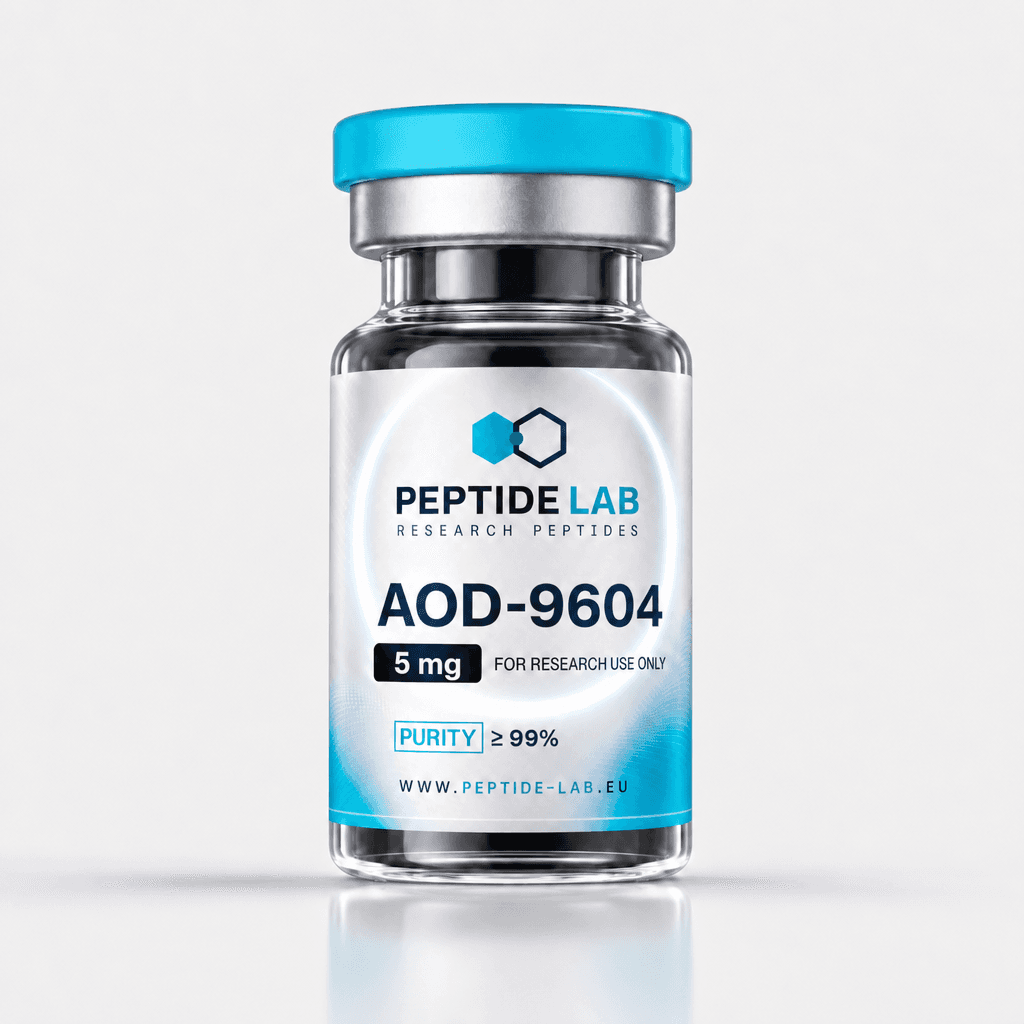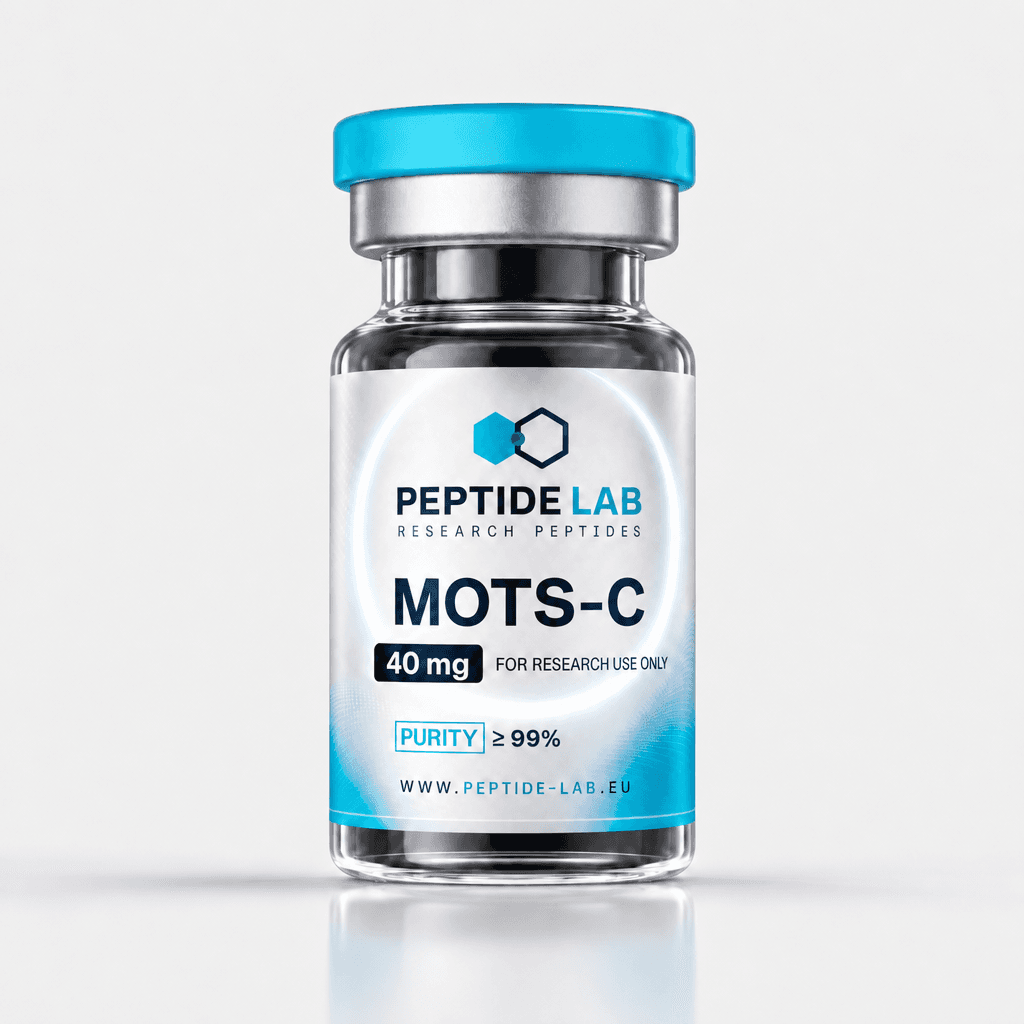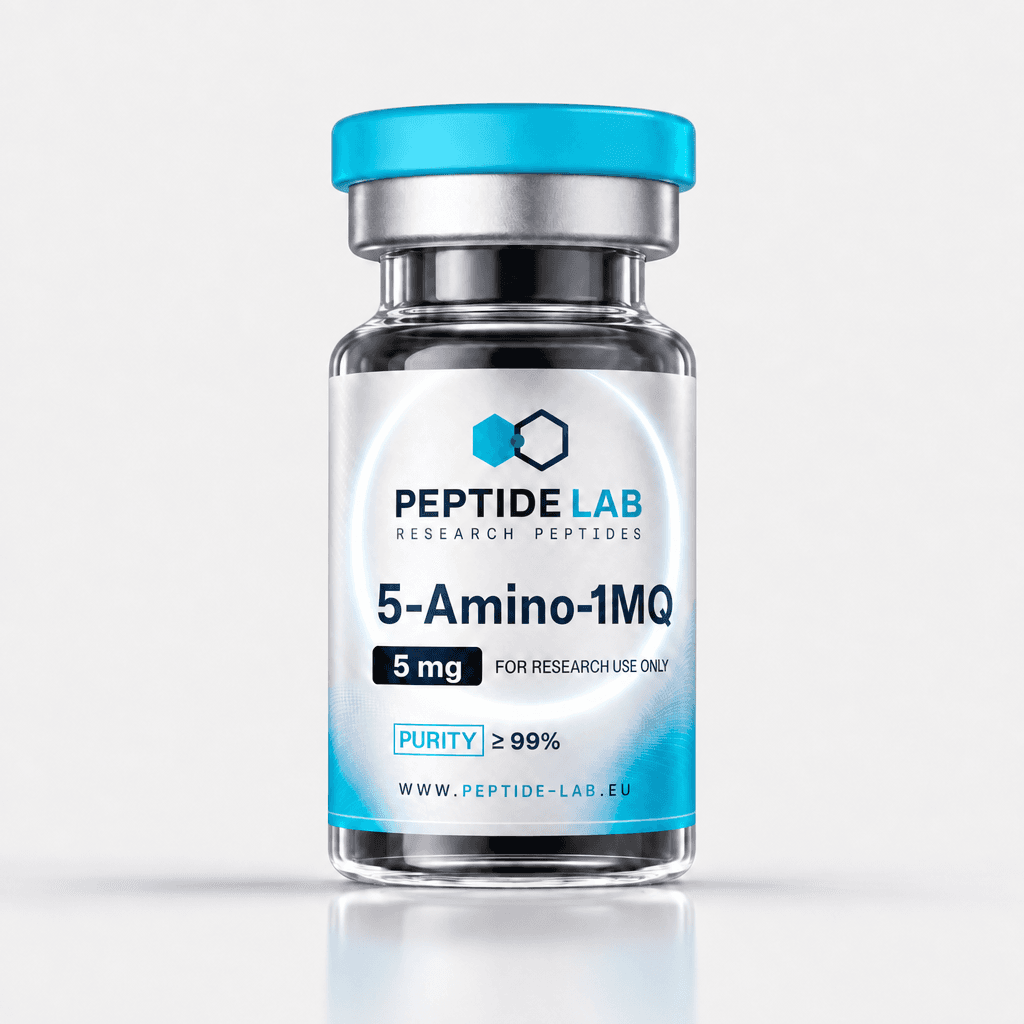
Few topics receive as much attention in peptide research as the metabolic peptides — the class studied in relation to weight, metabolism and fat burning. From the incretin agonists that made the news to lesser-known mitochondrial compounds: in this in-depth guide we set out which peptides are examined in metabolic research, how they differ and what to watch for. All strictly research-only and without slimming or health claims.
The most studied metabolic peptides fall into two groups: the incretin agonists(Retatrutide, Tirzepatide, Semaglutide) that act on the GLP-1/GIP/glucagon receptors, and non-incretine compounds (AOD-9604, MOTS-C, SLU-PP-332, 5-Amino-1MQ) with other targets. All at Peptide Lab for research only — not a medicine, not a slimming product.
What do we mean by "peptides for weight loss"?
The term is popular but scientifically imprecise: it concerns peptides and small molecules studied in preclinical and clinical research for their role in metabolism and energy balance. These compounds do not "burn" fat themselves; they are studied for mechanisms such as appetite regulation, insulin sensitivity, lipolysis and mitochondrial function. The effect observed in research models cannot simply be transferred to human use — which is why we approach this topic solely from a research context. New to peptides? First read what peptides are.
The incretin class: GLP-1, GIP and glucagon
The most discussed group are the incretin mimetics: molecules that mimic the receptors of the body’s own hormones involved in blood sugar and appetite regulation. GLP-1 (glucagon-like peptide-1) and GIP (glucose-dependent insulinotropic polypeptide) are gut hormones released after a meal. The glucagon receptor plays a role in energy balance and fat metabolism. Research compounds in this class differ mainly in the number of receptors they engage at once.
Peptide Lab does not sell semaglutide and tirzepatide as medicines; the comparison is for information only. The deeper explanation of the distinction is in Retatrutide vs Tirzepatide.
Retatrutide: the triple agonist
Retatrutide is the most discussed research compound in this class because it is the only one to engage three receptors at once. Because it activates the glucagon receptor in addition to GLP-1 and GIP, it is a broader metabolic research subject than the dual and single agonists. It is still in the clinical research phase and is not approved as a medicine. The full background is in what is Retatrutide, and the much-discussed relationship with weight in Retatrutide and weight loss: what the research says.
Non-incretine metabolic compounds
Alongside the incretin class, a second group of compounds is studied that acts on metabolism through very different mechanisms. These are less known to the general public but scientifically at least as interesting because they do not work via the appetite axis.
AOD-9604 is a fragment of growth hormone studied in research for lipolysis — the breakdown of fat tissue — without the broader growth hormone effects. More in what is AOD-9604. MOTS-C is a so-called mitochondrial-derived peptide studied in relation to metabolic homeostasis and insulin sensitivity; see what is MOTS-C.
Mitochondrial and newer research compounds
An emerging research field focuses on molecules that take energy production in the cell — mitochondrial function — as their target. SLU-PP-332 is an experimental molecule studied in preclinical research for mimicking effects normally associated with exercise (a so-called "exercise mimetic"). Read more in what is SLU-PP-332. 5-Amino-1MQ is studied as an inhibitor of the enzyme NNMT, which plays a role in fat-tissue metabolism; see what is 5-Amino-1MQ. These are early-phase research compounds — which is precisely why a careful research design and documentation are essential here.
L-Carnitine as metabolic support
L-Carnitine is strictly speaking not a peptide, but an amino-acid derivative that plays a role in transporting fatty acids to the mitochondria. In metabolic research it is often mentioned in the same breath as the compounds above. Unlike most research peptides it is supplied as a liquid and does not need reconstitution. The background is in what is L-Carnitine.
Research versus hype: why nuance is crucial
Around metabolic peptides there is an enormous amount of marketing language that blurs the distinction between preclinical research, clinical trials and anecdotes. An effect observed in a rodent model is fundamentally different from an outcome from a controlled clinical trial in humans — and both are again different from online stories. With a molecule like Retatrutide, still in the clinical research phase, the temptation to overstate early results is great. Scientifically responsible research acknowledges what is not yet known: long-term effects, optimal research doses and translatability between models are still open questions for many of these compounds. A broader treatment is in peptide therapy: research versus hype.
Reconstitution and research design
Most metabolic peptides are supplied as a lyophilised (freeze-dried) powder and must be reconstituted with bacteriostatic water before use in a research setup. The correct ratio of powder to solvent determines the concentration per unit, and thus the accuracy of each experiment. Incorrect reconstitution is a common source of unreliable results — not because the peptide fails, but because the concentration is off. Use the reconstitution calculator to calculate the ratio per vial exactly. The exception is L-Carnitine, supplied as a ready-to-use liquid.
Comparing metabolic peptides
Because the class is so broad, the key question for a researcher is not "which peptide is best" but "which mechanism do I want to study". If the research question is about appetite and blood-sugar regulation, the incretin agonists are the obvious choice. If it is about lipolysis without the broader hormonal effects, AOD-9604 is more relevant. If the focus is on mitochondrial function, MOTS-C, SLU-PP-332 and 5-Amino-1MQ come into view. This mechanistic approach — target first, molecule second — avoids the classic trap of chasing the most "popular" compound without a clear research question. It is also why the fat loss & metabolism category is so diverse.
Purity, documentation and legality
Precisely because metabolic peptides are in high demand, careful documentation is extra important here. With every purchase, check the Certificate of Analysis with the measured purity and identity of the batch. Learn how to read one in how to read a COA, and view the public certificates per lot number. On the legal framework: research peptides are available as research material, not for consumption — read are peptides legal.
How metabolic peptides connect to other research
Metabolic research rarely stands alone: metabolism touches on muscle growth, ageing and recovery, and many researchers examine these areas together. The growth hormone axis central to peptides for muscle growth overlaps with metabolism through the role of growth hormone in fat metabolism. The quality principles — purity, COA, reconstitution — are identical across all categories. Anyone studying metabolic peptides does well to include the broader context: a compound is rarely relevant to one isolated mechanism.
This guide is for information and a research context only. The mentioned compounds at Peptide Lab are intended for laboratory and research purposes — not a medicine, not a slimming product, not for human or animal consumption and not medical advice. No efficacy, weight or health claims for human use are made. For questions about weight or health, always consult a qualified doctor.
Frequently asked questions about metabolic peptides
Which peptides are studied in relation to fat loss?
Metabolic research mainly looks at the incretin agonists (Retatrutide, Tirzepatide, Semaglutide), alongside non-incretine compounds such as AOD-9604, MOTS-C, SLU-PP-332 and 5-Amino-1MQ. They act on different mechanisms; no effects for human use are claimed here.
What is the difference between a dual and a triple agonist?
A dual agonist such as tirzepatide activates two receptors (GIP and GLP-1). A triple agonist such as Retatrutide adds the glucagon receptor. The difference is therefore the number of receptor targets the molecule engages in research.
Are fat-loss peptides approved as medicine?
Some molecules (such as semaglutide and tirzepatide) are approved as medicines in various countries, but Peptide Lab does not sell them as medicines. Retatrutide is still being studied in clinical trials. Everything at Peptide Lab is research material only.
Can I buy these peptides for research?
Yes, the mentioned compounds are available as research material, lab-verified at ≥99% purity with a public COA per batch, for laboratory and research purposes only.
What should I check regarding purity?
Always ask for a Certificate of Analysis per batch and check the measured purity (ideally ≥99%). For metabolic peptides, independent lab verification is extra important given the demand for these compounds.