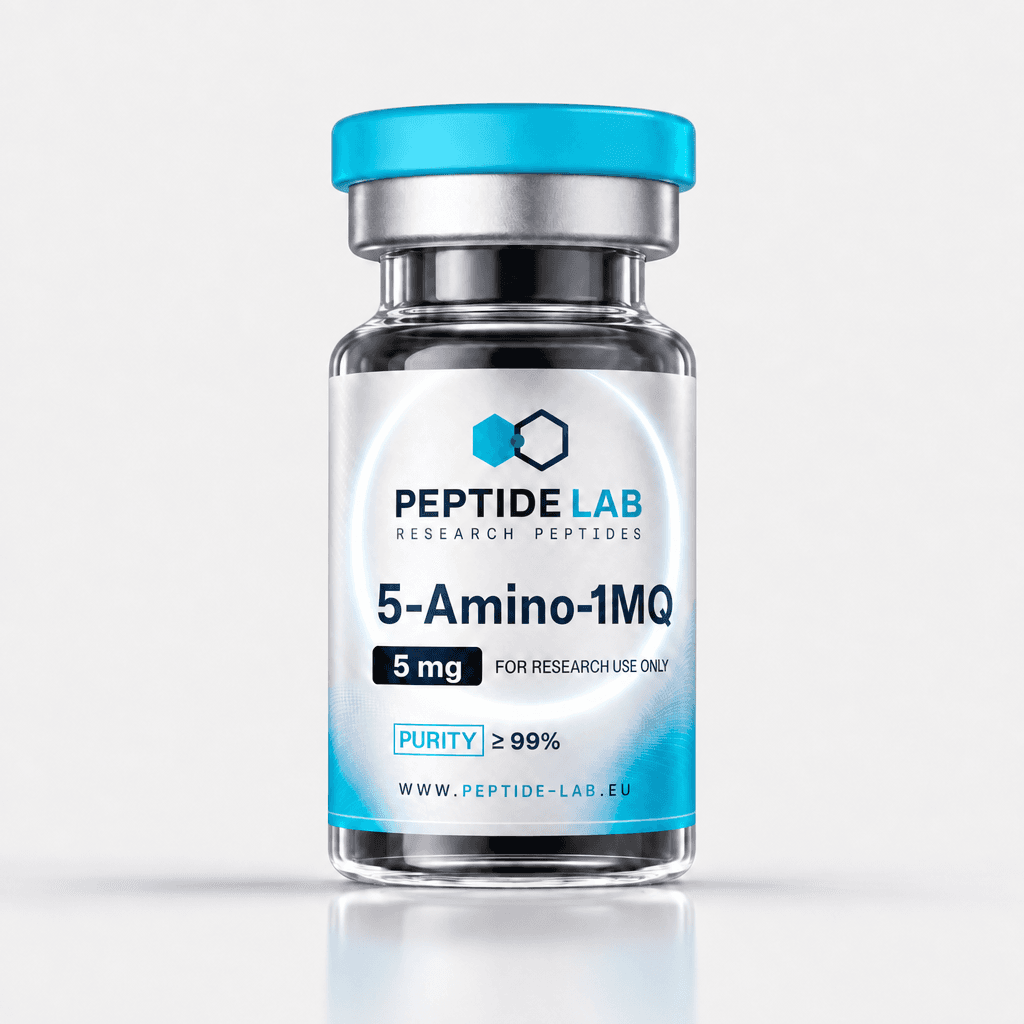
5-Amino-1MQ
Buy 5-Amino-1MQ for research — ≥99% pure, with a Janoshik COA per batch.
5-Amino-1MQ is an NNMT inhibitor research compound being studied for its effects on metabolism, NAD+ and body composition. 5 mg, 99.0% pure.
Available to order soon
The shop will be opening soon. Leave your email address and you’ll be the first to know when orders can be placed.
Specifications
- Category
- Fat Loss & Metabolism
- Dosage
- 5 mg per vial
- Packaging
- 1 vial (5 mg)
- Purity
- 99.0%
- Molecular weight
- Zie productspecificatie
- Lab-cert ID
- CURATED-5A1MQ
Research focus
You can buy 5-Amino-1MQ from Peptide Lab as a laboratory-verified research compound with 99.0% purity, for research purposes only. 5-Amino-1MQ is a small molecule being studied in research as an inhibitor of the enzyme NNMT (nicotinamide N-methyltransferase), in the context of metabolism, NAD+ and body composition. It is supplied as a lyophilised powder, 5 mg per vial.
Who is 5-Amino-1MQ intended for?
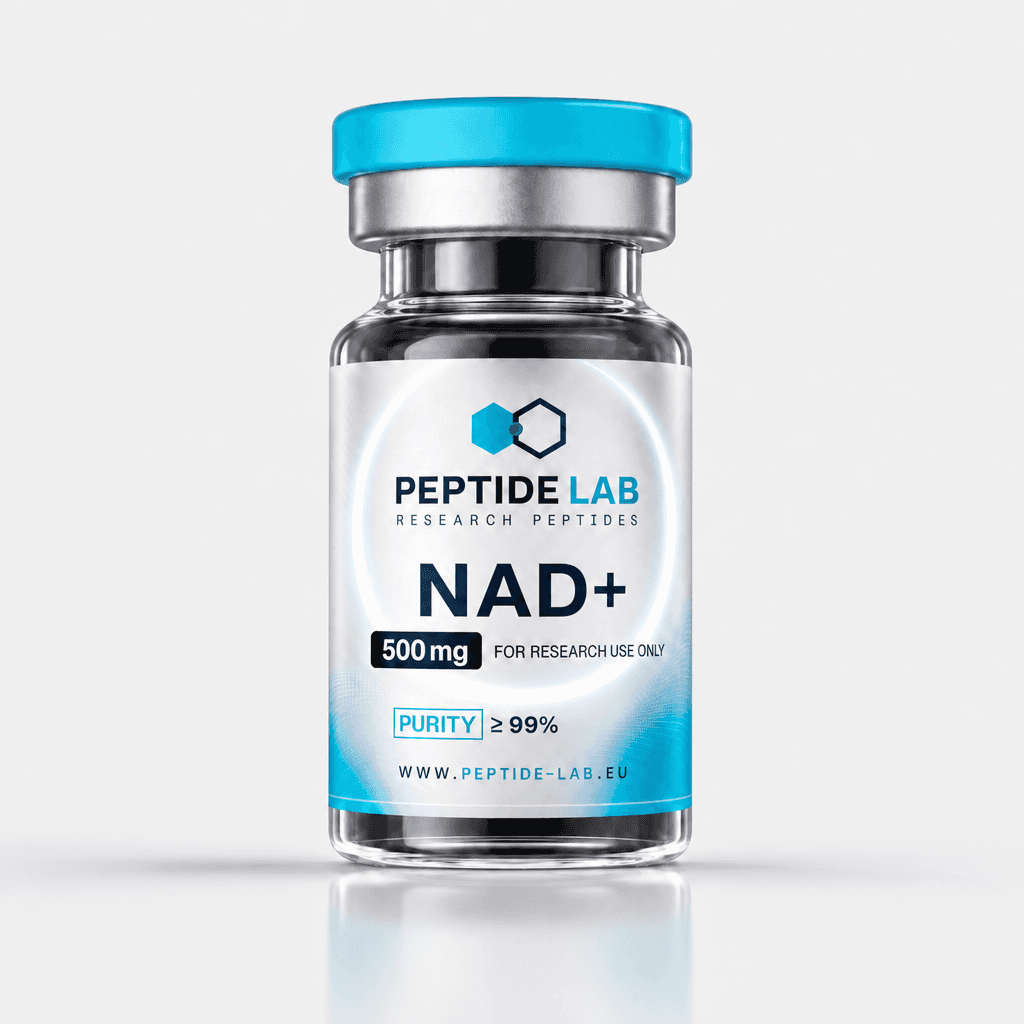
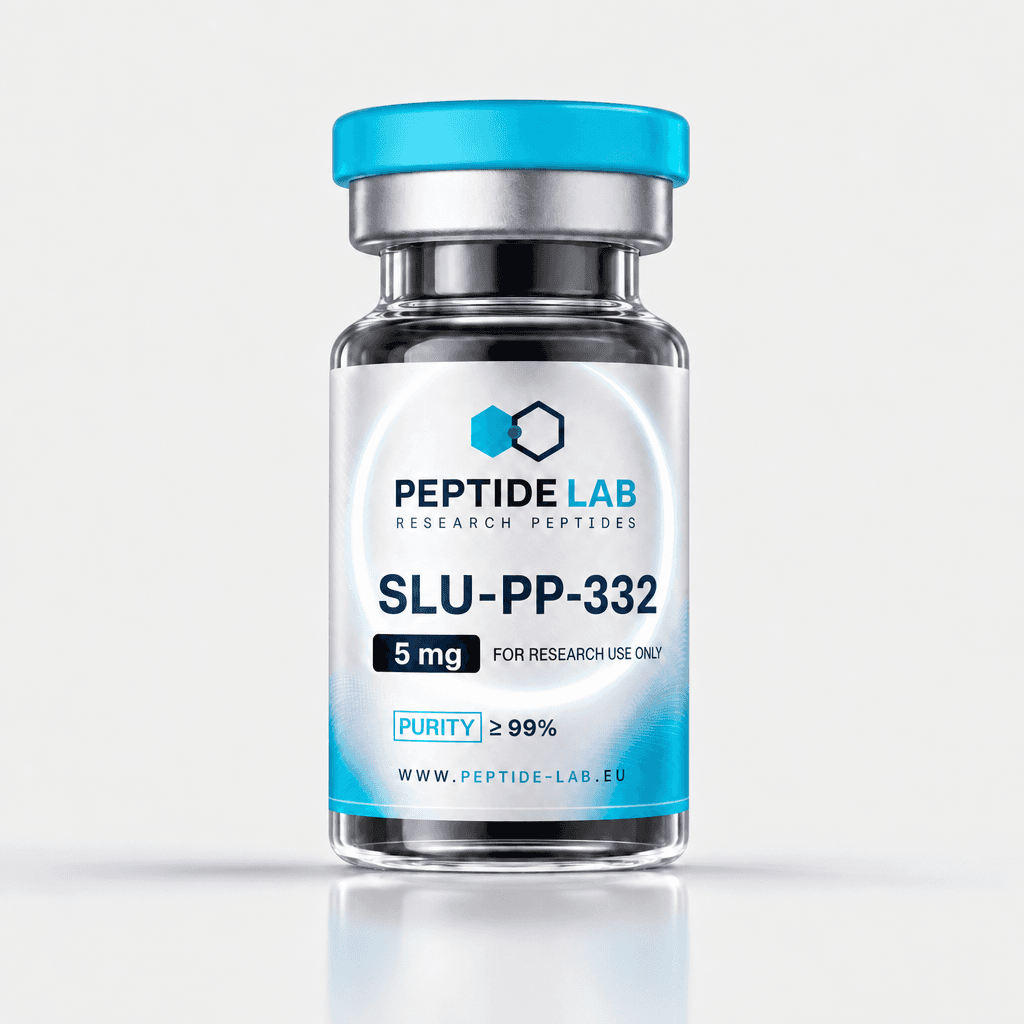
5-Amino-1MQ is intended for researchers and laboratories studying metabolism and NAD+ homeostasis. Related metabolic research compounds can be found under MOTS-C, NAD+ and SLU-PP-332; see also the Fat Loss & Metabolism category.
Why Peptide Lab?
- Verified purity of 99.0%.
- Batch documentation is available.
- Lyophilised powder, 5 mg per vial.
- Fast, discreet EU delivery.
5-Amino-1MQ is not a medicinal product and is not intended for human or animal consumption.
Specifications at a glance
- Form: freeze-dried powder
- Packaging: 5 mg per vial
- Purity: 99.0%
- Molecular weight: See product specification
- Laboratory certificate: CURATED-5A1MQ
- For laboratory and research purposes only

Price, contents and delivery
The price of 5-Amino-1MQ is €102 per vial — that is 5 mg per vial, which works out at €20.40 per mg. This price includes the batch-specific Janoshik certificate, linked to the lot number on the label, so you can trace exactly what you have.
- Price per vial
- €102
- Price per mg
- €20.40
- Contents
- 5 mg per vial
- Availability
- In stock
Delivery within the EU
Postage costs €9.95 and is free for orders of €150 or more. A parcel is usually delivered within 1–3 working days, discreetly and with a tracking code. The countries and rates are listed in the delivery policy.
Order online
Online ordering isn’t available yet — the shop will open soon. Enter your email address above, and you’ll be the first to know when 5-Amino-1MQ is available to order. In the meantime, take a look at the full range in the shop.
Frequently Asked Questions
What does 5-Amino-1MQ do?
Research suggests that it inhibits the enzyme NNMT, which is associated with higher NAD+ levels and metabolic effects.
Is it a peptide?
No, it is a small-molecule NNMT inhibitor, listed under ‘Fat Loss & Metabolism’.
Purity?
99.0%; see product specification.
How much does 5-Amino-1MQ cost?
The current price of 5-Amino-1MQ is shown at the top of this page, including the price per mg so you can compare fairly. Bundles increase the discount, and shipping is free above €150.
Is 5-Amino-1MQ legal to buy in the Netherlands?
5-Amino-1MQ is supplied strictly for laboratory and research purposes — not as a medicine and not for human or animal consumption. Within that research-only framework it is available in the Netherlands. This is general information, not legal advice.
Reviews
- 5,010 July 2026
Highly recommend
Highly recommend this peptide lab. The 5-Amino-1MQ is excellent quality and customer service is very responsive.
Richard Hernandez· BristolVerified purchaseResponse from Peptide Lab
Thank you for the review! We're glad you're satisfied with your order.
- 5,026 April 2026
Fast delivery
Ordered 5-Amino-1MQ from peptide lab and it arrived within 3 days. Superb packaging and perfect quality.
Michael Lewis· BelfastVerified purchase - 5,011 June 2026
Werkt uitstekend!
Werkt uitstekend. Heb vaker 5-Amino-1MQ besteld bij andere shops, maar peptide lab levert veruit de beste kwaliteit.
Eva Scholten· UtrechtVerified purchase - 5,030 May 2026
Super Kundenservice
Peptide-lab.eu hat den besten Kundenservice. 5-Amino-1MQ funktioniert hervorragend. Best peptides europe.
Sarah Werner· DüsseldorfVerified purchase - 5,011 May 2026
Netjes verpakt
Snel binnen, netjes verpakt. 5-Amino-1MQ doet precies wat het moet doen. De webshop peptide-lab.eu is super overzichtelijk en betrouwbaar.
Niels Bos· AlmereVerified purchaseResponse from Peptide Lab
Bedankt voor je review! Fijn dat je tevreden bent met peptide-lab.eu.
- 5,015 April 2026
Schneller Versand
Habe 5-Amino-1MQ gekauft und es kam super schnell an. Die Qualität ist top, high purity und sicher verpackt.
Martina Schmidt· ViennaVerified purchase - 5,09 April 2026
Beste in Europa
Beste plek om 5-mAino-1MQ te kopen in Europa. Prijzen zijn eerlijk en de purity is top. Ga hier zeker vaker bestellen.
Sanne de Jong· EindhovenVerified purchaseResponse from Peptide Lab
Bedankt voor je review! Fijn dat je tevreden bent met peptide-lab.eu.
- 5,02 April 2026
Zeer snelle levering
De 5-Amino-1MQ van peptide-lab.eu is echt top. Kwaliteit is zoals beloofd en snelle levering!
Bas van Leeuwen· RotterdamVerified purchase
Often bought together
Related products
Further reading on this research
FOR RESEARCH USE ONLY. For laboratory and research purposes only. Not for human or animal consumption; not a medicine and does not constitute medical advice.