“Peptides for muscle growth” is a widely searched term within the bodybuilding community. In this guide we explain, research-only, which peptides the scientific literature links to muscle tissue and the growth-hormone axis — without performance or usage claims.
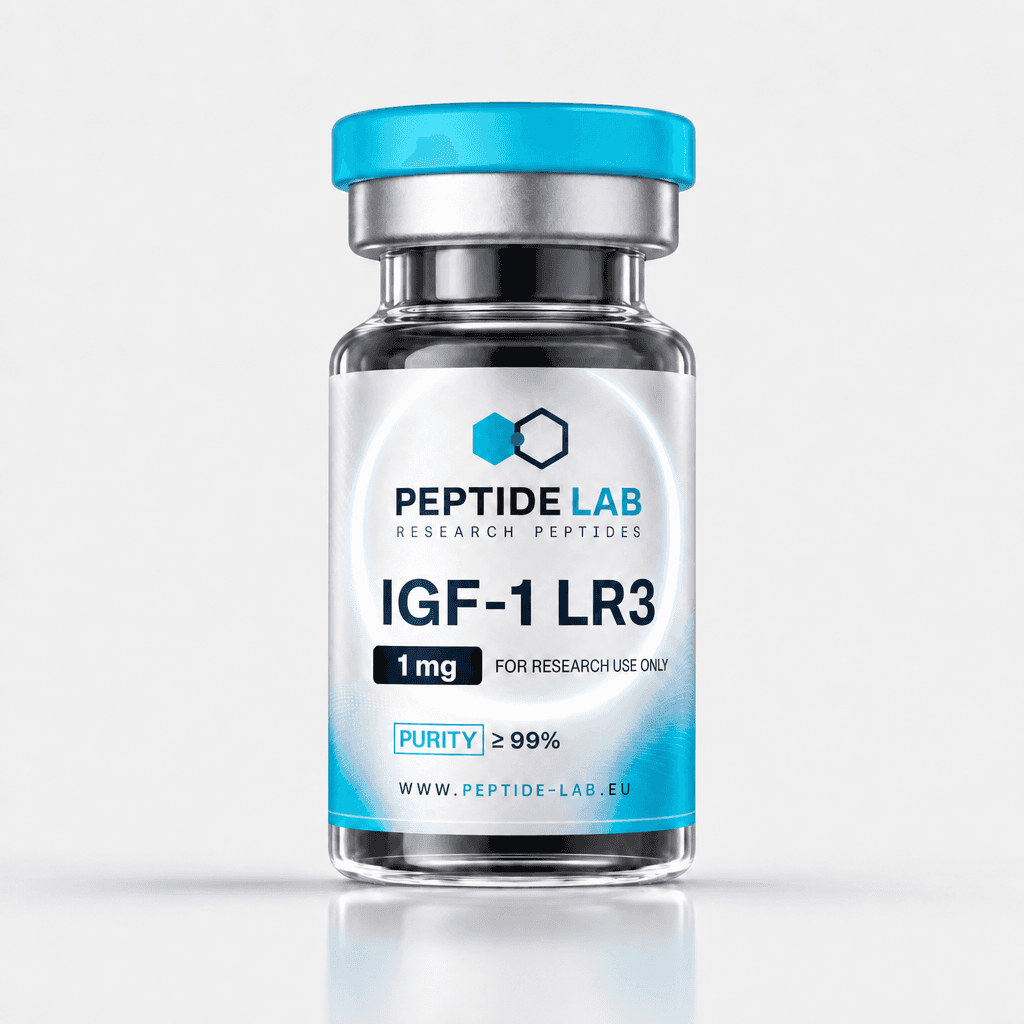
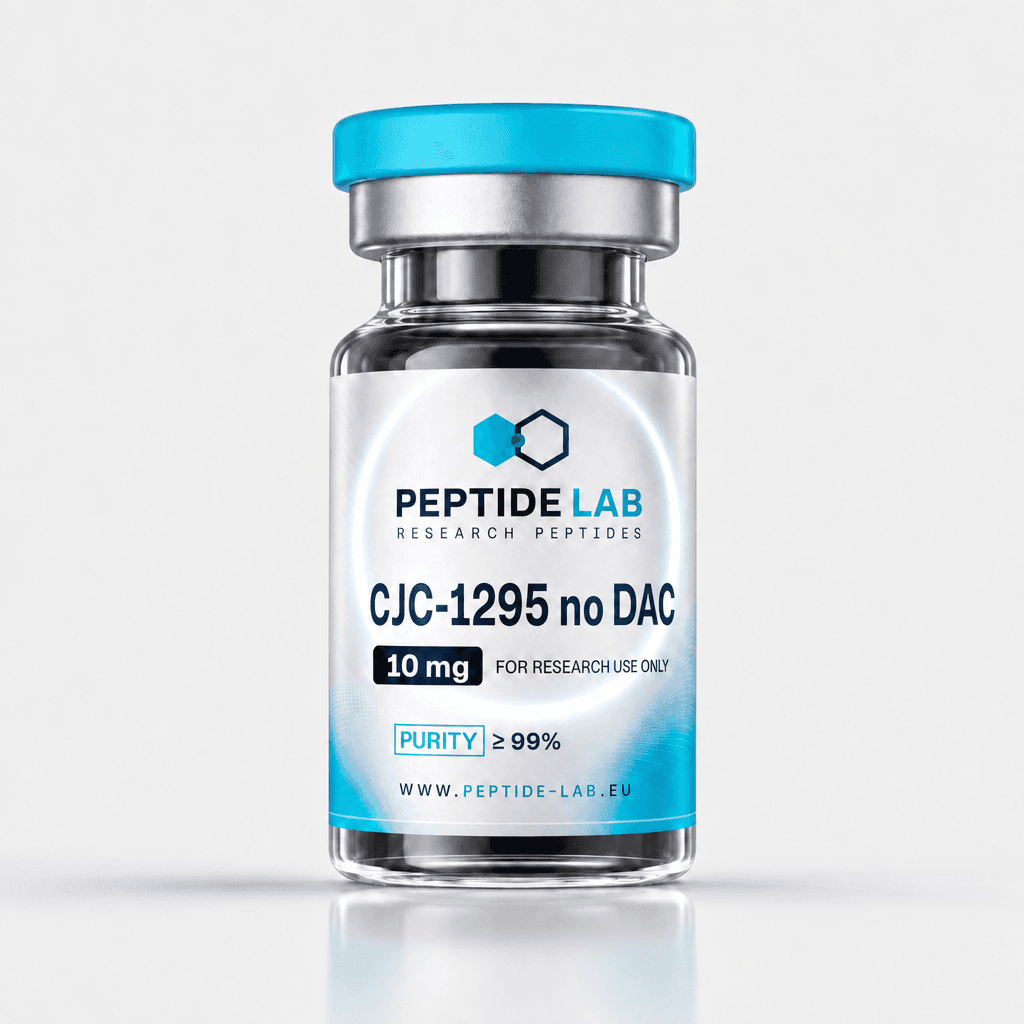
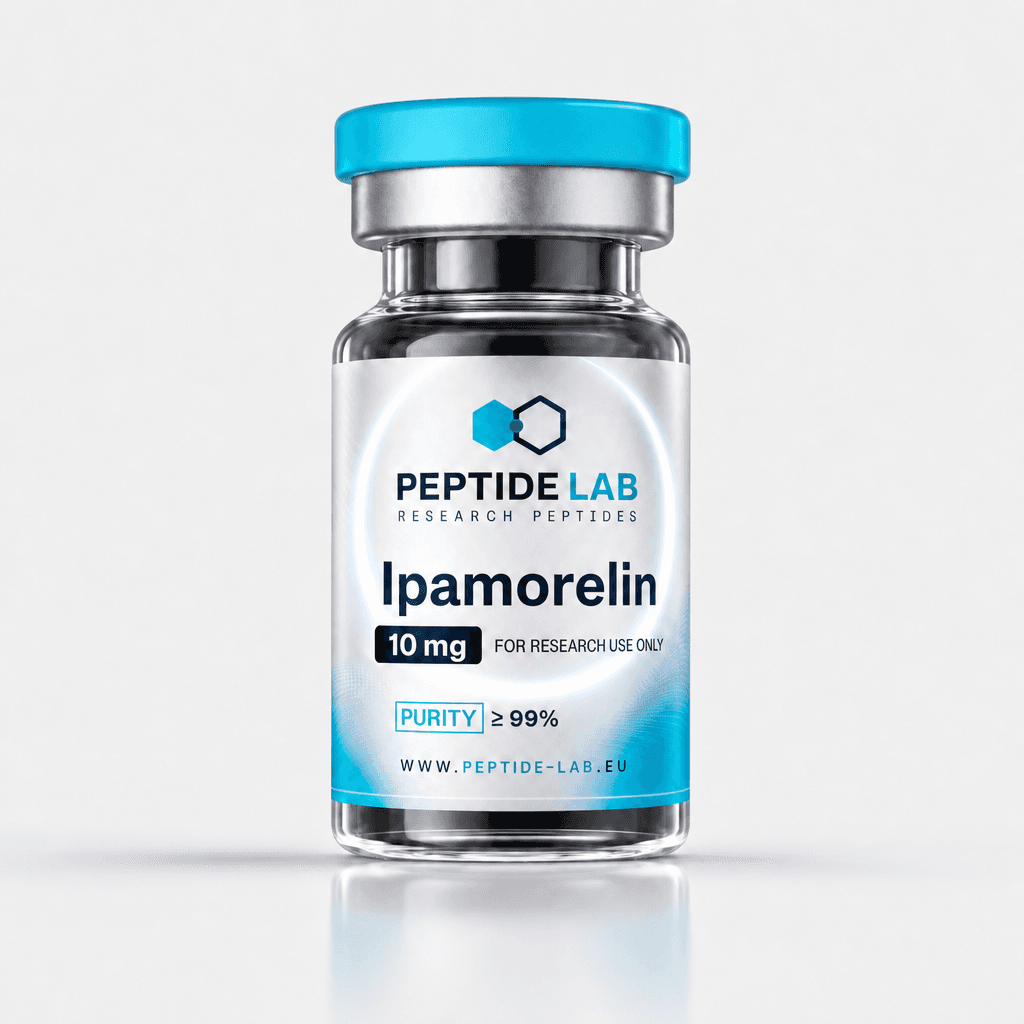
Research into muscle tissue and the growth-hormone axis mostly cites GHRH analogues (CJC-1295, tesamorelin), GHRPs (ipamorelin) and IGF-1 LR3. These are not medicines and there is no proven muscle-growth effect in humans — preclinical research material only, ≥99% pure with a COA per batch.
Why are peptides linked to muscle growth?
The link between peptides and muscle growth almost always runs through the growth-hormone axis: a system that physiological research has associated with muscle tissue and protein synthesis for decades. Peptides that influence this axis are therefore used as research subjects. New to peptides? First read what peptides are.
GHRH analogues and GHRPs: the growth-hormone route
GHRH analogues such as CJC-1295 and GHRPs such as ipamorelin are studied for their role in the release of growth hormone, an axis long associated with muscle physiology. The full breakdown of these two families is in the hub growth-hormone peptides, with dedicated guides on CJC-1295, ipamorelin and tesamorelin.
IGF-1 LR3: further down the same axis
IGF-1 LR3 is a modified form of insulin-like growth factor 1 (IGF-1), with a longer half-life than the natural molecule, which makes it more usable as a research subject. IGF-1 acts further down the same signalling pathway as growth hormone, which is why it is often mentioned alongside CJC-1295 and ipamorelin.
Research-only: no performance or muscle-growth claims
The descriptions in this article come from preclinical and physiological research and are not proof of effect in humans. Peptide Lab makes no statements about muscle growth, recovery or performance in humans or animals. Browse the full range in the muscle growth & growth hormone category.
Purity and documentation
Reproducible research requires material with verified purity and full traceability. Every batch at Peptide Lab is tested by Janoshik Analytical at ≥99% purity by HPLC and mass spectrometry, with a public certificate per lot number. Each product is supplied as a lyophilised powder — calculate the reconstitution ratio with the reconstitution calculator.
This information is general and intended solely for a research context. Peptide Lab supplies these peptides for laboratory and research purposes only. Not for human or animal consumption, not a medicine, no performance claim and not medical advice.
Frequently asked questions about peptides and muscle growth
Which peptides are linked to muscle growth in research?
The literature mostly cites peptides from the growth-hormone axis, such as GHRH analogues (CJC-1295, tesamorelin), the GHRP ipamorelin, and the growth-hormone-related IGF-1 LR3. Each acts on a different point in that system.
Is there evidence that peptides stimulate muscle growth in humans?
The available descriptions come from preclinical and physiological research into the growth-hormone axis and are not proof of effect in humans. Peptide Lab makes no performance or muscle-growth claims and supplies research-grade material only.
What is the difference between GHRH analogues, GHRPs and IGF-1 LR3?
GHRH analogues and GHRPs act on different receptors to study the release of growth hormone (see the growth-hormone-peptides guide). IGF-1 LR3 is a modified form of insulin-like growth factor 1, further down the same axis, with a longer half-life as a research subject than natural IGF-1.
Are these peptides pure at Peptide Lab?
Yes, each peptide is lab-verified at ≥99% purity by HPLC and mass spectrometry, with a public Janoshik certificate per batch. For research purposes only.