CJC-1295 is one of the most studied peptides within growth-hormone research. In this guide we explain, research-only, what CJC-1295 is, how the no-DAC and with-DAC variants differ, and what the peptide is studied for in research — without any health or performance claims.
CJC-1295 is a synthetic GHRH analogue studied as a growth-hormone secretagogue. The no DAC variant (Mod GRF 1-29) is short-acting; the with DAC variant lasts longer through albumin binding. It is not a medicine and is offered for research only, ≥99% pure with a COA per batch.
What is CJC-1295?
CJC-1295 is a synthetic analogue of growth-hormone-releasing hormone (GHRH) that is studied in endocrine research as a growth-hormone secretagogue. GHRH is the body's own signal that prompts the pituitary to release growth hormone. CJC-1295 is a modified version of the active GHRH fragment, designed to be more stable than the natural molecule. New to peptide science? First read what peptides are.
CJC-1295 no DAC vs. with DAC
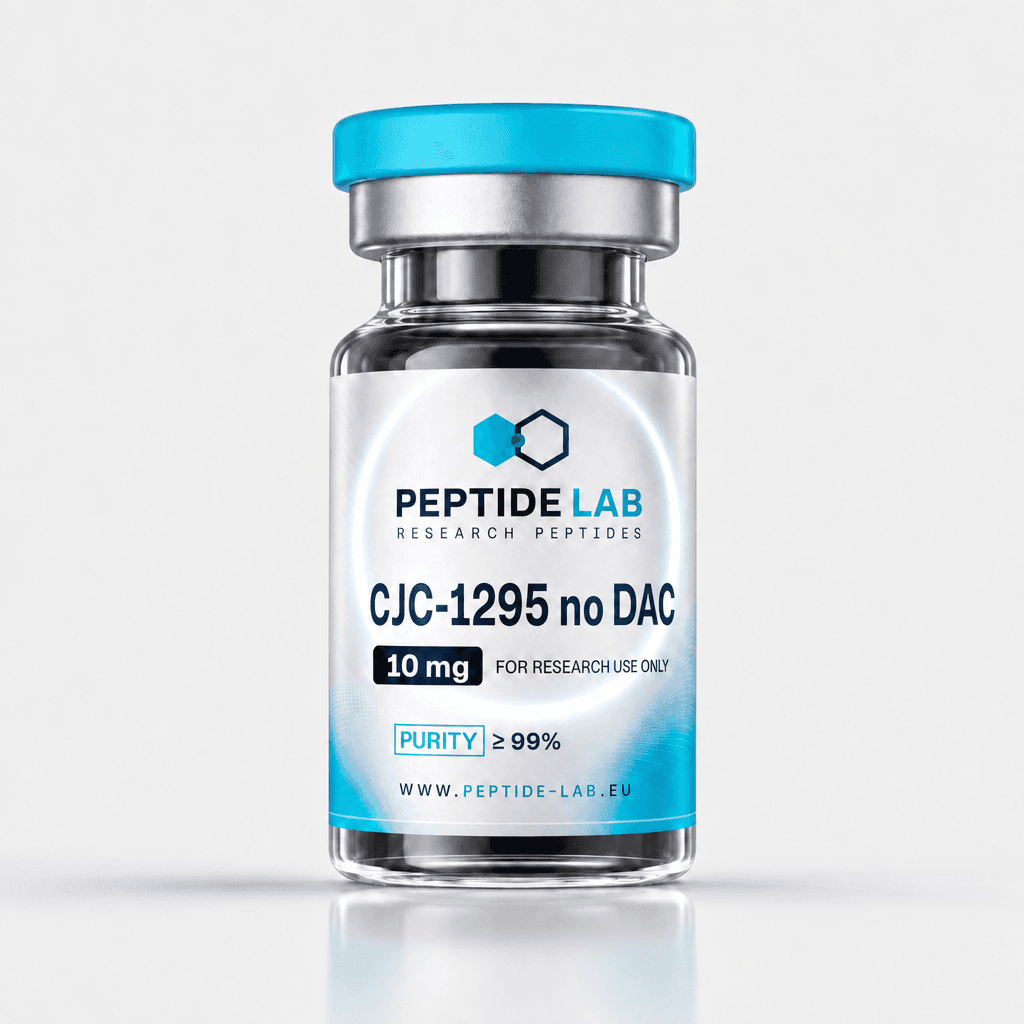
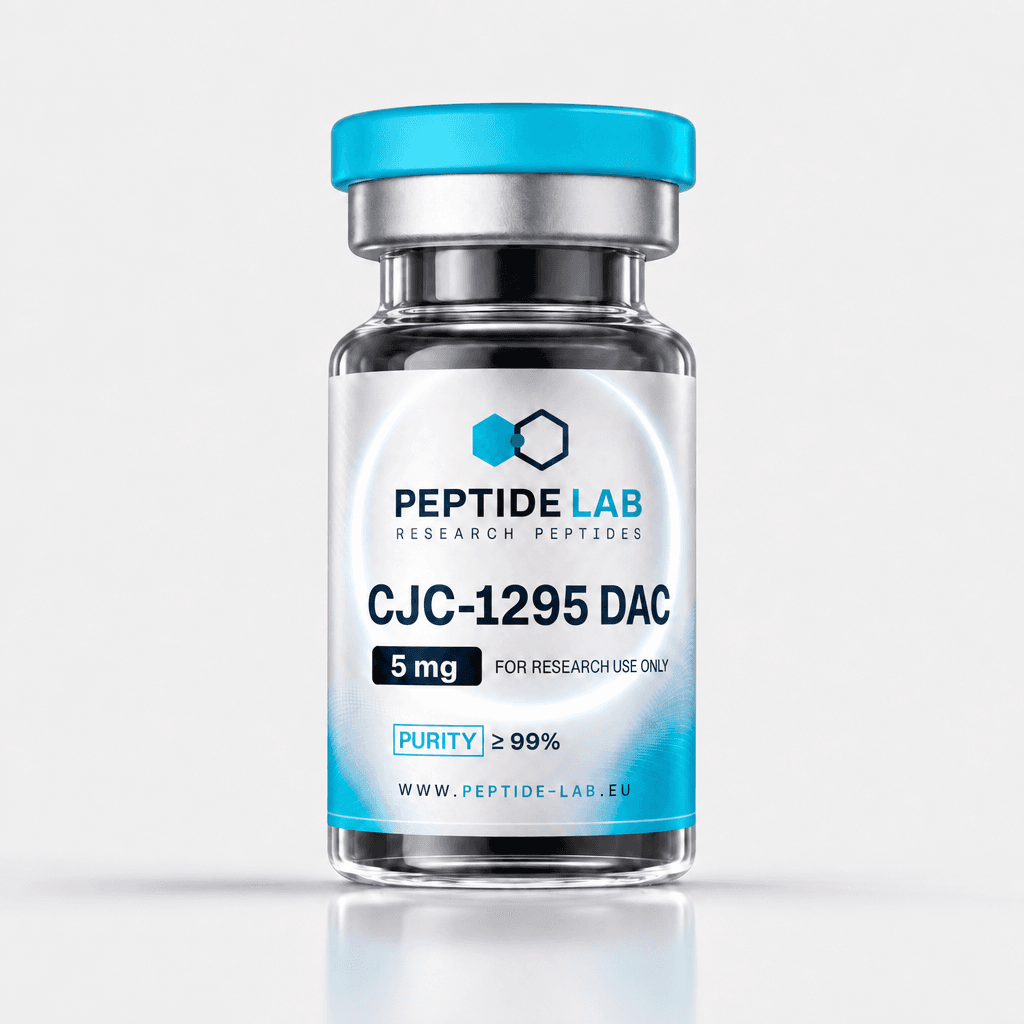
The main distinction is duration of action: the no-DAC variant is short-acting, while the with-DAC variant lasts much longer through binding to albumin. “DAC” stands for Drug Affinity Complex — an addition that makes the molecule bind to blood proteins and thereby extends its half-life in research. The no-DAC variant is also known as Mod GRF 1-29.
Both variants are available separately: CJC-1295 no DAC and CJC-1295 with DAC. They are offered for research purposes only.
Why CJC-1295 and Ipamorelin are mentioned together
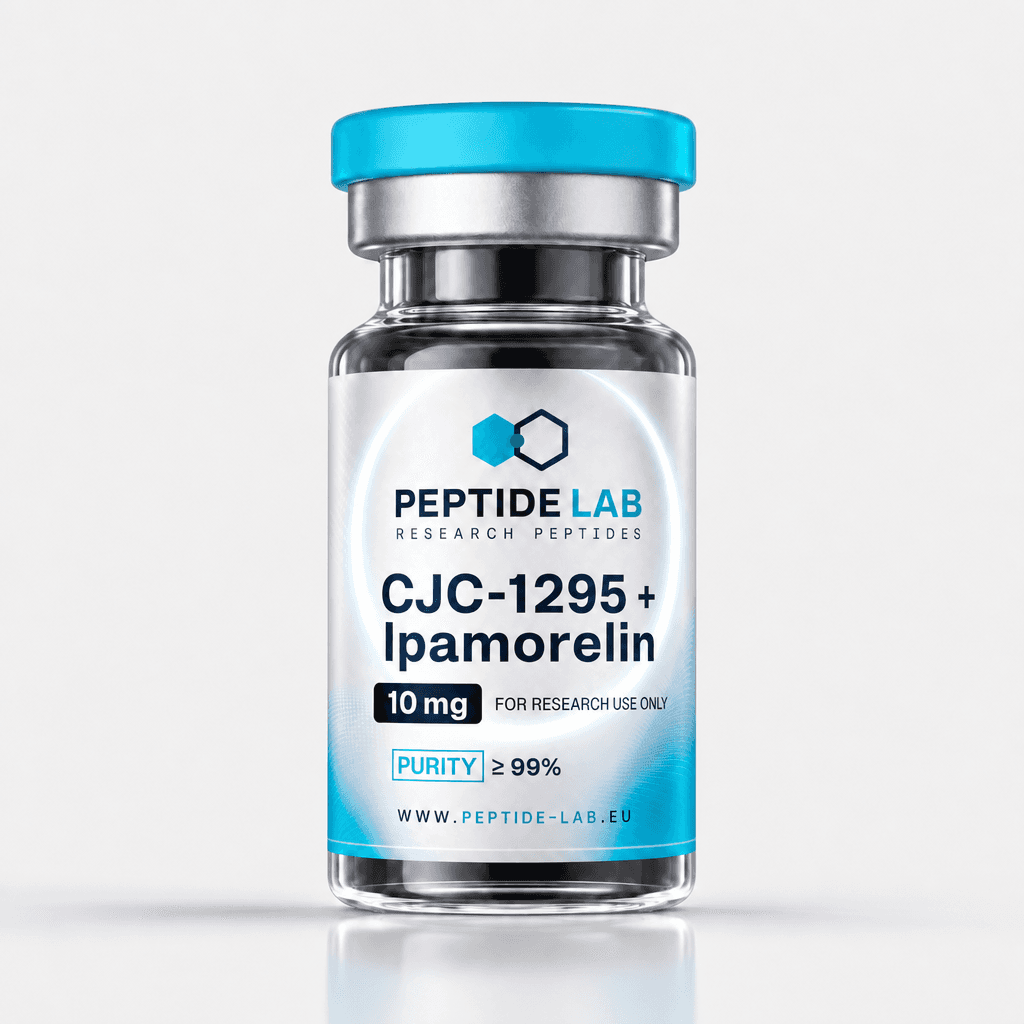
In research a GHRH analogue and a growth-hormone-releasing peptide (GHRP) are sometimes studied together because they act on the growth-hormone axis via different routes. CJC-1295 is a GHRH analogue; Ipamorelin is a GHRP. The combination is a recurring subject in the literature on the hypothalamic-pituitary axis. Peptide Lab therefore also offers the CJC-1295 + Ipamorelin blend. These are descriptions of research designs and are not dosing or usage advice.
How is CJC-1295 reconstituted?
CJC-1295 is supplied as a lyophilised (freeze-dried) powder and reconstituted in the lab with bacteriostatic water. The right ratio depends on the vial strength and the research design. Use the reconstitution calculator to determine water, concentration and units, or read the full explanation in how to reconstitute peptides.
Purity and documentation
The usefulness of CJC-1295 as research material stands or falls with verified purity and traceability. At Peptide Lab every batch is tested by Janoshik Analytical at ≥99% purity by HPLC and mass spectrometry, with a public certificate per lot number. Read more about how we assure quality on the science page.
This information is general and intended solely for a research context. Peptide Lab supplies CJC-1295 for laboratory and research purposes only. Not for human or animal consumption, not a medicine and not medical advice.
Frequently asked questions about CJC-1295
What is CJC-1295?
CJC-1295 is a synthetic analogue of growth-hormone-releasing hormone (GHRH). In endocrine research it is studied as a growth-hormone secretagogue and is not an approved medicine.
What is the difference between CJC-1295 no DAC and with DAC?
The 'no DAC' variant (also called Mod GRF 1-29) is short-acting. The 'with DAC' variant contains a Drug Affinity Complex that binds to albumin, which in research gives it a considerably longer half-life. Both are offered for research only.
Why is CJC-1295 often mentioned together with Ipamorelin?
In research a GHRH analogue (CJC-1295) and a GHRP (Ipamorelin) are sometimes studied together because they act on the growth-hormone axis via different routes. This is a description of research designs, not usage advice.
Is CJC-1295 pure at Peptide Lab?
Yes, CJC-1295 is lab-verified at ≥99% purity by HPLC and mass spectrometry, with a public Janoshik certificate per batch. For laboratory and research purposes only.