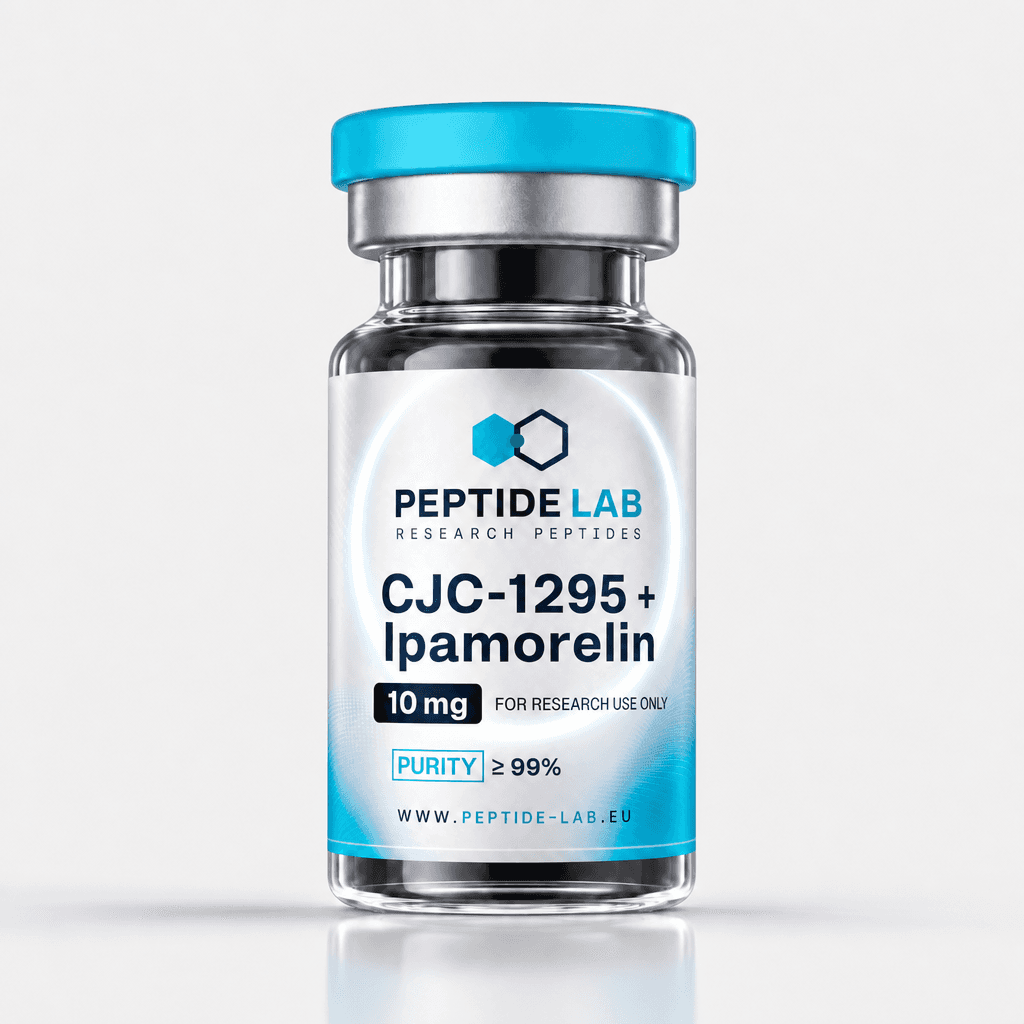
CJC-1295 and Ipamorelin are rarely mentioned separately in the growth-hormone literature. In this guide we explain, research-only, why these two peptides are so often studied together, and when to choose the pre-mixed blend over separate vials.
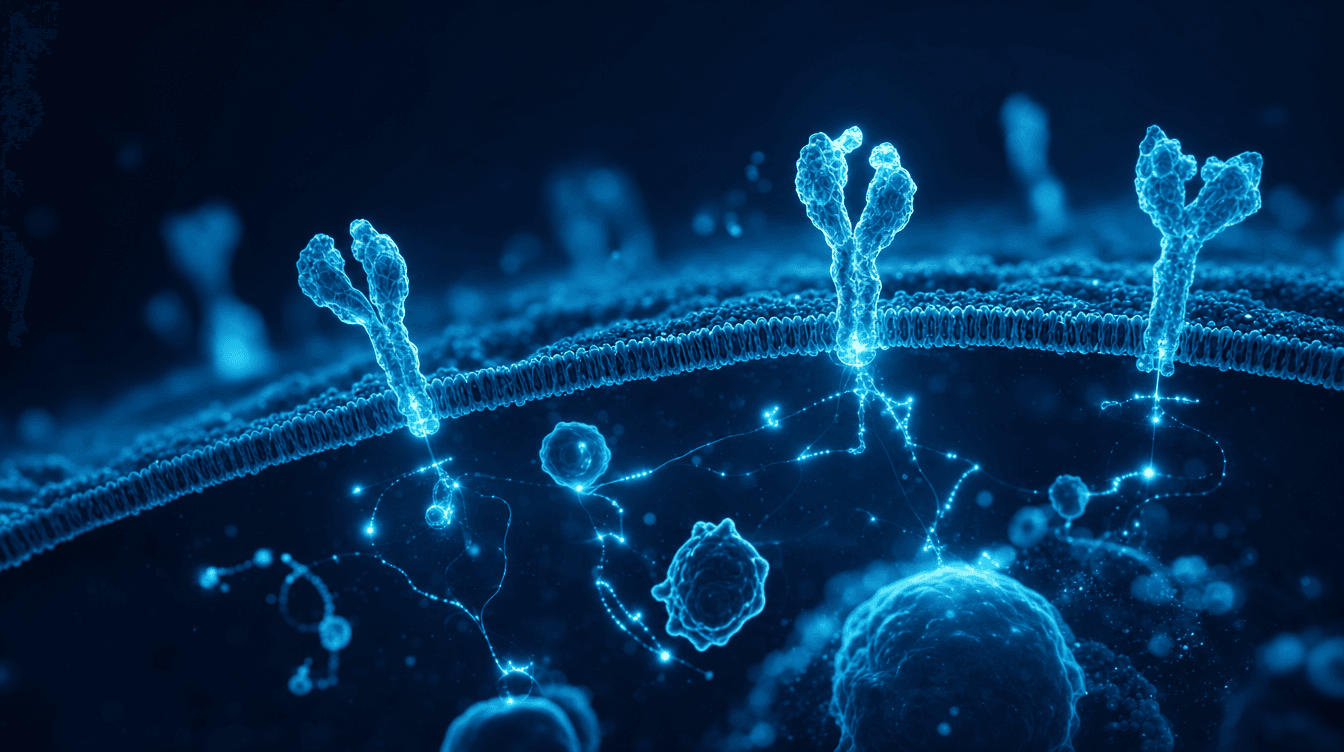
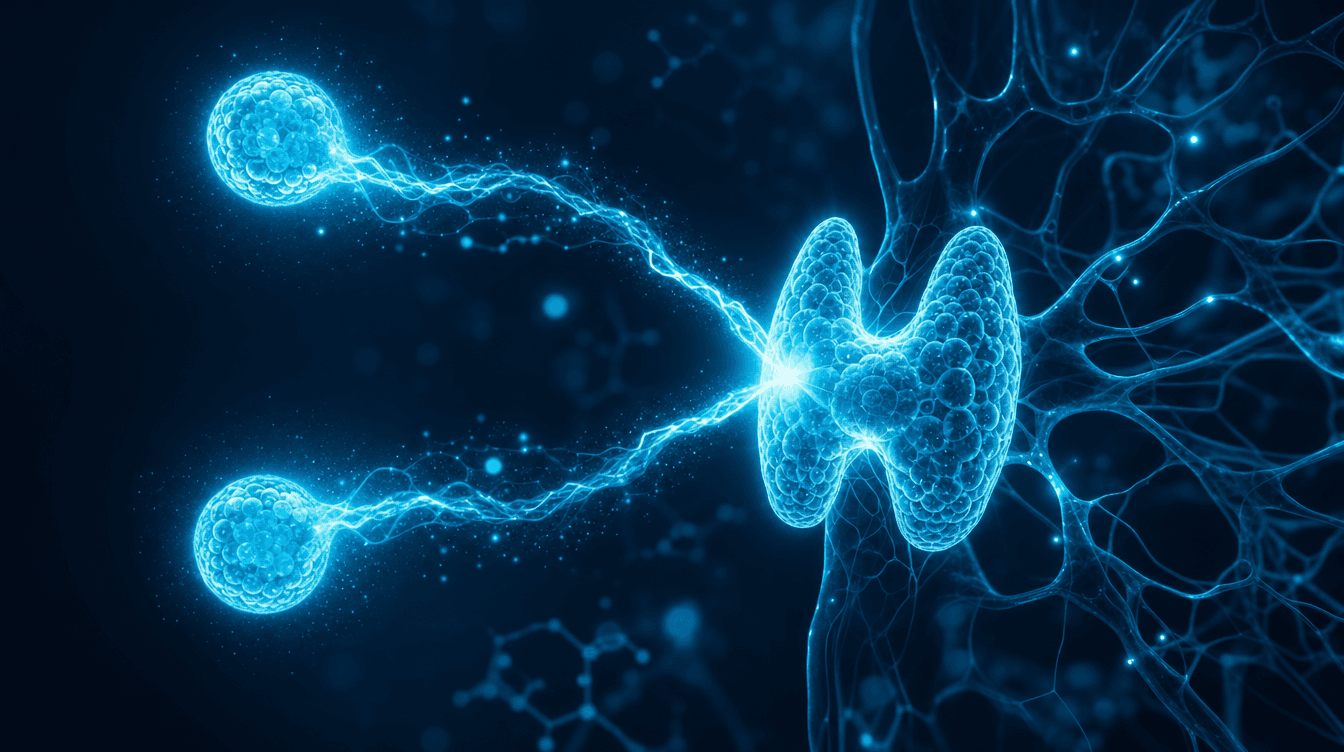
CJC-1295 (a GHRH analogue) and Ipamorelin (a GHRP) act on two different receptors within the same growth-hormone axis, making them complementary research subjects. For research use only, ≥99% pure with a COA per batch.
Two complementary points of action
CJC-1295 mimics growth hormone-releasing hormone (GHRH), while Ipamorelin acts via the ghrelin receptor — two different points of action within the same axis. The full background on both families is in the hub growth-hormone peptides, with dedicated guides on CJC-1295 and Ipamorelin.
Why a blend instead of separate vials?
Chemically, nothing changes between using them separately and the blend — it's the same CJC-1295 and the same Ipamorelin, pre-combined in one vial. That simplifies reconstitution to one step instead of two. Separate vials give more flexibility when a research design calls for a different ratio.
Reconstituting the blend
Like the separate peptides, the blend is supplied as a lyophilised powder and reconstituted with bacteriostatic water. Calculate the right ratio with the reconstitution calculator, or read the step-by-step guide in how to reconstitute peptides.
Purity and documentation
Reproducible research with a blend requires extra careful documentation, since the certificate must cover both components. Every batch at Peptide Lab is tested by Janoshik Analytical at ≥99% purity by HPLC and mass spectrometry, with a public certificate per lot number.
This information is general and intended solely for a research context. Peptide Lab supplies this blend for laboratory and research purposes only. Not for human or animal consumption, not a medicine and not medical advice.
Frequently asked questions about the CJC-1295 + Ipamorelin blend
Why are CJC-1295 and Ipamorelin studied together?
CJC-1295 (a GHRH analogue) and Ipamorelin (a GHRP) act on two different receptors within the same growth-hormone axis. Those complementary points of action are exactly why the combination recurs so often in research.
What is the difference between using them separately and the blend?
Chemically, nothing changes: the blend is the same two peptides, pre-combined in one vial for convenience during reconstitution. Separate vials offer more flexibility in ratio per research design.
Is this combination the same as the GHRH+GHRP blends in the literature?
Combining a GHRH analogue with a GHRP is a recurring research model. The exact molecules and ratios used in the literature may differ from Peptide Lab's specific product offering.
Is Peptide Lab's blend pure?
Yes, every batch is lab-verified at ≥99% purity by HPLC and mass spectrometry, with a public Janoshik certificate. For research purposes only.