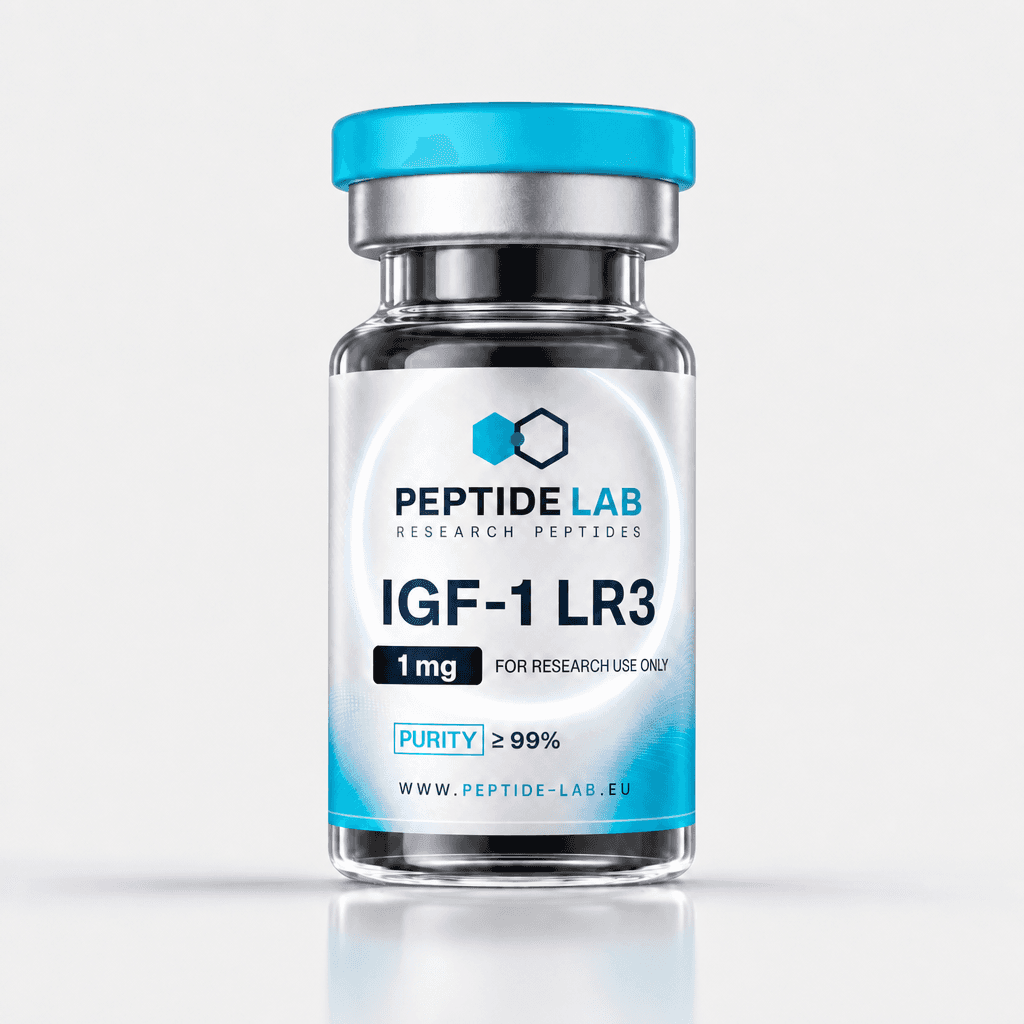
IGF-1 LR3
Buy IGF-1 LR3 for research — ≥99% pure, with a Janoshik COA per batch.
IGF-1 LR3 is a long-acting analogue of Insulin-like Growth Factor 1, studied for its effects on muscle growth and anabolic signalling. 1 mg, 99.0% pure, with CoA.
Available to order soon
The shop will be opening soon. Leave your email address and you’ll be the first to know when orders can be placed.
Specifications
- Category
- Muscle Growth & Growth Hormone
- Dosage
- 1 mg per vial
- Packaging
- 1 vial (1 mg)
- Purity
- 99.0%
- Molecular weight
- Zie CoA
Research focus
You can buy IGF-1 LR3 from Peptide Lab as a laboratory-verified research peptide with 99.0% purity, for research purposes only. IGF-1 LR3 (Long R3 IGF-1) is a modified, long-acting variant of insulin-like growth factor 1 (IGF-1). It is a commonly used reagent in growth and cell biology research and is supplied as a lyophilised powder, 1 mg per vial.
Who is IGF-1 LR3 intended for?
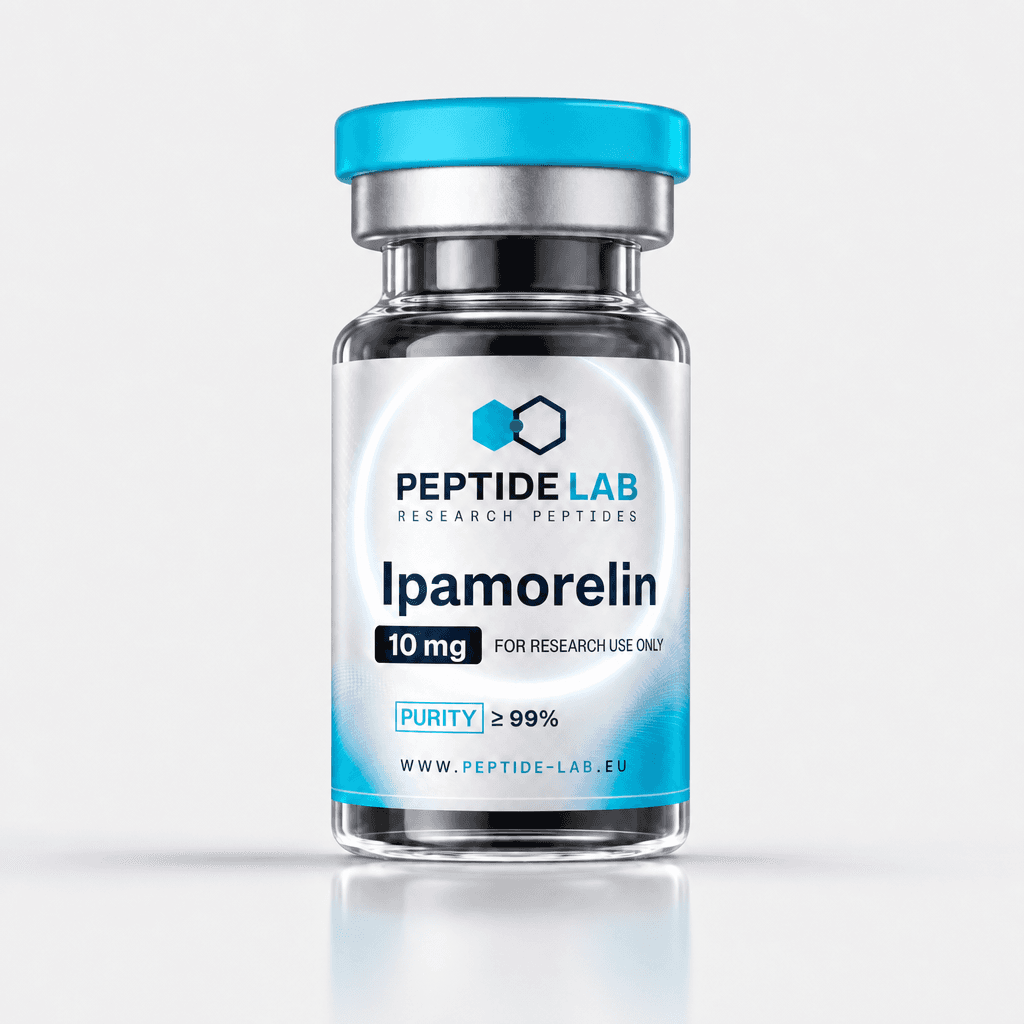
IGF-1 LR3 is intended for researchers and laboratories studying growth factor signalling, cell proliferation and tissue research. Related compounds can be found under CJC-1295 with DAC and Ipamorelin in the Muscle Growth & Growth Hormone category.
Why Peptide Lab?
- Verified purity of 99.0% by HPLC and mass spectrometry.
- Batch documentation available; molecular weight per CoA.
- Lyophilised powder, 1 mg per vial.
- Fast, discreet EU delivery.
IGF-1 LR3 is not a medicinal product and is not intended for human or animal consumption.
Specifications at a glance
- Form: freeze-dried powder
- Packaging: 1 mg per vial
- Purity: 99.0%
- Molecular weight: See CoA
- Laboratory certificate: available on request
- For laboratory and research purposes only

Price, contents and delivery
The price of IGF-1 LR3 is €82 per vial — that is 1 mg per vial, which works out at €82 per mg. This price includes the batch-specific Janoshik certificate, linked to the lot number on the label, so you can trace exactly what you have.
- Price per vial
- €82
- Price per mg
- €82
- Contents
- 1 mg per vial
- Availability
- In stock
Delivery within the EU
Postage costs €9.95 and is free for orders of €150 or more. A parcel is usually delivered within 1–3 working days, discreetly and with a tracking code. The countries and rates are listed in the delivery policy.
Order online
Online ordering isn’t available yet — the shop will open soon. Enter your email address above, and you’ll be the first to know when IGF-1 LR3 is available to order. In the meantime, take a look at the full range in the shop.
Frequently Asked Questions
Why LR3 and not just IGF-1?
The LR3 modification reduces binding to IGFBP and prolongs the duration of action in studies, making it a popular research variant.
Purity?
99.0%; see CoA for batch details.
What should I use to reconstitute it?
Using bacteriostatic water from our Lab & Accessories range.
How much does IGF-1 LR3 cost?
The current price of IGF-1 LR3 is shown at the top of this page, including the price per mg so you can compare fairly. Bundles increase the discount, and shipping is free above €150.
Is IGF-1 LR3 legal to buy in the Netherlands?
IGF-1 LR3 is supplied strictly for laboratory and research purposes — not as a medicine and not for human or animal consumption. Within that research-only framework it is available in the Netherlands. This is general information, not legal advice.
Reviews
- 5,020 June 2026
Highly recommend
Highly recommend this peptide lab. The IGF-1 LR3 is excellent quality and customer service is very responsive.
George Anderson· LondonVerified purchase - 5,07 April 2026
Legit source
The IGF-1 LR3 is legit Good to finally have a reliable source for lab tested peptides in the EU
Susan Smith· GlasgowVerified purchase - 4,011 July 2026
Top kwaliteit
Kwaliteit van IGF-1 LR3 is heel goed, alleen jammer dat de voorraad soms snel op is. Verder echt de beste lab tested peptides.
Esther Jansen· NijmegenVerified purchase - 5,09 July 2026
Lab tested en zuiver
Zeer tevreden over de IGF-1 LR3. Het is duidelijk lab tested en van hoge zuiverheid. Aanrader voor best peptides europe.
Jeroen Kok· AlmereVerified purchase - 5,025 June 2026
Zeer snelle levering
De IGF-1 LR3 van peptide-lab.eu is echt top. Kwaliteit is zoals beloofd en snelle levering!
Mark Bakker· AntwerpenVerified purchase - 5,015 June 2026
Beste in Europa
Beste plek om IGF-1 LR3 te kopen in Europa. Prijzen zijn eerlijk en de purity is top. Ga hier zeker vaker bestellen.
Mohammed Jansen· TilburgVerified purchase - 4,013 June 2026
Top kwaliteit
kwaliteit van igf-1 lr3 is heel goed, alleen jammer dat de voorraad soms snel op is. verder echt de beste lab tested peptides.
Niels Bos· UtrechtVerified purchase - 5,012 June 2026
Beste Qualität
Das IGF-1 LR3 ist von bester Qualität Schneller Versand nach Deutschland Peptide-labeu ist sehr zuverlässig und seriös
Nicole Schäfer· MunichVerified purchase
Often bought together
Related products
Further reading on this research
FOR RESEARCH USE ONLY. For laboratory and research purposes only. Not for human or animal consumption; not a medicine and does not constitute medical advice.