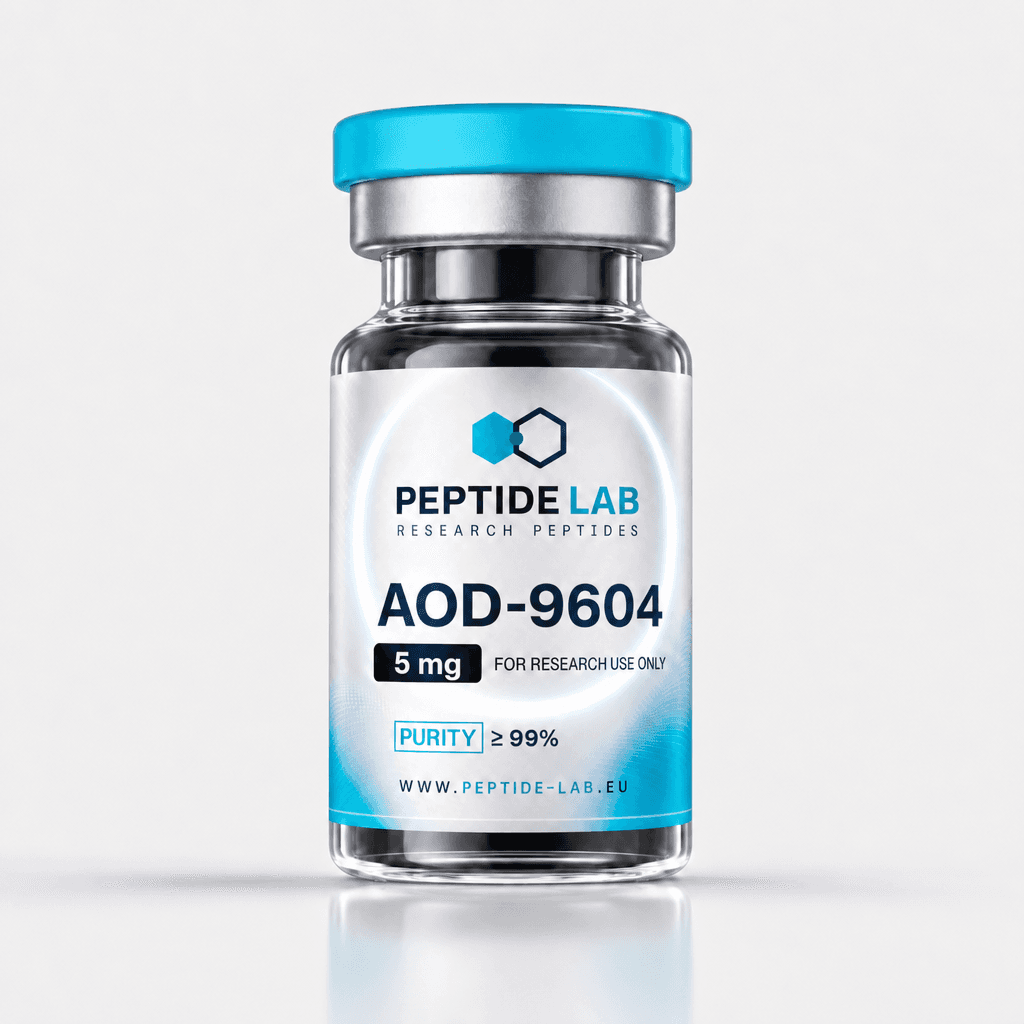
This batch has been independently tested by Janoshik Analytical for identity and purity (HPLC/MS). The full certificate of analysis is available for public inspection.
- Batch
- JAN-172950
- Purity
- 99.1%
AOD-9604
Buy AOD-9604 for research — ≥99% pure, with a Janoshik COA per batch.
AOD-9604 is a modified HGH fragment (176–191) studied for its lipolytic effects without any growth-promoting effects. 5 mg, 99.0% pure, with a laboratory certificate.
Available to order soon
The shop will be opening soon. Leave your email address and you’ll be the first to know when orders can be placed.
Specifications
- Category
- Fat Loss & Metabolism
- Dosage
- 5 mg per vial
- Packaging
- 1 vial (5 mg)
- Purity
- 99.0%
- Molecular weight
- 1815.08 g/mol
- Lab-cert ID
- JAN-2024-AOD-0819
Research focus
You can buy AOD-9604 from Peptide Lab as a lab-verified research peptide with 99.0% purity and a Janoshik lab certificate for each batch. AOD-9604 is a synthetic fragment of human growth hormone (amino acids 176–191), with an additional tyrosine at the end. It was developed in the 1990s specifically to study the fat metabolism aspect of growth hormone. It is supplied exclusively for laboratory and research purposes.
Who is AOD-9604 intended for?
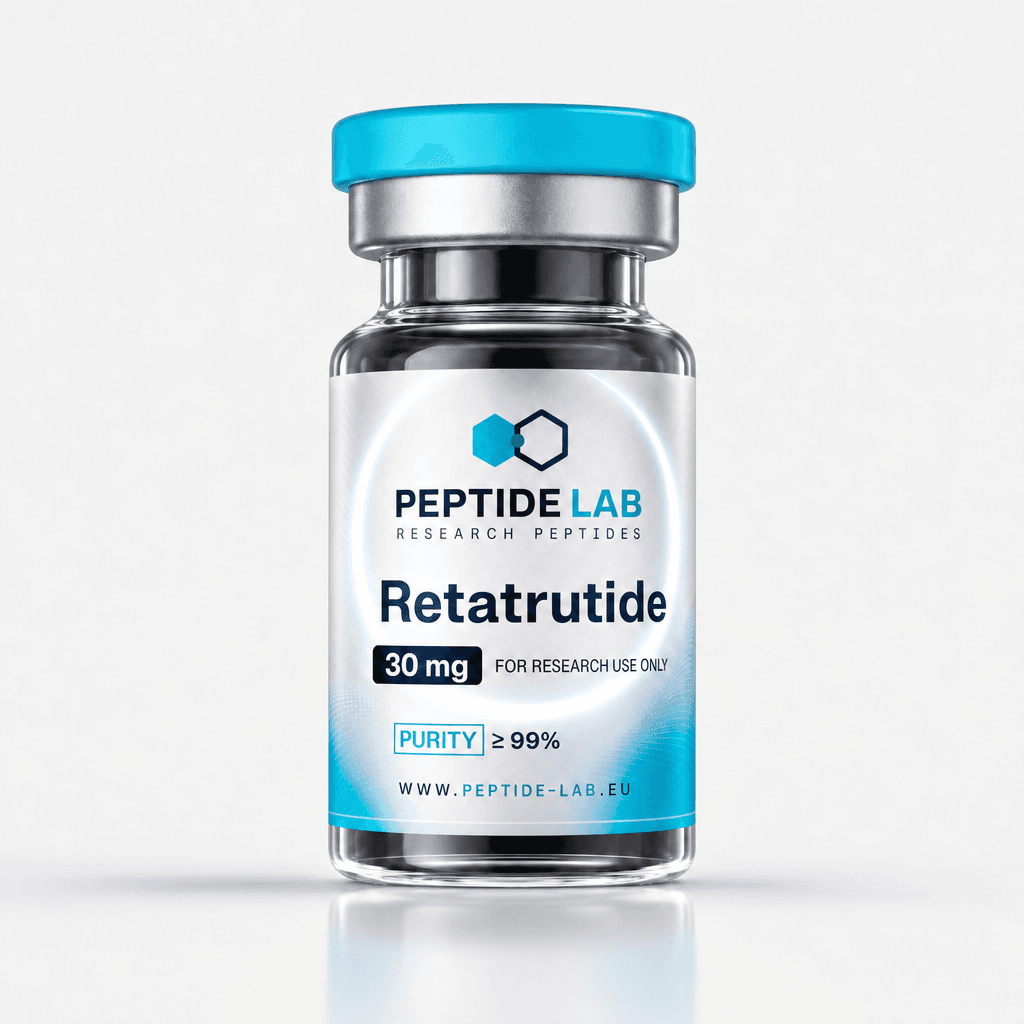
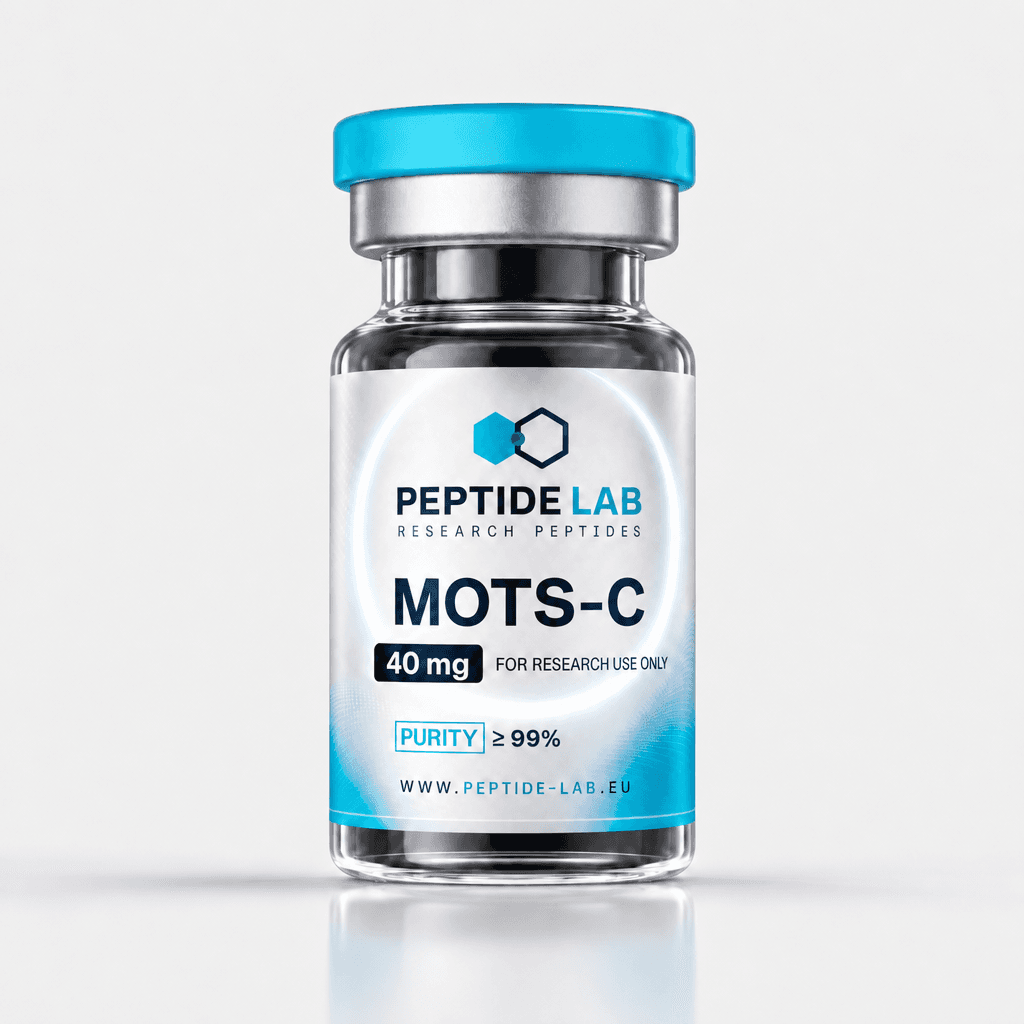
AOD-9604 is intended for researchers and laboratories studying lipid and fat metabolism. Related research compounds include Retatrutide and MOTS-C within the Fat Loss & Metabolism category.
Why Peptide Lab?
- Verified purity of 99.0% by HPLC and mass spectrometry.
- Public Certificate of Analysis per batch (JAN-2024-AOD-0819).
- Lyophilised powder, 5 mg per vial.
- Fast, discreet EU delivery.
AOD-9604 is not a medicinal product and is not intended for human or animal consumption.
Specifications at a glance
- Form: freeze-dried powder
- Packaging: 5 mg per vial
- Purity: 99.0%
- Molecular weight: 1815.08 g/mol
- Laboratory certificate: JAN-2024-AOD-0819
- For laboratory and research purposes only

Price, contents and delivery
The price of AOD-9604 is €55 per vial — that is 5 mg per vial, which works out at €11 per mg. This price includes the batch-specific Janoshik certificate, linked to the lot number on the label, so you can trace exactly what you have.
- Price per vial
- €55
- Price per mg
- €11
- Contents
- 5 mg per vial
- Availability
- In stock
Delivery within the EU
Postage costs €9.95 and is free for orders of €150 or more. A parcel is usually delivered within 1–3 working days, discreetly and with a tracking code. The countries and rates are listed in the delivery policy.
Order online
Online ordering isn’t available yet — the shop will open soon. Enter your email address above, and you’ll be the first to know when AOD-9604 is available to order. In the meantime, take a look at the full range in the shop.
Frequently Asked Questions
What is the difference between AOD-9604 and HGH Fragment 176-191?
AOD-9604 has an additional tyrosine at the N-terminus and is produced recombinantly, resulting in more consistent purity and activity.
Does AOD-9604 affect blood sugar levels?
Research describes it as glucose-neutral, with no IGF-1 effects.
Purity?
99.0% via Janoshik, with certificate.
How much does AOD-9604 cost?
The current price of AOD-9604 is shown at the top of this page, including the price per mg so you can compare fairly. Bundles increase the discount, and shipping is free above €150.
Is AOD-9604 legal to buy in the Netherlands?
AOD-9604 is supplied strictly for laboratory and research purposes — not as a medicine and not for human or animal consumption. Within that research-only framework it is available in the Netherlands. This is general information, not legal advice.
Reviews
- 5,03 July 2026
Legit source
The AOD-9604 is legit. Good to finally have a reliable source for lab tested peptides in the EU.
Michael Martinez· LiverpoolVerified purchaseResponse from Peptide Lab
Thank you for the review! We're glad you're satisfied with your order.
- 5,017 May 2026
Highly recommend
Highly recommend this peptide lab. The AOD-9604 is excellent quality and customer service is very rseponsive.
Olivia Robinson· BristolVerified purchase - 5,021 April 2026
Best peptides Europe
Best peptides europe, hands down. The AOD-9604 works perfectly. Will buy again from peptide-lab.eu.
Charles Gonzalez· ManchesterVerified purchase - 4,05 July 2026
Top kwaliteit
Kwaliteit van AOD-9604 is heel goed, alleen jammer dat de voorraad soms snel op is. Verder echt de beste lab tested peptides.
Luuk Bos· AlmereVerified purchase - 5,04 July 2026
Schneller Versand
Habe AOD-9604 gekauft und es kam super schnell an. Die Qualität ist top, high purity und sicher verpackt.
Hannah Schmidt· DüsseldorfVerified purchase - 5,023 June 2026
Werkt uitstekend!
Werkt uitstekend. Heb vaker AOD-9604 besteld bij andere shops, maar peptide lab levert veruit de beste kwaliteit.
Kees van der Meer· GroningenVerified purchase - 5,022 June 2026
Super Kundenservice
Peptide-lab.eu hat den besten Kundenservice. AOD-9604 funktioniert hervorragend. Best peptides europe.
Alexander Werner· FrankfurtVerified purchase - 5,022 June 2026
Lab tested en zuiver
Zeer tevreden over de AOD-9604. Het is duidelijk lab tested en van hoge zuiverheid. Aanrader voor best peptides europe.
Dennis van den Berg· GroningenVerified purchaseResponse from Peptide Lab
Bedankt voor je review! Fijn dat je tevreden bent met peptide-lab.eu.
Often bought together
Related products
Further reading on this research
FOR RESEARCH USE ONLY. For laboratory and research purposes only. Not for human or animal consumption; not a medicine and does not constitute medical advice.