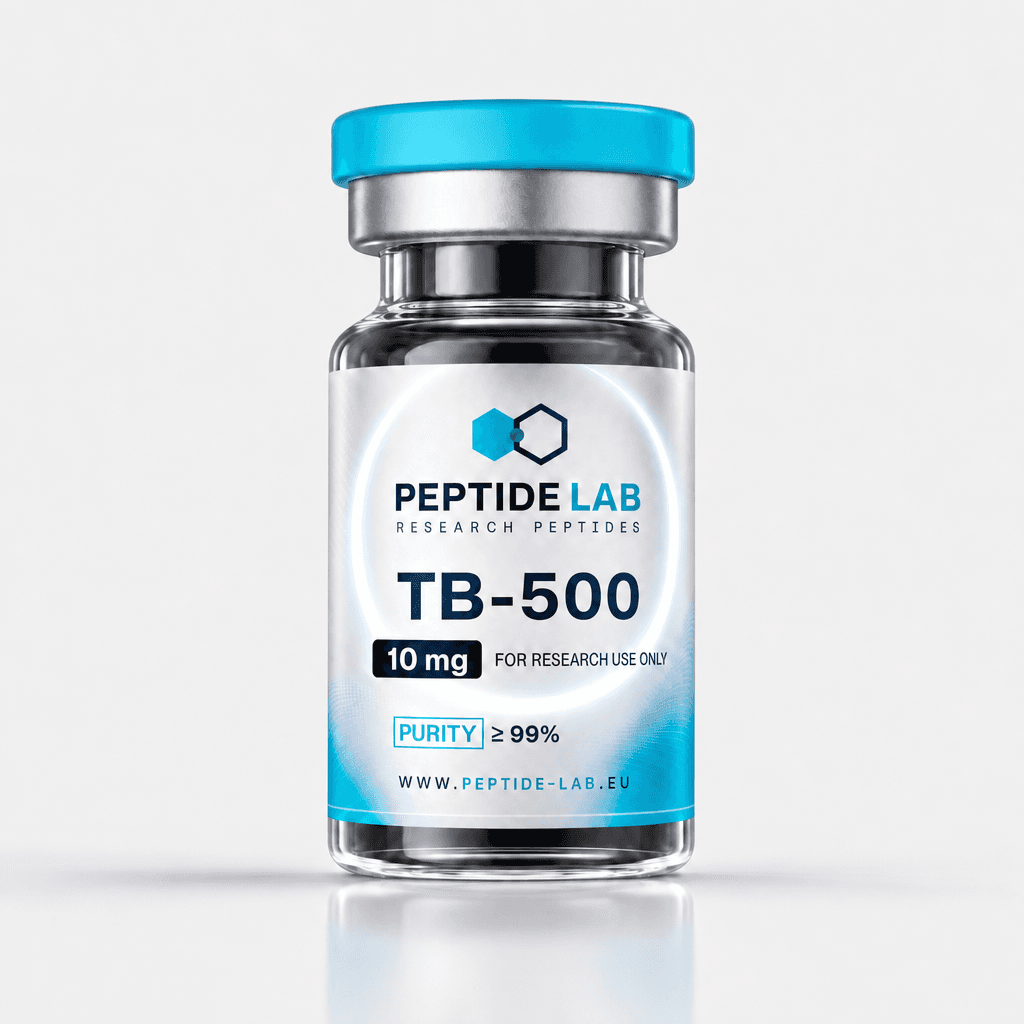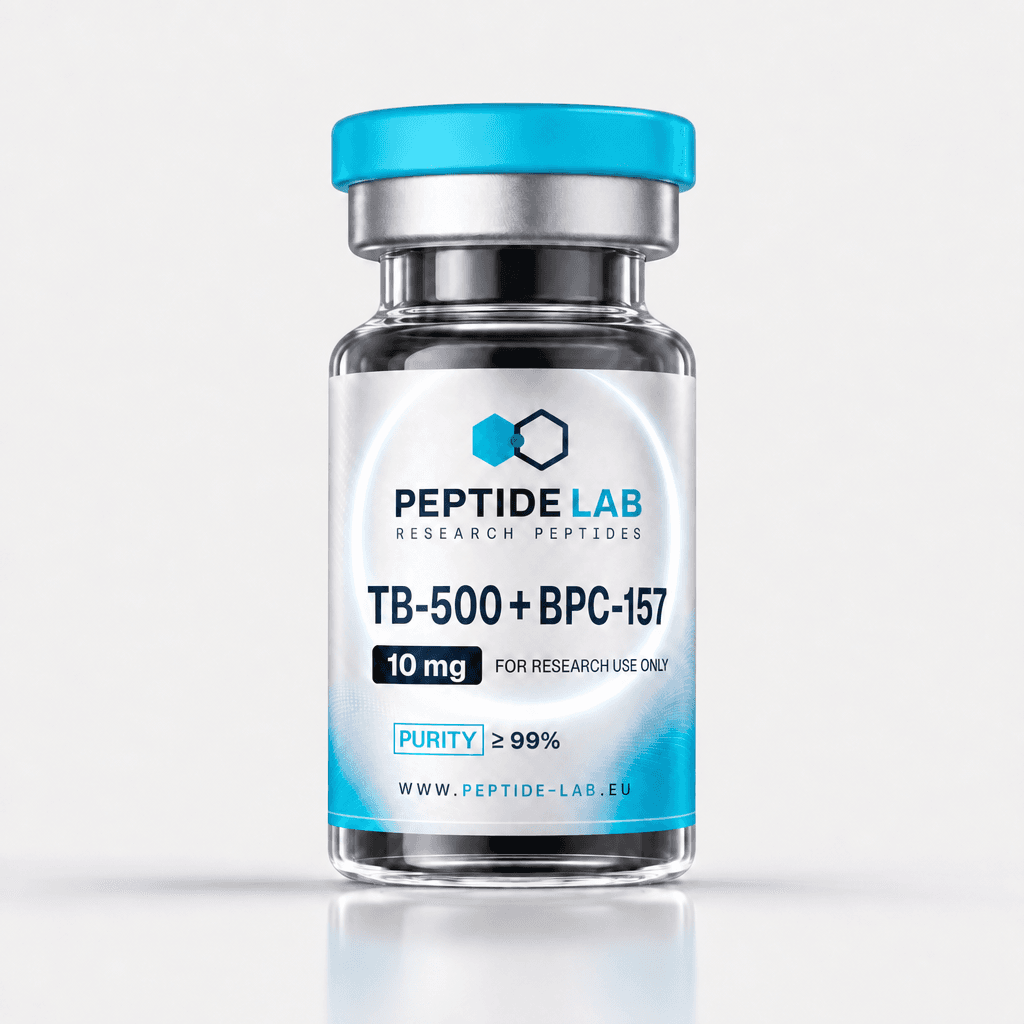
Alongside BPC-157, TB-500 is one of the best-known peptides within recovery research. In this guide we explain, research-only, exactly what TB-500 is, where it comes from and what it is studied for.
TB-500 is a synthetic fragment of Thymosin Beta-4 (Tβ4), an endogenous protein. In preclinical research it is studied for actin regulation, cell migration and tissue processes. At Peptide Lab every batch is lab-verified at ≥99% purity with a Janoshik COA. For research purposes only.
What is TB-500?
TB-500 is a synthetic peptide derived from Thymosin Beta-4 (Tβ4), a naturally occurring protein that plays a role in the organisation of the cytoskeleton. TB-500 corresponds to the portion of Tβ4 that receives the most attention in research. Want the broader context first? Then read what peptides are and the guide to peptides for recovery.
TB-500 versus Thymosin Beta-4
Thymosin Beta-4 is the complete natural protein; TB-500 is a shorter, synthetic fragment of it. The fragment contains the part that is central in research. Because it is smaller and more stable, it lends itself better to synthesis, purification and reproducible study — one of the reasons TB-500 appears so often in research.
What is TB-500 studied for in research?
In preclinical research, TB-500 is studied in relation to actin regulation, cell migration and tissue processes. Actin is a structural protein that gives cells their shape and helps them move. Scientific interest focuses, among other things, on:
- Actin regulation: the role of Tβ4-like peptides in building the cytoskeleton.
- Cell migration: processes in which cells move — relevant in recovery research.
- Tissue and blood vessels: preclinical studies into tissue and blood-vessel formation.
These themes come from preclinical research and are not transferable to human use.
The research themes mentioned originate from preclinical research. Peptide Lab supplies TB-500 exclusively for laboratory and research purposes. Not for human or animal consumption, not a medicine and not medical advice.
TB-500 versus BPC-157
TB-500 and BPC-157 are two different recovery peptides that are studied via different mechanisms. They are often mentioned together because they are complementary in recovery research.
Read more about the counterpart in what BPC-157 is. Because they act differently, they are sometimes combined — see combining BPC-157 and TB-500.
Buying and using TB-500 in research
At Peptide Lab, TB-500 is supplied as a freeze-dried powder, lab-verified at ≥99% purity. It is reconstituted in the lab with bacteriostatic water — the procedure is set out in our guide on reconstituting peptides. See the TB-500 product page, the BPC-157 & TB-500 blend or the Recovery & healing category.
Frequently asked questions about TB-500
What is TB-500 in short?
TB-500 is a synthetic peptide derived from Thymosin Beta-4 (Tβ4), an endogenous protein. It corresponds to the actively studied portion of that protein and is investigated in recovery research for processes around actin regulation and cell migration. For research purposes only.
What is the difference between TB-500 and Thymosin Beta-4?
Thymosin Beta-4 is the complete, natural protein. TB-500 is a shorter, synthetic fragment that contains the section which receives the most attention in research. Because the fragment is smaller and more stable, it is easier to synthesise and study.
What is TB-500 studied for in research?
In preclinical research, TB-500 is studied in relation to actin (a structural protein in cells), cell migration and tissue and repair processes. This concerns scientific research exclusively; no therapeutic claims are attached to it.
Is TB-500 combined with BPC-157?
In some research setups they are studied together because they act via different mechanisms. Peptide Lab offers a ready-made blend for this. It remains research material, not usage advice.
Sources & further reading
Independent third-party references — for further reading, not an endorsement or partnership.
- Dr. William Seeds, MD — Peptide Protocols — Medical references on peptides in cellular medicine (SSRP Institute)