GHK-Cu is one of the most studied copper peptides within skin and tissue science. In this guide we explain, research-only, what GHK-Cu is, why it is called a “copper peptide” and how research material differs from the copper peptides in cosmetics — without any health or skin claims.
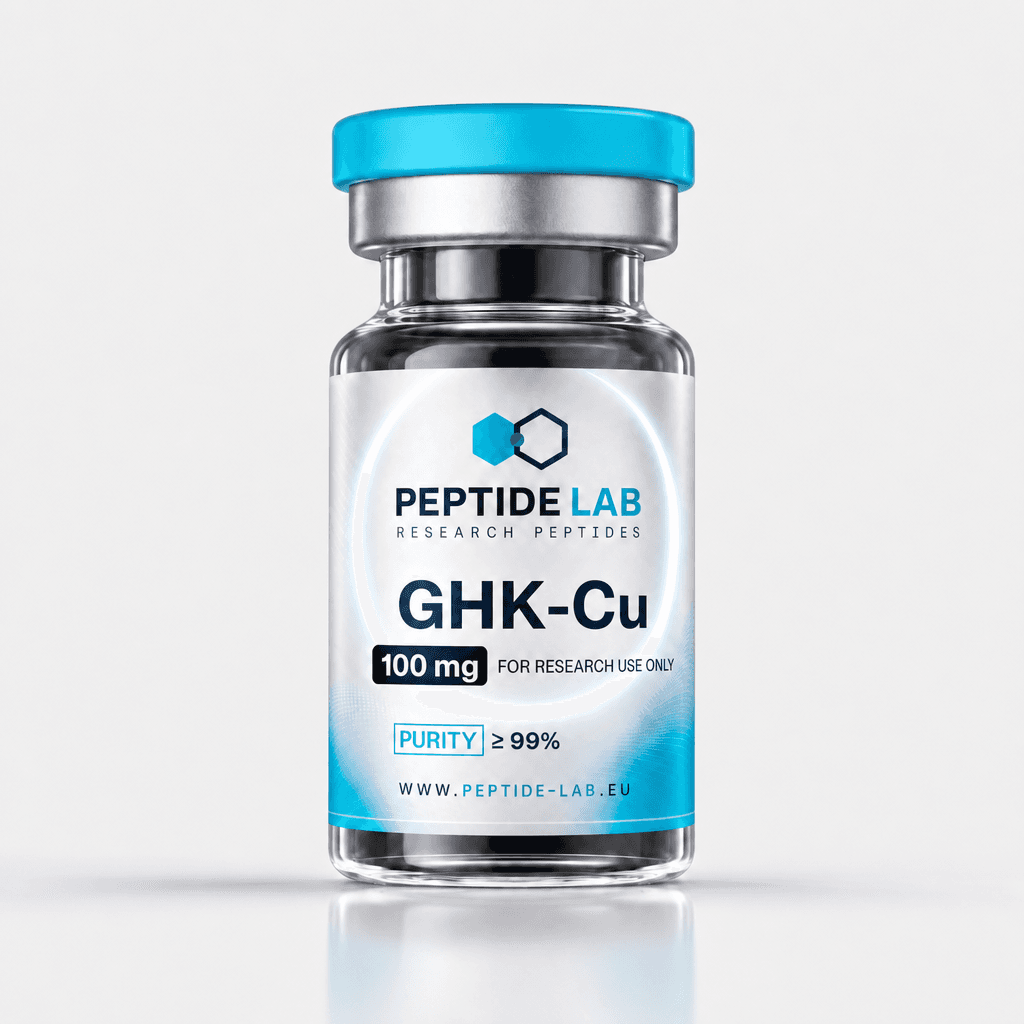
GHK-Cu is the tripeptide glycyl-L-histidyl-L-lysine bound to a copper ion, studied in skin and tissue research. It is not a medicine and not the same as a cosmetic copper peptide; research material is offered for research only, ≥99% pure with a COA per batch.
What is GHK-Cu?
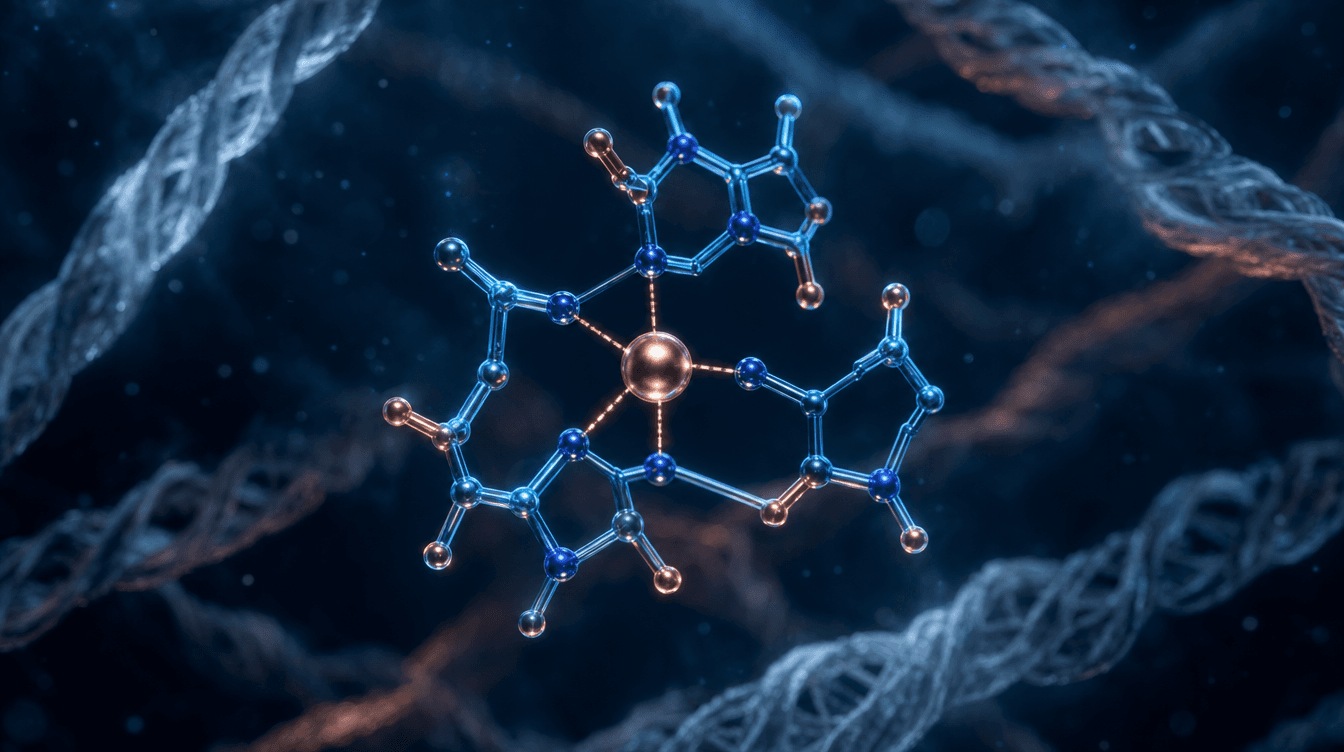
GHK-Cu is a copper peptide: the tripeptide glycyl-L-histidyl-L-lysine (GHK) bound to a copper ion (Cu). The GHK fragment occurs naturally in the body and has a strong affinity for copper. That combination makes GHK-Cu a distinct and much-studied molecule within peptide science. New to peptides? First read what peptides are.
What is GHK-Cu studied for in research?
In research GHK-Cu is studied in relation to skin and tissue processes and to the role of copper in cellular signalling. It is a recurring subject within dermatological and regenerative preclinical research. These descriptions come from a research context and are no proof of effect or usage advice.
Copper peptide for research vs. copper peptide in skincare
Cosmetic copper peptides in serums and research-grade GHK-Cu are fundamentally different products — even though they share the same molecule name. Copper peptides in skincare are formulated for topical, cosmetic use and fall under their own legal framework. GHK-Cu as a research peptide is a lyophilised powder that, once reconstituted, is used for laboratory and research purposes only. Confusing the two is the most common mistake online.
Looking for the cosmetic route instead? See skincare & serums. For the research variant there is GHK-Cu within the category anti-ageing & longevity, alongside the mitochondria-targeted SS-31.
How is GHK-Cu reconstituted?
GHK-Cu is supplied as a freeze-dried powder and reconstituted in the lab with bacteriostatic water. Because GHK-Cu has a relatively high vial strength, the right water ratio matters to reach a workable concentration. Use the reconstitution calculator or read how to reconstitute peptides.
Purity and documentation
For a copper peptide, verified purity is extra important because the copper complexation must be exactly right. Every batch of GHK-Cu at Peptide Lab is tested by Janoshik Analytical at ≥99% purity by HPLC and mass spectrometry, with a public certificate per lot number. Read more on the science page, or read the full buying guide buy GHK-Cu.
This information is general and intended solely for a research context. Peptide Lab supplies GHK-Cu for laboratory and research purposes only. Not for human or animal consumption, not a medicine and not medical advice.
Frequently asked questions about GHK-Cu
What is GHK-Cu?
GHK-Cu is a copper peptide: the tripeptide glycyl-L-histidyl-L-lysine bound to a copper ion. It is studied within skin and tissue research and is not an approved medicine.
Why is GHK-Cu called a 'copper peptide'?
Because the tripeptide GHK naturally binds a copper ion (Cu). That copper complexation is exactly what makes GHK-Cu a distinct object of study within peptide research.
What is the difference between GHK-Cu for research and copper peptides in skincare?
Cosmetic copper peptides are found in creams and serums for topical use and fall under cosmetics rules. GHK-Cu as a research peptide is a lyophilised powder offered for laboratory and research purposes only. They are different products.
Is GHK-Cu pure at Peptide Lab?
Yes, GHK-Cu is lab-verified at ≥99% purity by HPLC and mass spectrometry, with a public Janoshik certificate per batch. For research purposes only.