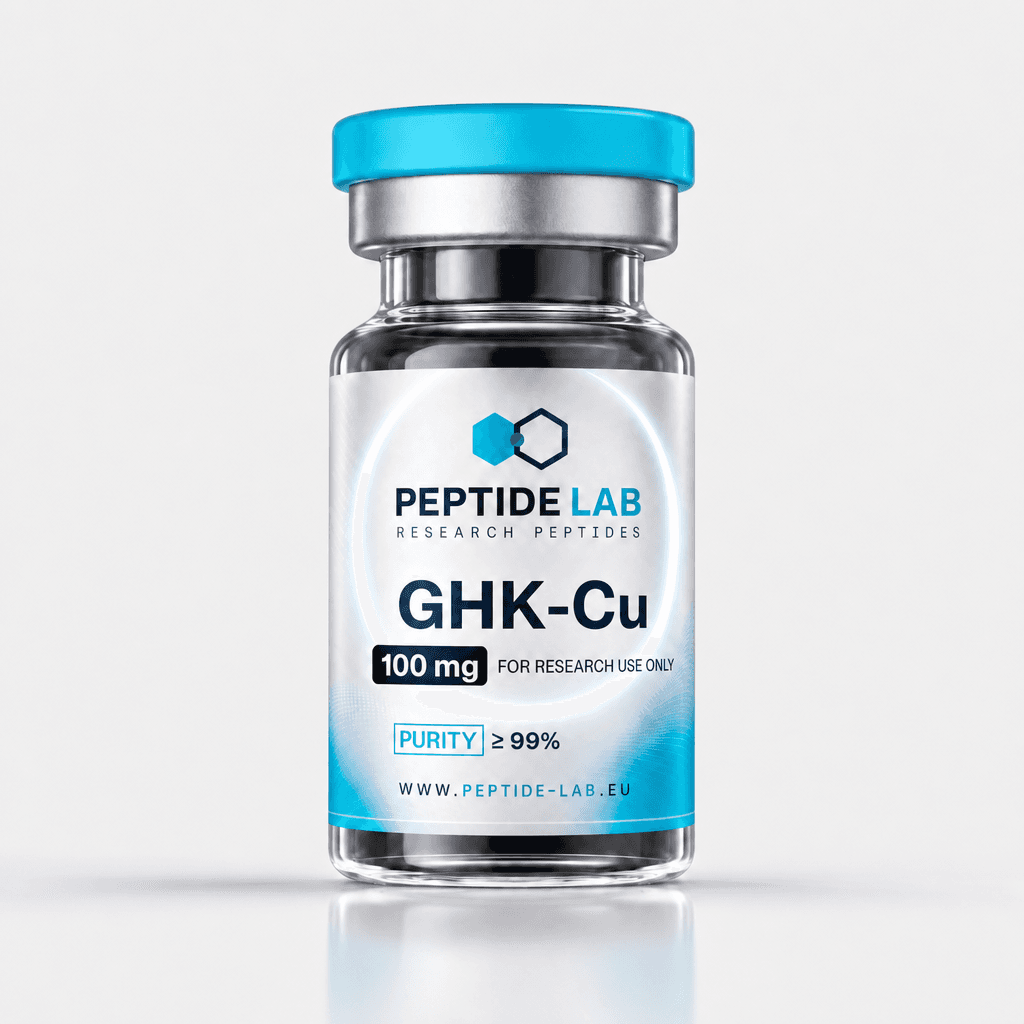
Buying GHK-Cu for research mainly means being able to check purity and documentation before ordering a vial. In this guide we explain, research-only, what to look for, how to check a COA, and why traceability matters extra for a copper peptide.
Buying GHK-Cu for research comes down to three things: documented purity (≥99%), a public and verifiable COA from an independent lab, and a traceable lot number. For research use only, not a medicine and not a cosmetic product.
What to look for in GHK-Cu for research
The three core points are purity, documentation and traceability — without all three, reproducible research is not possible. New to GHK-Cu? First read the background in what is GHK-Cu.
Purity: ≥99% and correct copper complexation
A purity of ≥99%, confirmed by HPLC and mass spectrometry, is the standard benchmark for research-grade GHK-Cu. For a copper peptide, copper complexation also matters: the copper ion has to be correctly bound to the tripeptide, otherwise the molecular identity is off. Mass spectrometry confirms exactly that.
Reading and checking a COA
A Certificate of Analysis (COA) confirms the purity of one specific batch, linked to the lot number on the label. The full four-step explanation is in how to read a COA. Want to know how GHK-Cu compares to cosmetic copper peptides? Read copper peptides: cosmetic vs research.
Reconstitution after purchase
GHK-Cu is supplied as a lyophilised powder and needs to be reconstituted before lab use. Because GHK-Cu has a relatively high vial strength, getting the water ratio right matters. Calculate it with the reconstitution calculator, or read the step-by-step guide in how to reconstitute peptides.
This information is general and intended solely for a research context. Peptide Lab supplies GHK-Cu for laboratory and research purposes only. Not for human or animal consumption, not a medicine, not a cosmetic product and not medical advice.
Frequently asked questions about buying GHK-Cu
What should you look out for when buying GHK-Cu for research?
Look for documented purity of ≥99%, a public and batch-specific COA from an independent lab (HPLC + mass spectrometry), and traceability via a lot number. Avoid suppliers without a verifiable certificate.
What is good purity for GHK-Cu?
≥99% purity, confirmed by HPLC and mass spectrometry, is the standard research benchmark. For a copper peptide, correct copper complexation also matters — otherwise the molecular identity is off. Mass spectrometry confirms exactly that.
Is research-grade GHK-Cu the same as the GHK-Cu in a serum?
No. Research-grade GHK-Cu is a lyophilised powder, intended solely for laboratory use. Cosmetic GHK-Cu serums are a different product category, formulated for topical use on the skin.
Is GHK-Cu from Peptide Lab pure?
Yes, GHK-Cu is lab-verified at ≥99% purity by HPLC and mass spectrometry from Janoshik Analytical, with a public certificate per batch. For research purposes only.