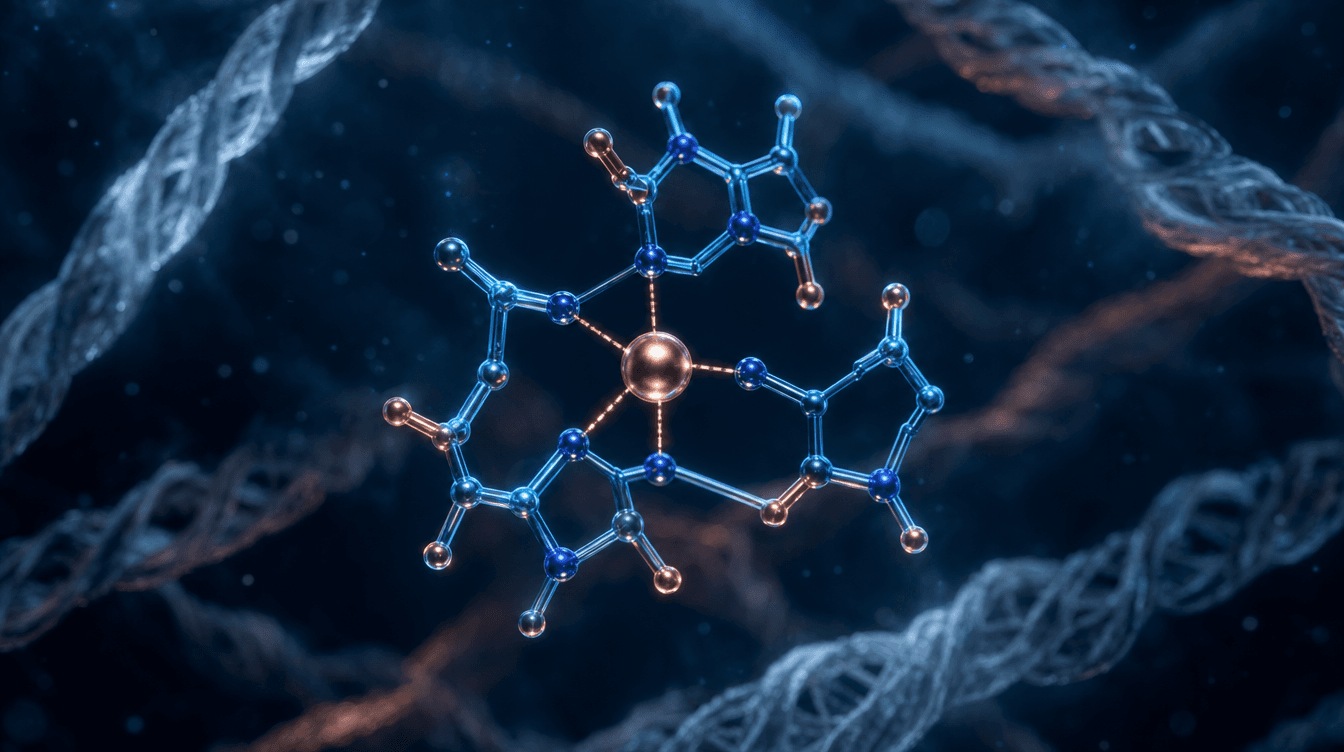
Copper peptides show up in two very different places: on skincare shelves and in the laboratory. In this guide we explain, research-only, what copper peptides are, which ones are known and why those two worlds need to be kept apart. Without any health or cosmetic claims.
Copper peptides are peptides that bind a copper ion; GHK-Cu is the most studied example. They exist both as a cosmetic skincare ingredient and in research-grade form. The research variant is not a medicine or cosmetic and is offered for research only, ≥99% pure with a COA per batch.
What are copper peptides?
Copper peptides are peptides with a copper ion (Cu) bound to them, which gives the molecule its characteristic properties and often a blue colour. The copper ion is not incidental but a central part of the molecule. New to peptides? First read what peptides are.
GHK-Cu: the best-known copper peptide
The best-known and most studied copper peptide is GHK-Cu, where GHK stands for the amino-acid sequence glycyl-L-histidyl-L-lysine. It is studied within skin and ageing research. Want the full background? Read the separate guide what is GHK-Cu, or see the product GHK-Cu (copper peptide).
Cosmetic versus research copper peptides
Cosmetic copper peptides in creams and serums and research-grade copper peptides are fundamentally different products — even though the search term shares the same name. Cosmetic variants, such as a copper peptide serum, are formulated for topical use. Research copper peptides are lyophilised powders, for the lab only. See both worlds in the skincare & serums and skin & pigmentation categories, or compare them directly in GHK-Cu vs copper peptide serum.
Purity and documentation
Reproducible research with copper peptides requires material with verified purity and full traceability. Every batch of research-grade copper peptide at Peptide Lab is tested by Janoshik Analytical at ≥99% purity by HPLC and mass spectrometry, with a public certificate per lot number. Read more about our approach on the science page.
This information is general and intended solely for a research context. Peptide Lab supplies research-grade copper peptides for laboratory and research purposes only. Not for human or animal consumption, not a medicine and not medical advice.
Frequently asked questions about copper peptides
What are copper peptides?
Copper peptides are peptides that bind a copper ion. The best-known example is GHK-Cu (copper peptide). They occur both in cosmetic skincare and in research-grade form for laboratory and research purposes.
What is the best-known copper peptide?
GHK-Cu is by far the most studied copper peptide. GHK stands for the amino-acid sequence glycyl-L-histidyl-L-lysine, and 'Cu' for the bound copper ion. It is studied within skin and ageing research.
What is the difference between cosmetic and research copper peptides?
Cosmetic copper peptides are in creams and serums for topical use on the skin. Research copper peptides are lyophilised powders supplied for laboratory and research purposes only. They are different product categories.
Are copper peptides pure at Peptide Lab?
Yes, the research-grade copper peptides are lab-verified at ≥99% purity by HPLC and mass spectrometry, with a public Janoshik certificate per batch. For research purposes only.