This batch has been independently tested by Janoshik Analytical for identity and purity (HPLC/MS). The full certificate of analysis is available for public inspection.
- Batch
- JAN-157314
- Purity
- 99.7%
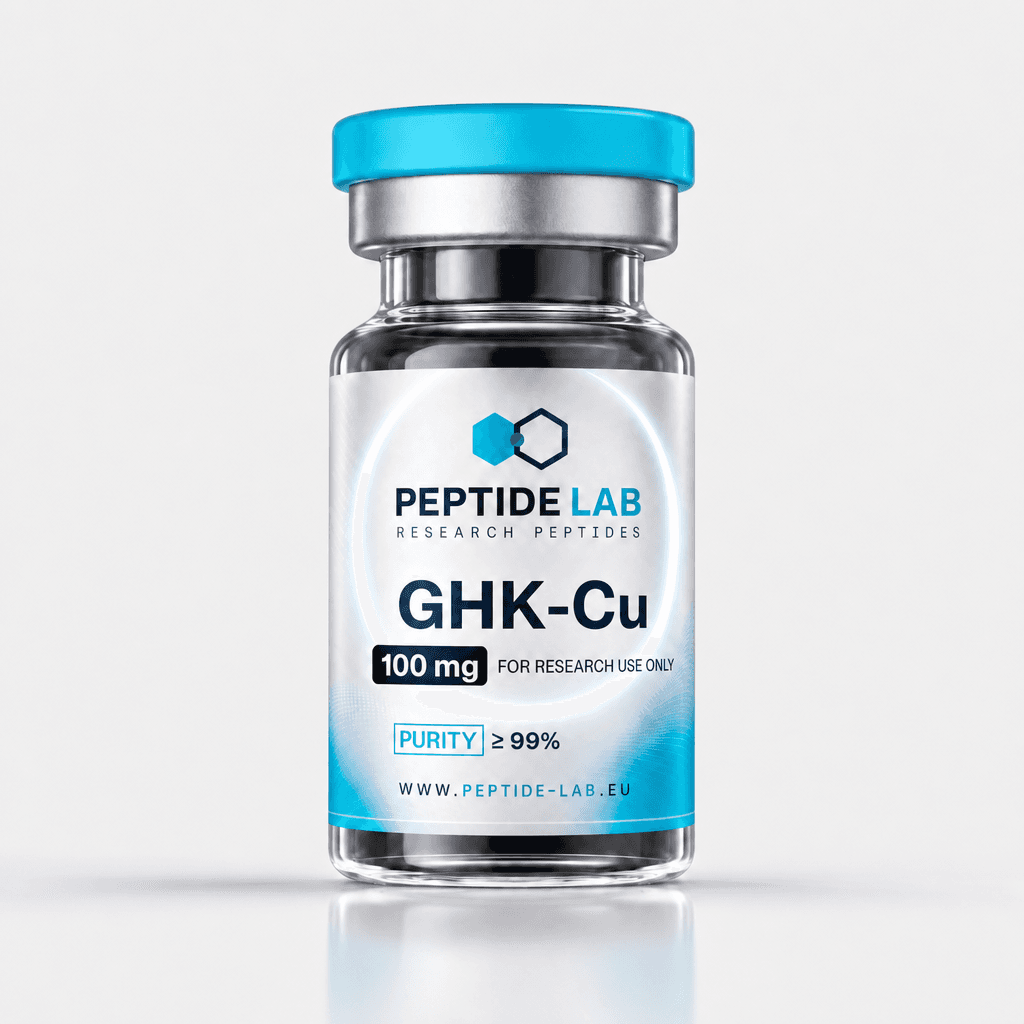
GHK-Cu (Copper Peptide)
Buy GHK-Cu (Copper Peptide) for research — ≥99% pure, with a Janoshik COA per batch.
GHK-Cu is the copper tripeptide complex studied for collagen synthesis, skin remodelling and anti-ageing gene expression. 100 mg, 99.1% pure, with a laboratory certificate.
Available to order soon
The shop will be opening soon. Leave your email address and you’ll be the first to know when orders can be placed.
Specifications
- Category
- Anti-ageing & Longevity
- Dosage
- 100 mg per vial
- Packaging
- 1 vial (100 mg)
- Purity
- 99.1%
- Molecular weight
- 403.93 g/mol
- Lab-cert ID
- JAN-2024-GHKCU-0556
Research focus
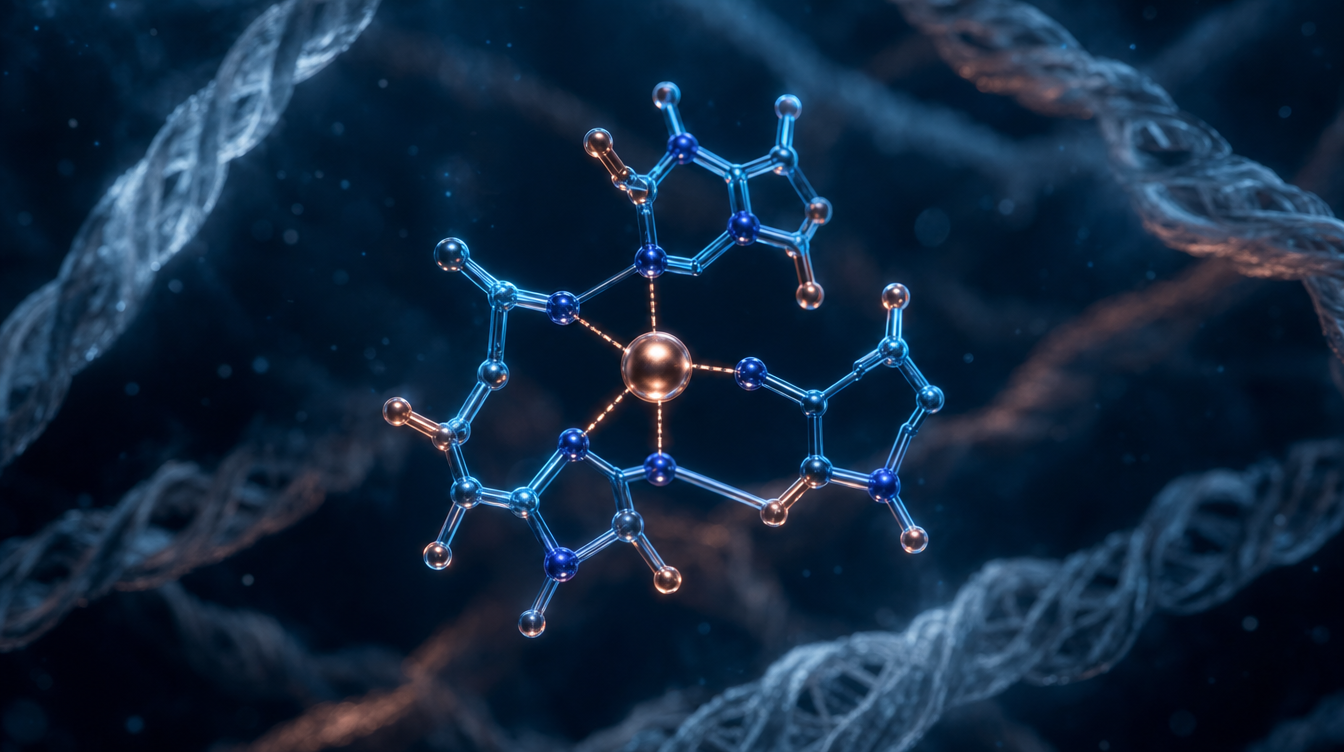
You can buy GHK-Cu from Peptide Lab as a lab-verified copper peptide with 99.1% purity and a Janoshik lab certificate for each batch. GHK-Cu (Copper Peptide) is a small tripeptide (glycyl-L-histidyl-L-lysine) that naturally binds to copper. It occurs naturally in the human body and is one of the most extensively studied peptides in skin, collagen and anti-ageing research. It is supplied exclusively for laboratory and research purposes.
Who is GHK-Cu intended for?
GHK-Cu is intended for researchers and laboratories studying processes relating to skin structure, collagen and tissue maintenance. It is supplied as a lyophilised powder, 100 mg per vial, recognisable by the distinctive blue colour of the copper complex.
Why Peptide Lab?
- Verified purity of 99.1% by HPLC and mass spectrometry.
- Public Certificate of Analysis for each batch.
- Fast, discreet EU delivery.
GHK-Cu is not a medicinal product and is not intended for human or animal consumption.
Why GHK-Cu stands out
GHK-Cu combines a small, well-defined tripeptide with a copper ion, making the complex unique in skin and connective tissue research. Its characteristic blue colour after reconstitution is instantly recognisable. Each batch is tested for 99.1% purity, ensuring that results remain traceable.
Specifications at a glance
- Form: freeze-dried powder
- Packaging: 100 mg per vial
- Purity: 99.1%
- Laboratory certificate: JAN-2024-GHKCU-0556
- For laboratory and research purposes only
Price, contents and delivery
The price of GHK-Cu (Copper Peptide) is €128 per vial — that is 100 mg per vial, which works out at €1.28 per mg. This price includes the batch-specific Janoshik certificate, linked to the lot number on the label, so you can trace exactly what you have.
- Price per vial
- €128
- Price per mg
- €1.28
- Contents
- 100 mg per vial
- Availability
- In stock
Delivery within the EU
Postage costs €9.95 and is free for orders of €150 or more. A parcel is usually delivered within 1–3 working days, discreetly and with a tracking code. The countries and rates are listed in the delivery policy.
Order online
Online ordering isn’t available yet — the shop will open soon. Enter your email address above, and you’ll be the first to know when GHK-Cu (Copper Peptide) is available to order. In the meantime, take a look at the full range in the shop.
Frequently Asked Questions
Why is GHK-Cu available in larger quantities?
In research protocols, GHK-Cu is often administered at higher doses; the 100 mg vial provides a supply sufficient for longer study periods.
Is GHK-Cu the same as the copper peptide serum?
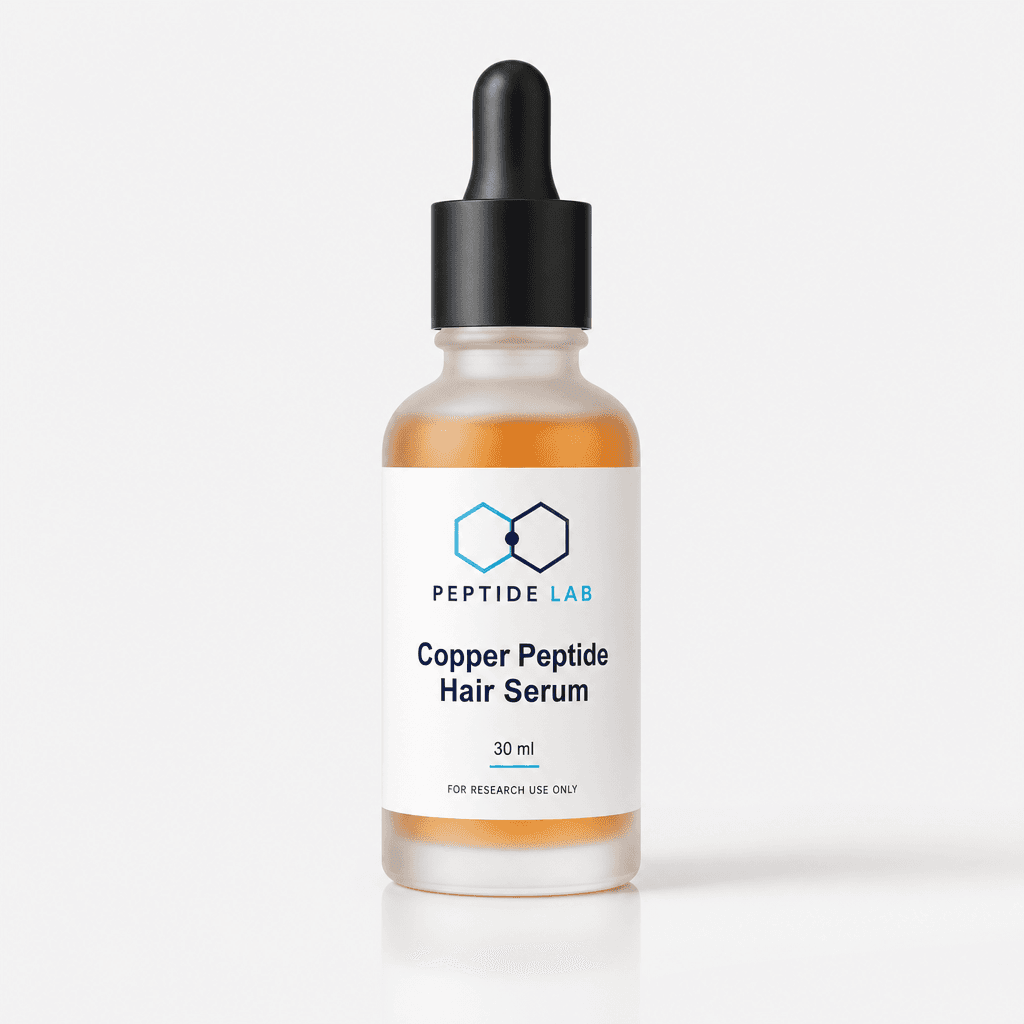
GHK-Cu is the pure research peptide; our serums are ready-to-use cosmetic formulations containing copper peptides.
What is purity?
99.1% via Janoshik, with a downloadable certificate.
How much does GHK-Cu (Copper Peptide) cost?
The current price of GHK-Cu (Copper Peptide) is shown at the top of this page, including the price per mg so you can compare fairly. Bundles increase the discount, and shipping is free above €150.
Is GHK-Cu (Copper Peptide) legal to buy in the Netherlands?
GHK-Cu (Copper Peptide) is supplied strictly for laboratory and research purposes — not as a medicine and not for human or animal consumption. Within that research-only framework it is available in the Netherlands. This is general information, not legal advice.
Reviews
- 4,018 May 2026
Good but delayed
the ghk-cu (copper peptide) is high quality but courier delayed the shipping by a day overall good experience with peptide-labeu
Emily Perez· BristolVerified purchase - 5,013 May 2026
Highly recommend
Highly recommend this peptide lab. The GHK-Cu (Copper Peptide) is excellent quality and customer service is very responsive.
George Thomas· BristolVerified purchaseResponse from Peptide Lab
Thank you for the review! We're glad you're satisfied with your order.
- 5,021 June 2026
Ongeëvenaarde service
Heel erg blij met GHK-Cu (Copper Peptide) De service van peptide-lab is ongeëvenaard Ze reageren snel op vragen en verzenden direct
Maaike Visser· UtrechtVerified purchase - 4,04 June 2026
Goed product, kleine vertraging
Goed GHK-Cu (Copper Peptide), maar verzending duurde 2 dagen langer door de bezorger. Verder is peptide-lab top.
Joris Brouwer· AlmereVerified purchaseResponse from Peptide Lab
Bedankt voor je review! Fijn dat je tevreden bent met peptide-lab.eu.
- 5,028 May 2026
Beste in Europa
Beste plek om GHK-Cu (Copper Peptide) te kopen in Europa. Prijzen zijn eerlijk en de purity is top. Ga hier zeker vaker bestellen.
Bas de Jong· EindhovenVerified purchase - 5,026 April 2026
Ongeëvenaarde service
Heel erg blij met GHK-Cu (Copper Peptide). De service van peptide-lab is ongeëvenaard. Ze reageren snel op vragen en verzenden direct.
Jan Smits· GentVerified purchase - 5,09 April 2026
Ongeëvenaarde service
heel erg blij met ghk-cu (copper peptide). des ervice van peptide-lab is ongeëvenaard. ze reageren snel op vragen en verzenden direct.
Esther van der Linden· AmsterdamVerified purchaseResponse from Peptide Lab
Bedankt voor je review! Fijn dat je tevreden bent met peptide-lab.eu.
- 5,04 April 2026
Sehr gute Reinheit
Sehr gute Reinheit bei dem GHK-Cu (Copper Peptide). Definitiv einer der besten Peptide Shops in Europa.
Martin Hoffmann· CologneVerified purchase
Often bought together
Related products
Further reading on this research
FOR RESEARCH USE ONLY. For laboratory and research purposes only. Not for human or animal consumption; not a medicine and does not constitute medical advice.