“Peptides for skin” is a broad term that covers two very different worlds: cosmetic serums and research-grade laboratory material. In this guide we place the best-known skin peptides side by side and explain which category is intended for what.
Peptides for skin come in two forms: cosmetic serums (for topical use) and research-grade powders (for the lab only). Well-known examples are copper peptides (GHK-Cu) and PDRN. Cosmetic serums are ready to use; research peptides are for research use only.
Two worlds: cosmetic versus research-grade
When people search for “peptides for skin”, they usually mean cosmetic serums — ready-made formulations for topical use on the skin. Those same peptide names also exist as research-grade powder, intended solely for laboratory use. The full distinction between these two worlds is explained in copper peptides: cosmetic vs research.
Copper peptides (GHK-Cu) in skincare
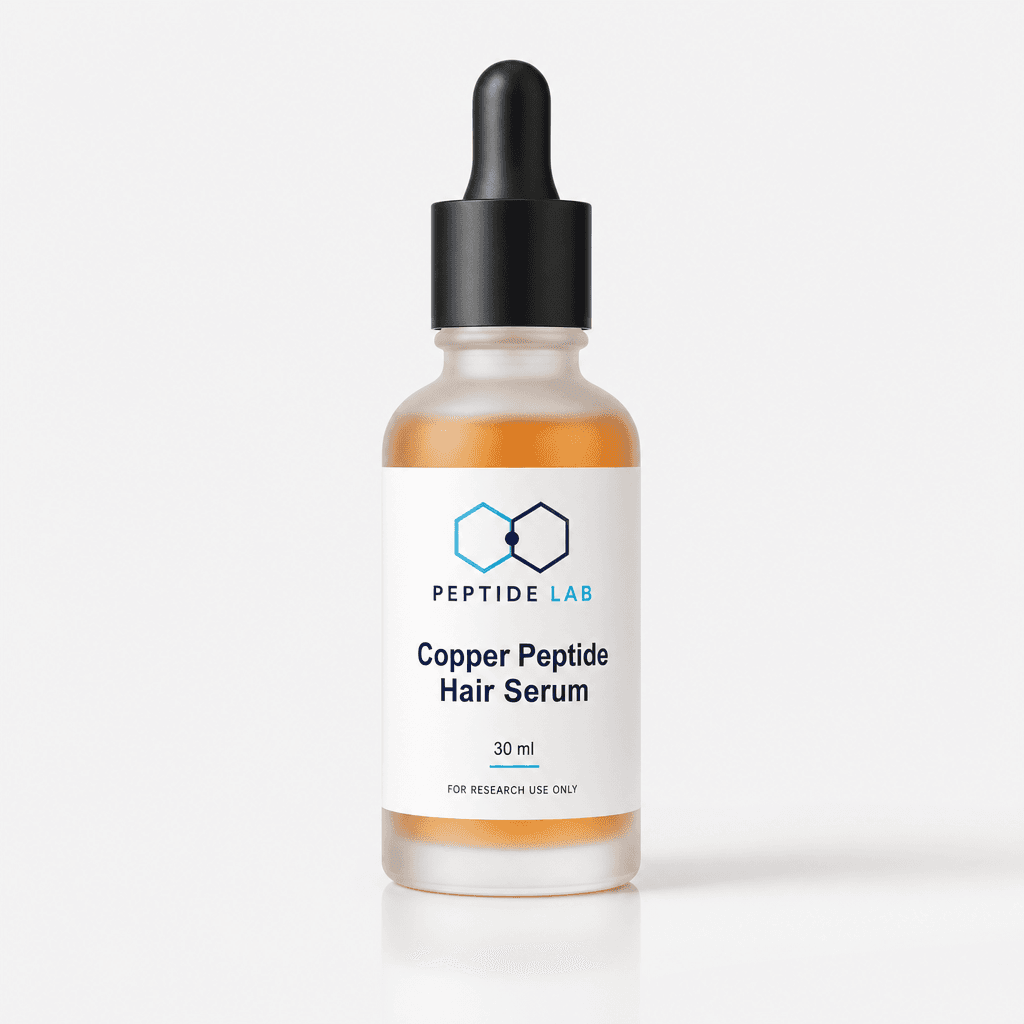
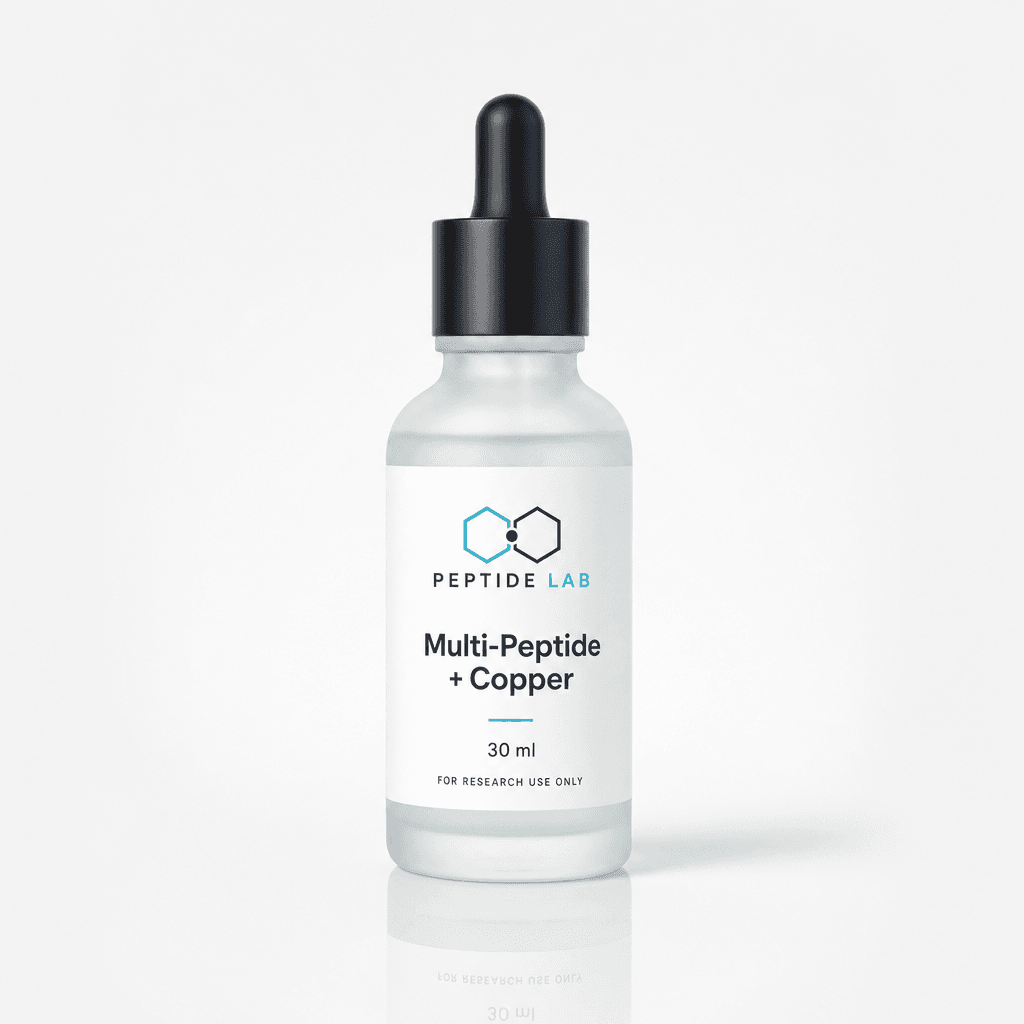
GHK-Cu is the best-known copper peptide and is used in cosmetic formulations in serums aimed at the skin. See, for example, the Copper Peptide Hair Serum or the Multi-Peptide + Copper Peptides Serum. The research background of the molecule is covered in what is GHK-Cu.
PDRN and other skin peptides
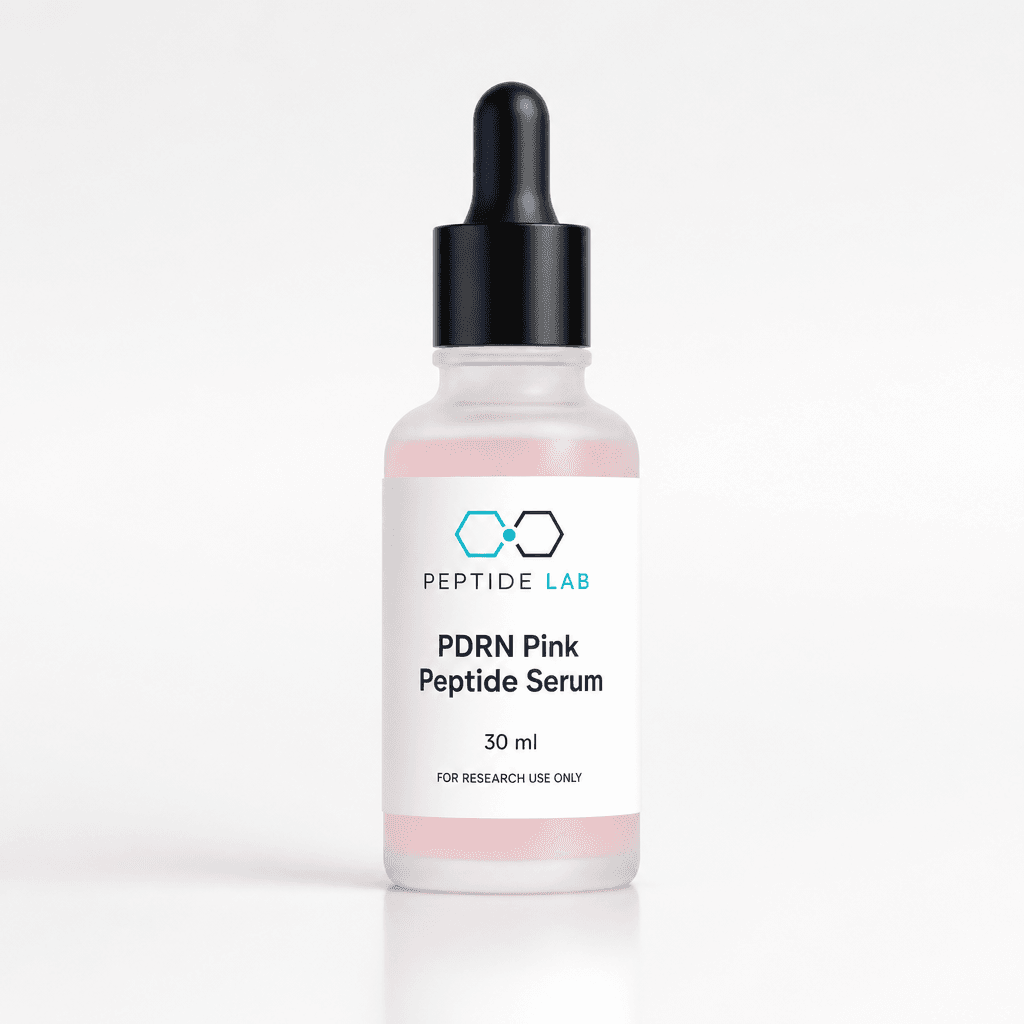
Besides copper peptides, other peptide complexes also appear in skincare, such as PDRN (polydeoxyribonucleotide) in the PDRN Pink Peptide Serum. Each complex has its own formulation and cosmetic purpose. Browse the full range in the skincare & serums category.
Research-grade skin peptides in the lab
Anyone studying GHK-Cu from a research perspective — separate from a cosmetic formulation — uses research-grade powder rather than a serum. That material is supplied as a lyophilised powder and reconstituted in the lab; see how to reconstitute peptides. For laboratory use only, not cosmetically formulated.
This information is general and educational. Peptide Lab's cosmetic serums are intended for topical use on the skin; the research-grade copper peptides are for laboratory and research purposes only and not for human or animal consumption. Not a medicine and not medical advice.
Frequently asked questions about peptides for skin
Which peptides are used in skincare?
Well-known examples are copper peptides such as GHK-Cu, PDRN (polydeoxyribonucleotide) and various peptide complexes in serums. Each has its own cosmetic formulation and skin application.
What is the difference between cosmetic skin peptides and research peptides?
Cosmetic skin peptides sit in ready-to-use serums for topical use. Research peptides are lyophilised powders supplied solely for laboratory and research purposes. These are two separate product categories, even when the underlying peptide name is the same.
Is GHK-Cu the same in a serum and as a research peptide?
It is the same tripeptide, but the formulation and intended use differ entirely. A serum is cosmetically formulated for topical use; the research-grade powder is intended solely for the lab. Read the full distinction in the guide on copper peptides.
Are Peptide Lab's serums tested?
Yes, Peptide Lab's skincare serums are carefully formulated, and the research-grade peptides are lab-verified with a public Janoshik certificate per batch.