Retinol and peptides often appear together in the same jar, but they are fundamentally different ingredients. In this guide we explain what retinol is, why it's processed alongside peptides in skincare serums, and how it differs from research-grade material.
Retinol is a vitamin A derivative, not a peptide. It is often combined with peptides and collagen in cosmetic serums because they target different, complementary aspects of the skin. Cosmetic product, not research-grade material.
Is retinol a peptide?
Retinol is a vitamin A derivative — not a chain of amino acids — and is therefore chemically unrelated to peptides. Yet it often appears in the same formulations as skin peptides. Read more about the distinction between different types of skin ingredients in peptides for skin.
Why combine retinol and peptides?
In cosmetic research, retinol and skin peptides target different aspects: retinol focuses on cell renewal and texture, while peptides such as copper peptides are more often linked to connective tissue and structure. Combining both in one serum aims for a broader effect than a single ingredient alone. Read more about copper peptides in copper peptides: cosmetic vs research.
Cosmetic serum versus research-grade material
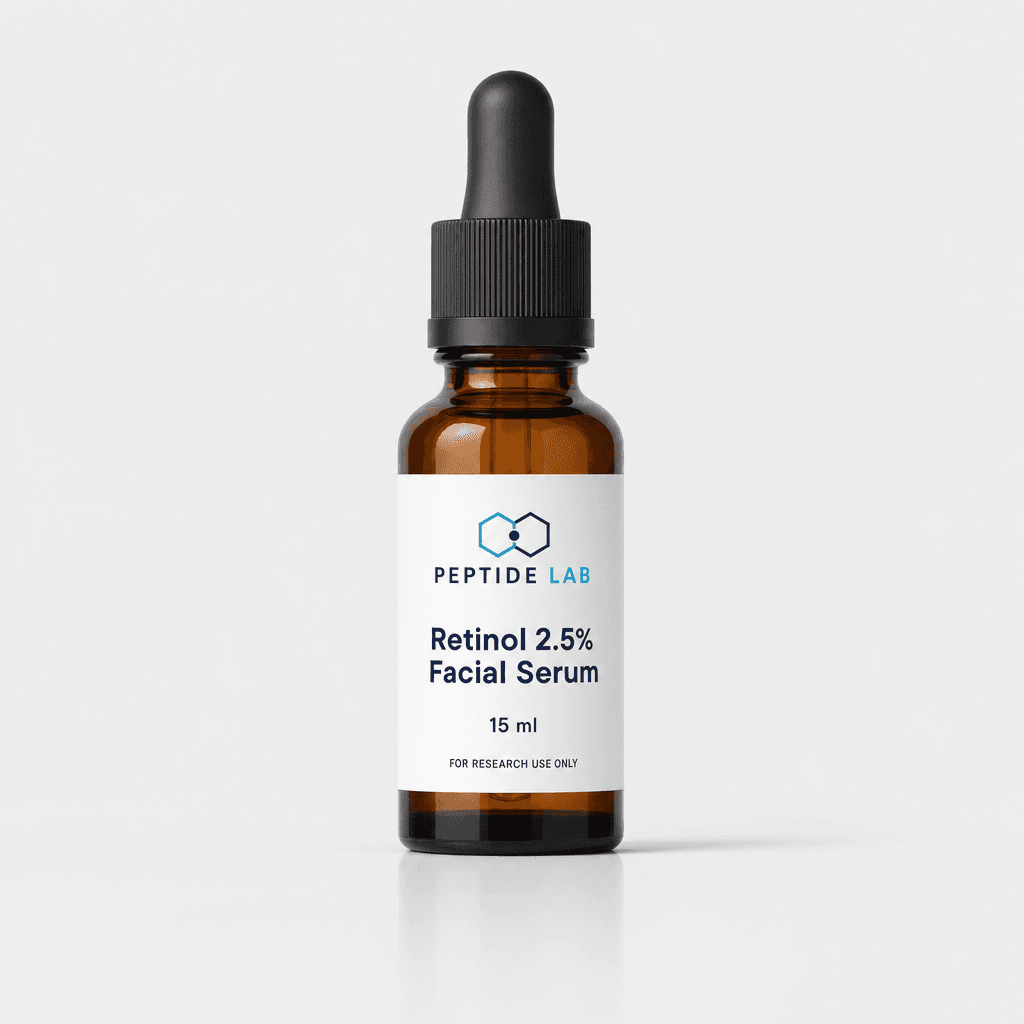
This serum is a ready-to-use cosmetic formulation for topical use, with retinol, vitamin C and E, hyaluronic acid and collagen. That's a different product from research-grade copper peptides such as GHK-Cu, which are supplied solely as lyophilised powder for laboratory use. Browse the full skincare & serums category.
And collagen in the serum?
Collagen in cosmetic serums is typically broken down into smaller fragments, including peptides, to be better absorbed in the formulation. Read the full explanation in what are collagen peptides.
This information is general and educational. Peptide Lab's Retinol 2.5% Facial Serum is a cosmetic product for topical use on the skin, not a medicine and not medical advice.
Frequently asked questions about retinol and skin peptides
Is retinol a peptide?
No. Retinol is a vitamin A derivative, not a chain of amino acids. It is often processed together with peptides and collagen in serums because of their complementary action on the skin.
Why are retinol and peptides often combined in serums?
Retinol and skin peptides target different aspects of the skin: retinol is studied in relation to cell renewal and texture, while peptides such as copper peptides are more often associated with connective tissue and structure. Combinations in cosmetic formulations aim for that broader effect.
What is the difference between this serum and research-grade copper peptides?
The Retinol 2.5% Facial Serum is a ready-to-use cosmetic formulation for topical use. Research-grade copper peptides such as GHK-Cu are lyophilised powders, intended solely for laboratory use. These are two separate product categories.
Is there collagen in the serum as a peptide?
Cosmetic collagen ingredients in serums are typically broken down into smaller fragments (including peptides) to be better absorbed in formulations. See the broader explanation in what are collagen peptides.