“Collagen peptides” is a term that often appears alongside research peptides, but it is a completely different category. In this short guide we explain exactly what collagen peptides are and why they should not be confused with research-grade peptides.
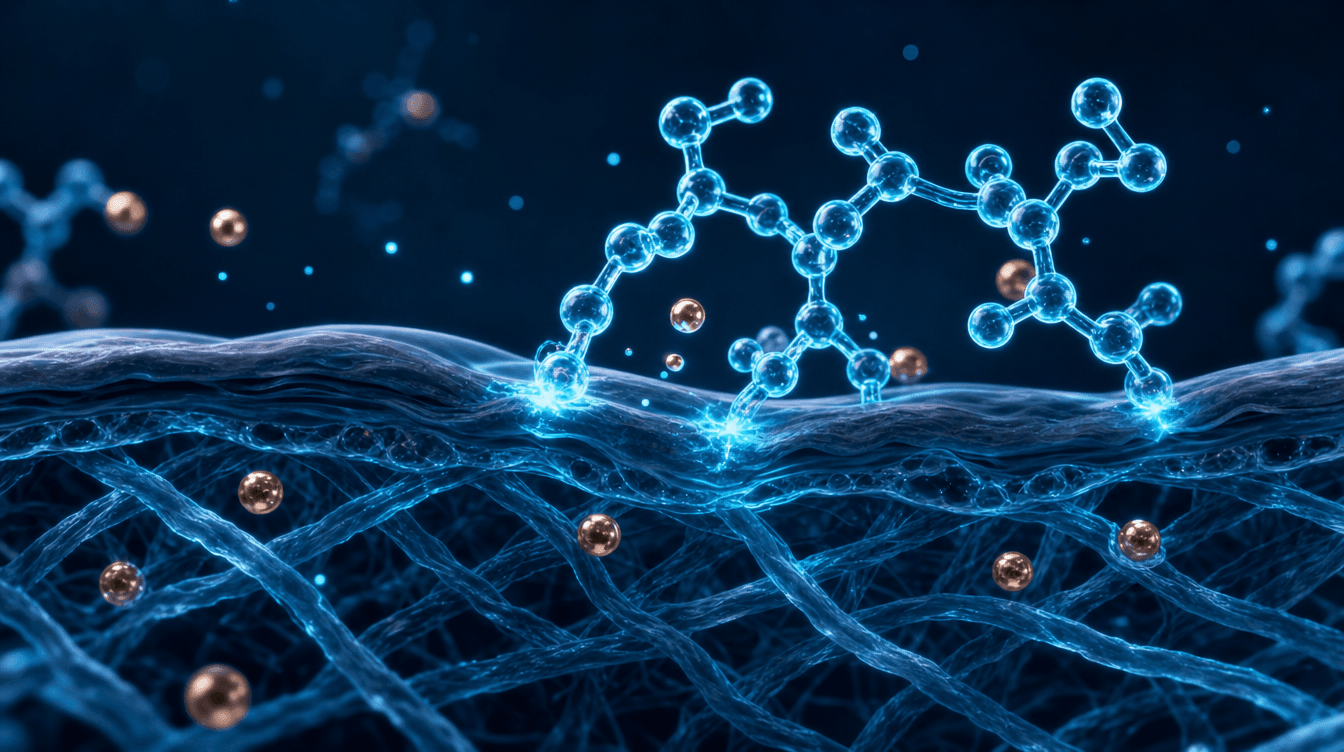
Collagen peptides are shorter amino acid chains, obtained by hydrolysing collagen — the structural protein in skin and connective tissue. They are nutritional and cosmetic ingredients, not research peptides, and a different category from Peptide Lab's research-grade material.
What are collagen peptides?
Collagen peptides form when collagen is enzymatically hydrolysed into shorter amino acid chains. Collagen itself is the most abundant structural protein in the body, with a long, folded chain structure. New to the term peptide in general? First read what peptides are.
Collagen versus collagen peptides
The difference lies in chain length: collagen is the intact, long protein, while collagen peptides are the shorter fragments that remain after hydrolysis. That shorter chain length is exactly why the term “peptide” applies here — similar to how a peptide bond forms the basis of every chain. Read more about that basis in what is a peptide bond.
Why collagen peptides are not the same as research peptides
Collagen peptides are nutritional and cosmetic ingredients; research-grade peptides such as those at Peptide Lab are specific, purified molecules for laboratory use. That distinction between “peptide” as a broad chemical term and “peptide” as research material is a recurring theme. The same applies to copper peptides: read copper peptides: cosmetic vs research for that comparison, or browse the broader guide peptides for skin.
This information is general and educational. Peptide Lab supplies research-grade research peptides for laboratory and research purposes only and does not sell nutritional collagen or collagen peptide supplements.
Frequently asked questions about collagen peptides
What are collagen peptides?
Collagen peptides are shorter amino acid chains that result when collagen — the most abundant structural protein in skin, connective tissue and bone — is enzymatically hydrolysed (broken down) into smaller fragments.
Are collagen peptides the same as Peptide Lab's research peptides?
No. Collagen peptides (hydrolysed collagen) are nutritional and cosmetic ingredients, while the research-grade peptides at Peptide Lab are specific, purified molecules for laboratory use. These are two entirely different product categories, even though both fall under the term 'peptide'.
What is the difference between collagen and collagen peptides?
Collagen is the original, long protein. Collagen peptides are the result of hydrolysing that protein into shorter chains, which affects solubility and absorption compared to the intact protein.
Does Peptide Lab study collagen peptides?
Peptide Lab focuses on research-grade research peptides such as GHK-Cu, not on nutritional collagen. The connection between copper peptides and skin research is explained in the guide on copper peptides.