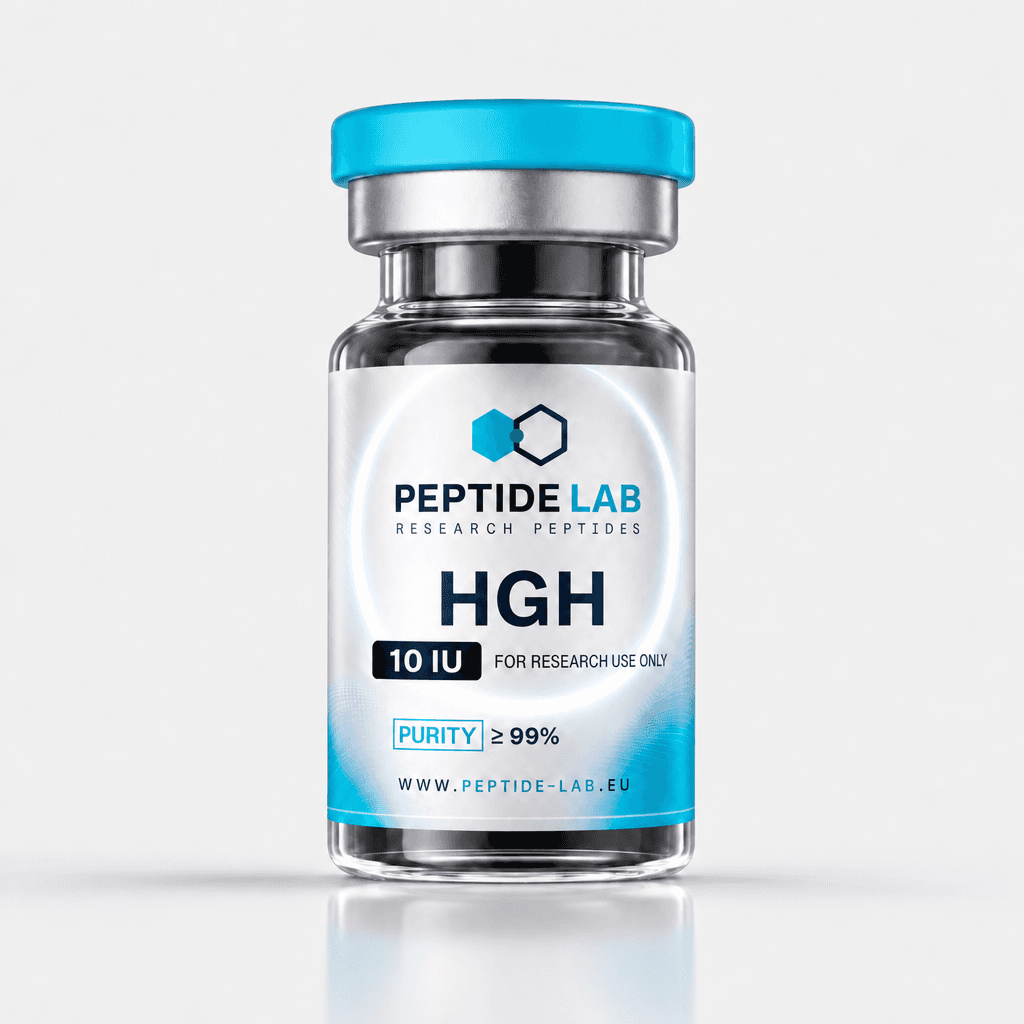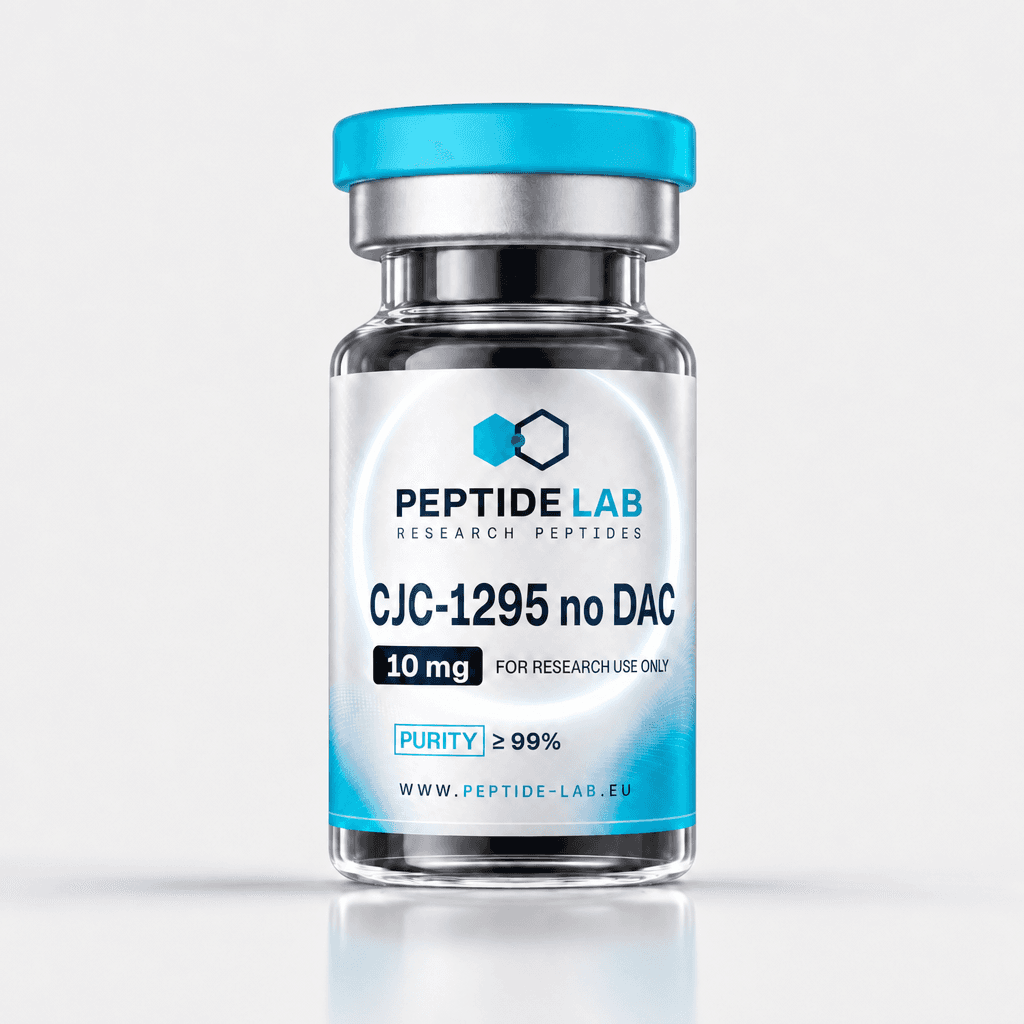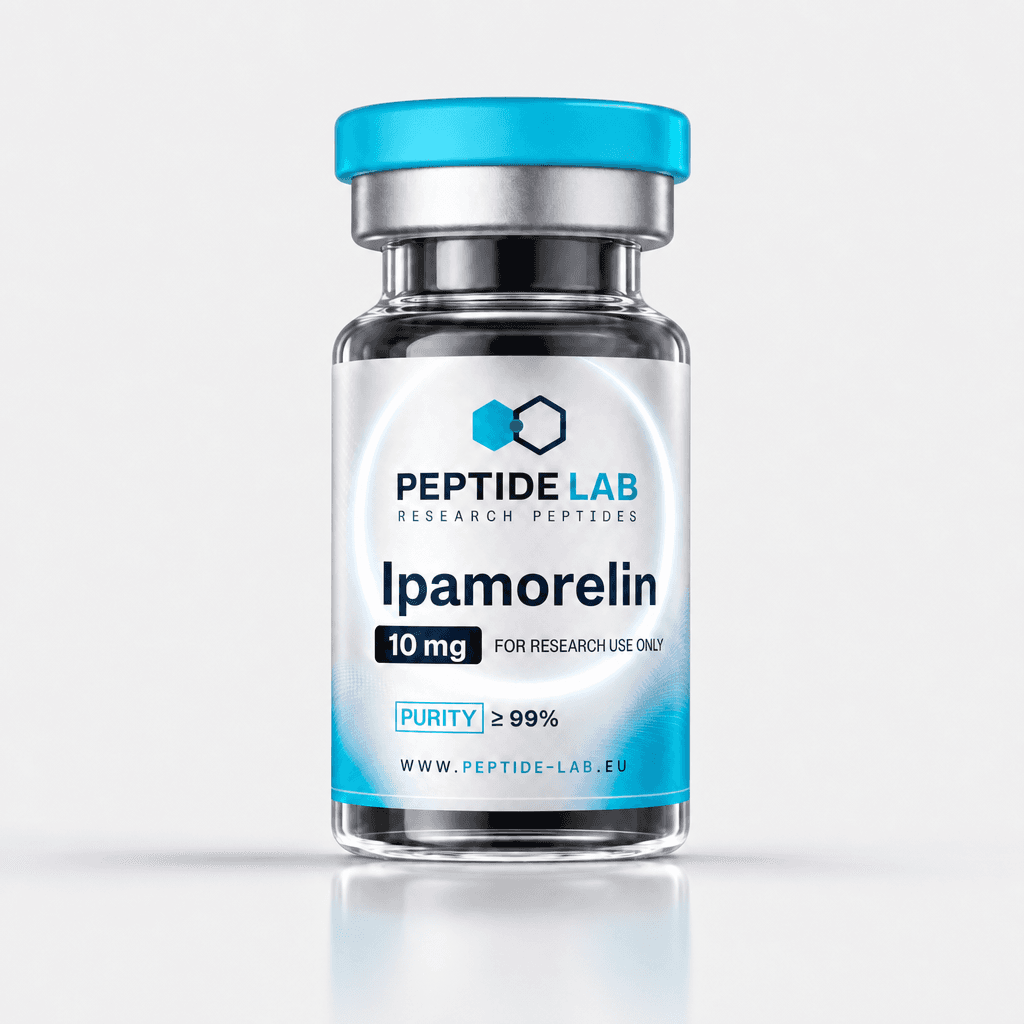
HGH is constantly overshadowed by the growth-hormone secretagogues, but it is a fundamentally different molecule. In this guide we explain, research-only, exactly what HGH is, how it differs from CJC-1295 and ipamorelin, and why the literature keeps the two apart.
HGH (somatropin) is growth hormone itself; secretagogues such as CJC-1295 and ipamorelin are not growth hormone, but signals that prompt the pituitary to release it. Both are studied within the same axis, but at a different point of action. For research use only, not a medicine.
What is HGH?
HGH, or somatropin, is human growth hormone — the protein the pituitary naturally produces, and the endpoint of the growth-hormone axis. New to peptides and research hormones? First read what peptides are.
HGH versus growth-hormone secretagogues
The difference between HGH and secretagogues lies in the point of action: HGH is the end product itself, secretagogues such as CJC-1295 and ipamorelin prompt the pituitary to release that end product. The full breakdown of those secretagogue families is in the hub growth-hormone peptides. That distinction is exactly why researchers study HGH separately from, say, CJC-1295, ipamorelin or tesamorelin.
HGH as a reference point in research
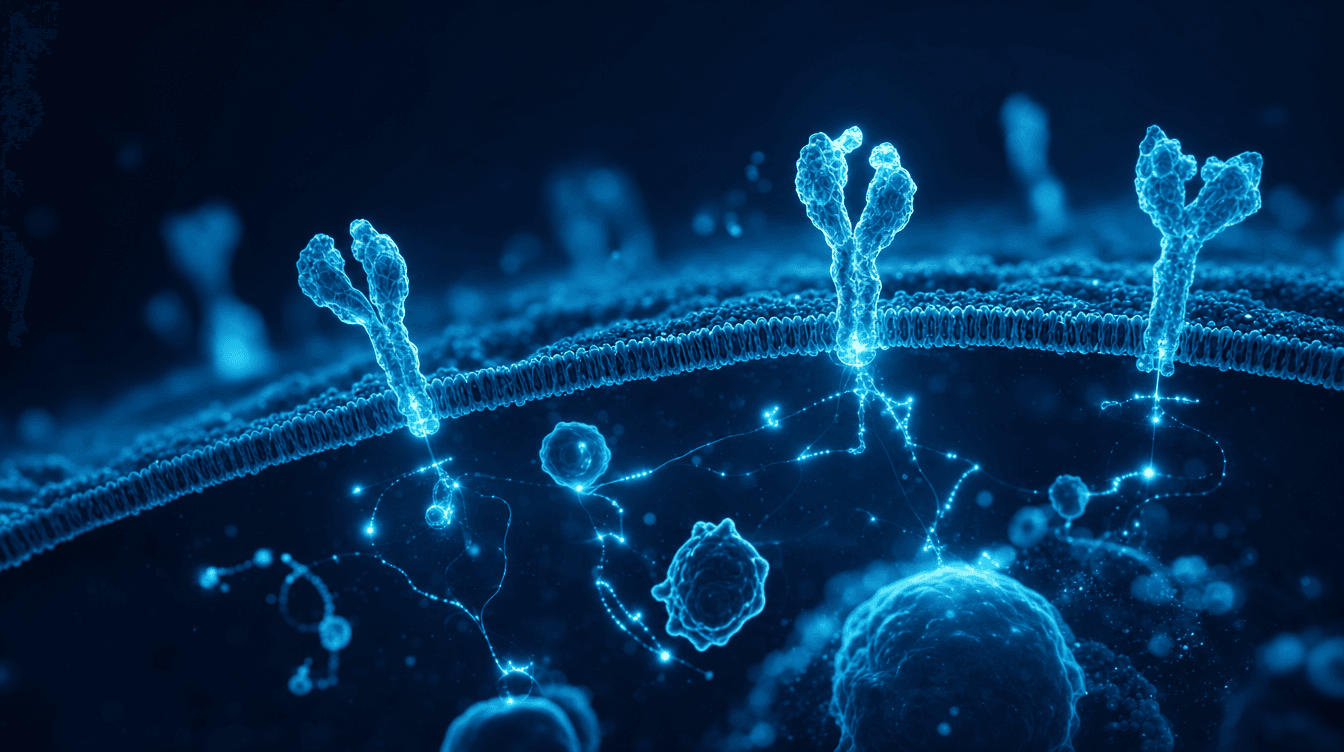
Because HGH is the direct endpoint of the growth-hormone axis, it is often used as a reference molecule alongside the indirect secretagogues. Want to know why this axis also gets so much attention in the bodybuilding community? Read peptides for muscle growth, or how HGH compares to the modified growth factor IGF-1 LR3, further down the same axis.
Purity and documentation
Reproducible research into the growth-hormone axis requires material with verified purity and full traceability. Every batch of HGH at Peptide Lab is tested by Janoshik Analytical, with a public certificate per lot number. Read more about our approach on the science page.
This information is general and intended solely for a research context. Peptide Lab supplies HGH for laboratory and research purposes only. Not for human or animal consumption, not a medicine and not medical advice.
Frequently asked questions about HGH
What is HGH (human growth hormone)?
HGH, or somatropin, is the body's own growth hormone itself — produced by the pituitary gland. That is a fundamentally different molecule from growth-hormone secretagogues (such as CJC-1295 and ipamorelin), which prompt the pituitary to release more growth hormone itself.
What is the difference between HGH and growth-hormone secretagogues?
HGH is the end product: the growth hormone protein itself. Secretagogues such as CJC-1295 or ipamorelin are not growth hormone, but signalling peptides that prompt the pituitary to release its own growth hormone. In research these are two different points of action.
Why is HGH used as a research subject?
HGH is studied as the direct endpoint of the growth-hormone axis, as opposed to secretagogues that influence the system indirectly. That makes it a reference molecule in physiological research into that same axis.
Is HGH pure at Peptide Lab?
Yes, HGH is lab-verified for purity by HPLC and mass spectrometry, with a public Janoshik certificate per batch. For research purposes only.