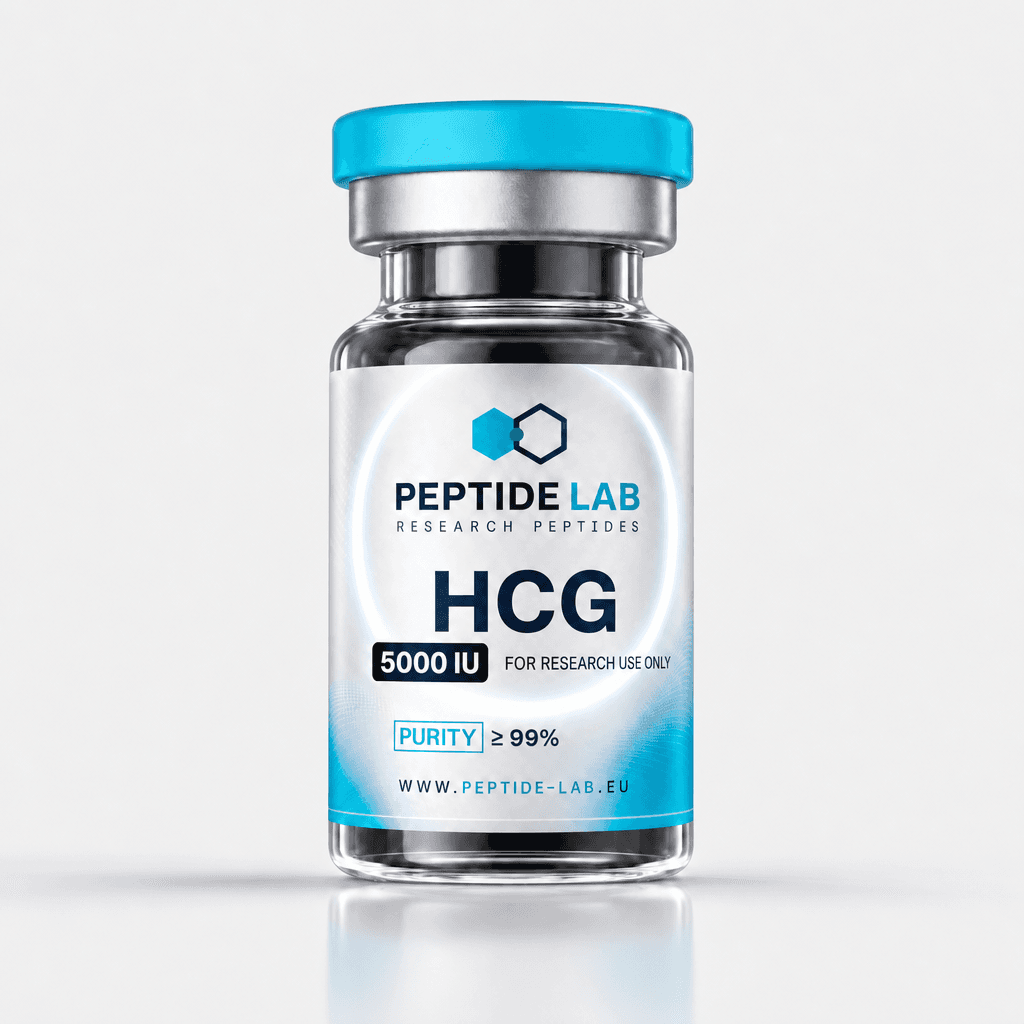
HCG is one of the most studied hormones within reproduction research. In this guide we explain, research-only, what HCG is, why it plays such a central role in the hypothalamic-pituitary-gonadal axis, and how it compares to other research hormones. Without health or treatment advice.
HCG (human chorionic gonadotropin) is a glycoprotein hormone structurally similar to luteinising hormone (LH) that binds to the same receptor. It is studied within the hormonal axis of reproduction. It is not a medicine or treatment and is offered for research only, pure with a COA per batch.
What is HCG?
HCG, or human chorionic gonadotropin, is a glycoprotein hormone naturally produced during pregnancy. It consists of an alpha and a beta subunit, with the beta subunit in particular giving the molecule its specificity. New to peptides and research hormones? First read what peptides are.
HCG and the LH receptor
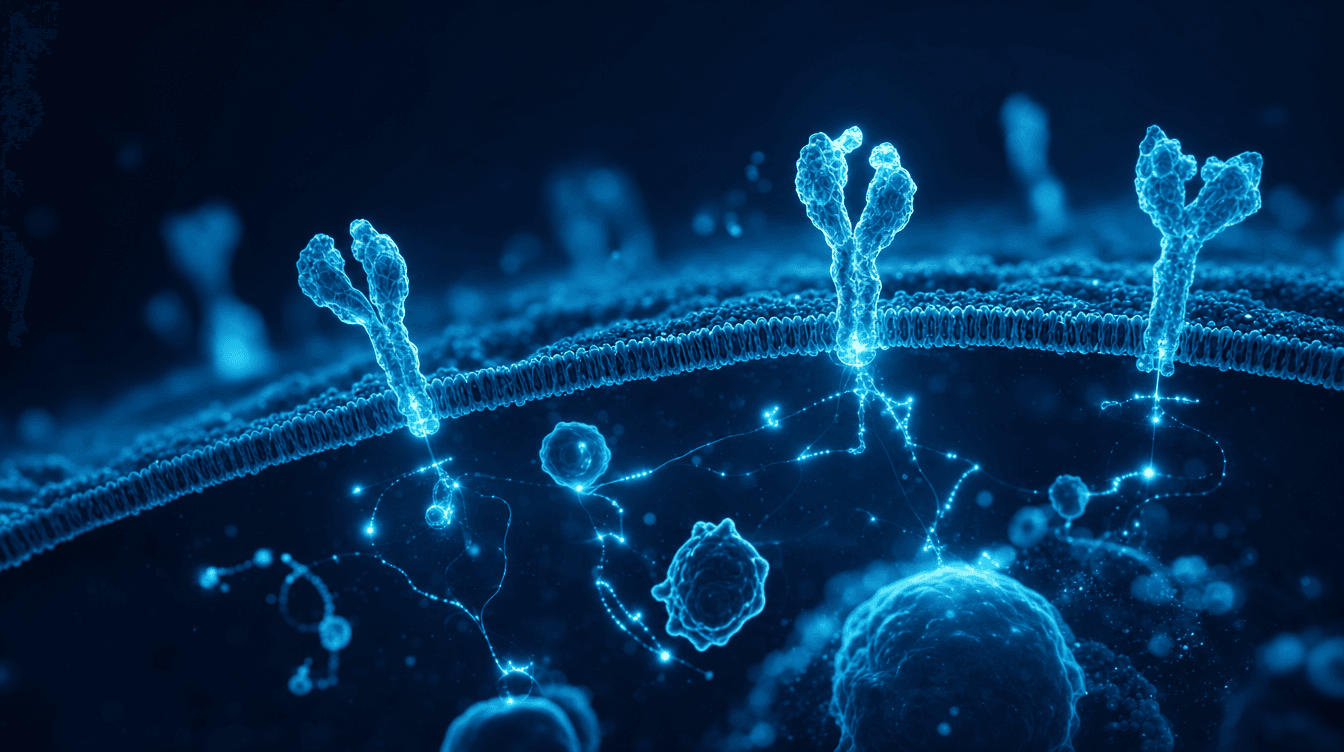
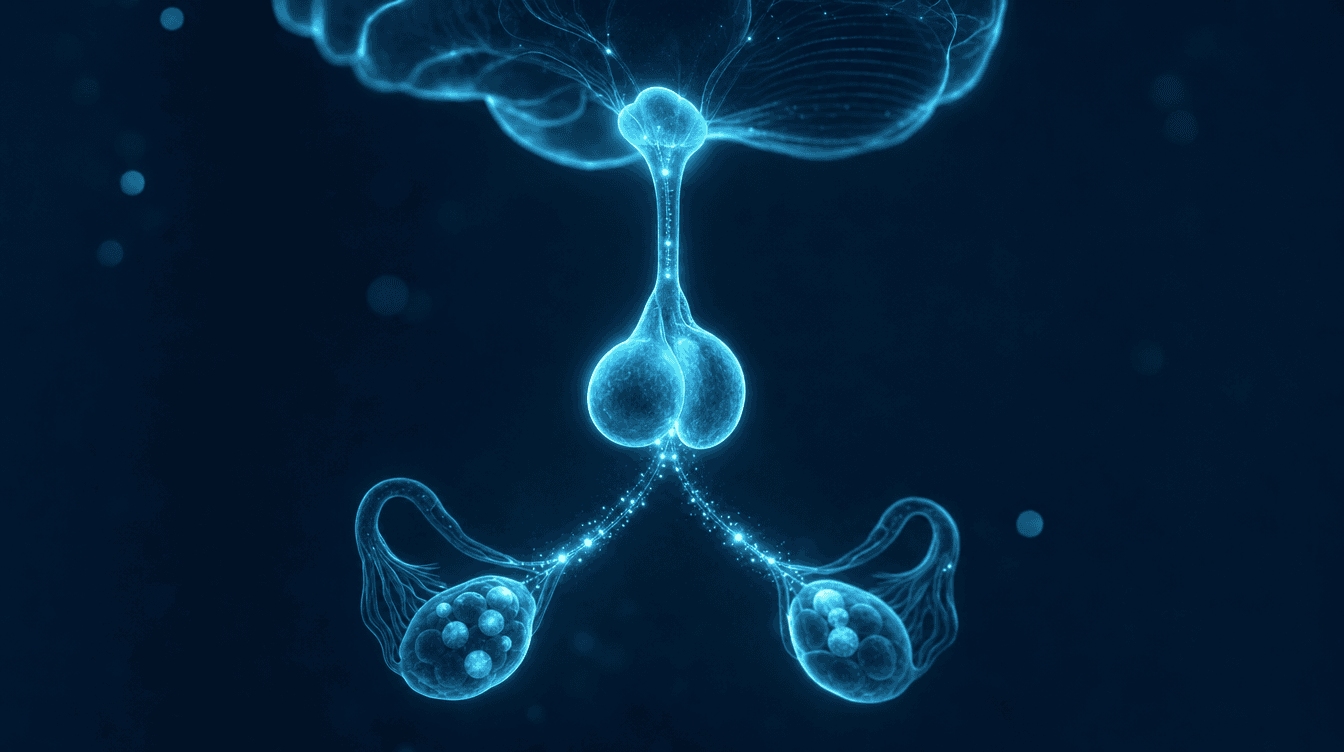
HCG shares a structural similarity with luteinising hormone (LH) and binds to the same receptor, the LH receptor. That overlap is exactly why HCG is so often used as a research subject in the literature on the hypothalamic-pituitary-gonadal axis (HPG axis) — the same system central to the guide on Kisspeptin.
HCG within the broader hormone axis
HCG is rarely studied in isolation: it is part of a network of hormones and receptors within reproduction and hormone science. Browse the broader category hormones & fertility to see which other research hormones are studied within the same axis.
Purity and documentation
Reproducible hormone research requires material with verified purity and full traceability. Every batch of HCG at Peptide Lab is tested by Janoshik Analytical, with a public certificate per lot number. Read more about our approach on the science page.
This information is general and intended solely for a research context. Peptide Lab supplies HCG for laboratory and research purposes only. Not for human or animal consumption, not a medicine, not a fertility treatment and not medical advice.
Frequently asked questions about HCG
What is HCG (human chorionic gonadotropin)?
HCG is a glycoprotein hormone naturally produced during pregnancy. In research it is studied for its structural similarity to luteinising hormone (LH) and the way it binds to the LH receptor.
Why is HCG linked to the LH receptor?
HCG and LH share a similar structure and both bind to the LH receptor. That overlap makes HCG a widely used research subject in studies of the hypothalamic-pituitary-gonadal axis, without implying any usage advice.
Is HCG a medicine?
At Peptide Lab, HCG is a research-grade product intended solely for laboratory and research purposes. It is not a medicine, not a fertility treatment, and no dosing advice is provided.
Is HCG pure at Peptide Lab?
Yes, HCG is lab-verified for purity by HPLC and mass spectrometry, with a public Janoshik certificate per batch. For research purposes only.