Almost every research peptide is supplied as a freeze-dried powder and must be dissolved before use — reconstituted. This guide explains step by step how to reconstitute peptides in the laboratory, research-only and without any fuss.
Reconstitution = dissolving freeze-dried peptide powder in bacteriostatic water. Let both come to room temperature, disinfect the stoppers, add the water slowly down the wall, swirl gently (do not shake) and store refrigerated. How much water you add determines the concentration — calculate it exactly with the peptide calculator. For research purposes only.
What does reconstituting peptides mean?
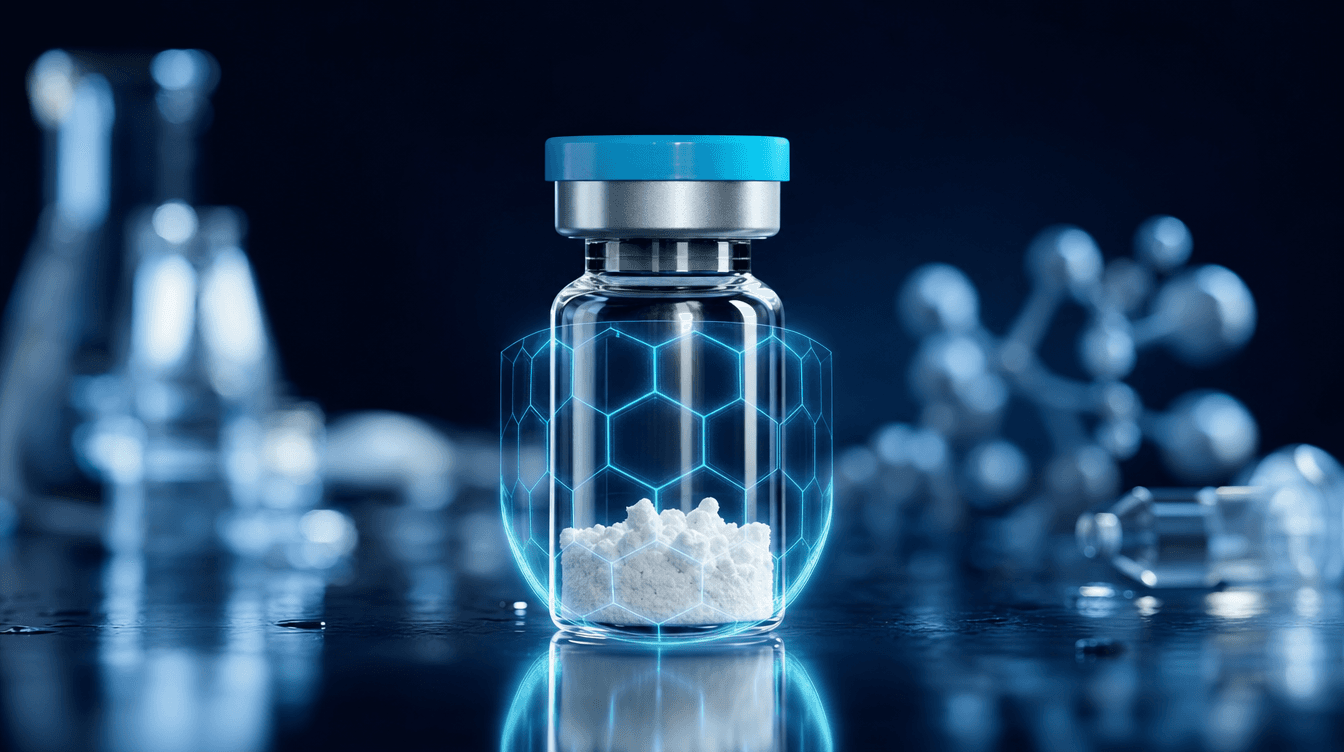
Reconstitution is dissolving lyophilised (freeze-dried) peptide powder in a sterile liquid, so that a solution with a known concentration is formed. Peptides are supplied freeze-dried because they are more stable in powder form. Only once in solution are they usable for research. The most commonly used liquid is bacteriostatic water.
What do you need for reconstitution?
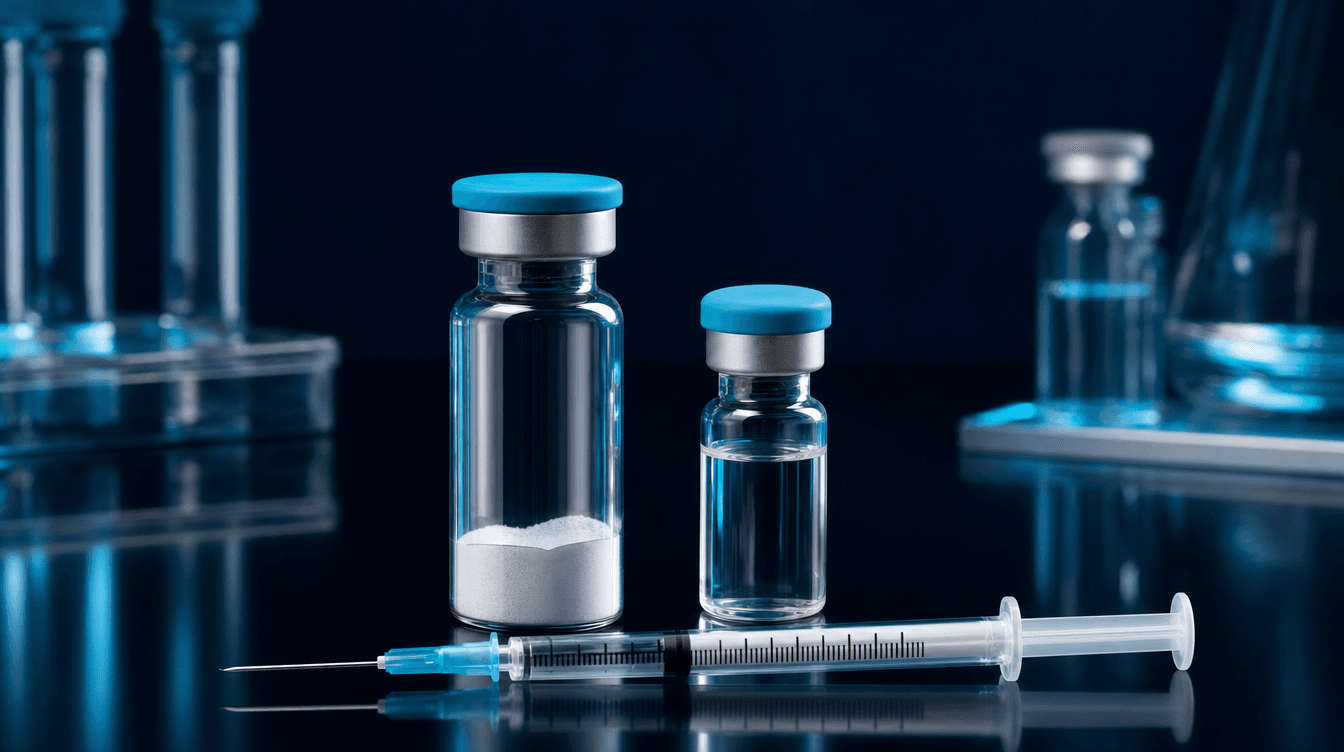
For a clean reconstitution you need four things: the freeze-dried peptide, a solvent, a syringe and disinfectant.
- The research peptide in a vial (freeze-dried powder).
- Bacteriostatic water as the solvent.
- Insulin syringes (U-100) for accurate measuring.
- Alcohol wipes to disinfect the rubber stoppers.
You will find everything together in the Lab & accessories category.
How to reconstitute peptides in 6 steps
- 1Let it come to room temperature
Let the vial with powder and the bacteriostatic water come to room temperature first. Adding cold liquid straight away can put unnecessary strain on the peptide.
- 2Disinfect the stoppers
Wipe the rubber stopper of both vials clean with an alcohol wipe and let it dry.
- 3Draw up the water
Draw up the desired amount of bacteriostatic water with an insulin syringe. How much you add determines the concentration.
- 4Add it down the wall
Introduce the water slowly, aimed at the glass wall of the vial — not directly onto the powder. This prevents foaming and damage.
- 5Swirl gently
Swirl the vial carefully until the powder has fully dissolved. Do not shake: vigorous shaking can damage the peptide.
- 6Label and store
Note the reconstitution date and the batch number on the vial and store the solution refrigerated (2-8 °C) right away.
Which water do you use?
Bacteriostatic water is the standard choice for reconstitution, because the preservative allows several days of use from a single vial. The table below compares the common solvents.
Reconstitution is a laboratory procedure described here solely in a research context. Peptide Lab peptides are exclusively for laboratory and research purposes — not for human or animal consumption, not a medicine and no medical or dosage advice.
Calculating concentration and units
The concentration is the vial strength divided by the added water (mg/mL) — and that determines how many units you draw an insulin syringe up to. Instead of calculating by hand, use the peptide calculator: enter your product, water and desired amount and you see the units, concentration and the number of doses per vial straight away. The calculator also works in reverse — how much water you need to add for a round number of units.
How do you store a reconstituted peptide?
Store the solution refrigerated (2-8 °C) and generally use it within a few weeks. Bacteriostatic water is used within 28 days after the first pierce, per the standard labelling. Keep the vial out of direct light, check the solution for clarity before use and note the reconstitution date. Read more background on recovery peptides in the recovery guide and in what BPC-157 is.
Frequently asked questions about reconstitution
What does reconstituting a peptide mean?
Reconstitution is dissolving freeze-dried (lyophilised) peptide powder in a sterile liquid — usually bacteriostatic water. This produces a solution with a known concentration that can be worked with in research. It is a standard laboratory procedure, for research purposes only.
How much bacteriostatic water should I add?
That is up to you: how much water you add determines the concentration (mg/mL). More water = lower concentration and more units per draw. Use the peptide calculator to work out exactly how much water matches your desired concentration or number of units.
Which water do I use to dissolve peptides?
For research, bacteriostatic water is typically used: sterile water with 0.9% benzyl alcohol as a preservative, which keeps a vial usable for several days after it has been pierced. Sterile water without a preservative is intended for single use.
Should I shake the vial after adding water?
No. Let the water run down the wall of the vial and swirl the vial gently until the powder has dissolved. Vigorous shaking can damage the peptide; gentle swirling is enough.
How long does a reconstituted peptide last?
Store the solution refrigerated (2-8 °C) and generally use it within a few weeks. Bacteriostatic water is used within 28 days after the first pierce, per the standard labelling. Always note the reconstitution date on the vial.