A Certificate of Analysis (COA) is the most important document for assessing the quality of a research peptide. Yet many people do not know exactly what to look for. In this guide we explain step by step how to read a COA and how to verify it — research-only and without jargon.
A COA is an independent lab report that confirms the purity and identity of one batch. Look at four things: the batch/lot number (must match your vial), the purity percentage (≥99%), the methods (HPLC + mass spectrometry) and an independent laboratory such as Janoshik. View our public lab certificates.
What is a Certificate of Analysis?
A Certificate of Analysis (COA) is a lab report that confirms the identity and purity of one specific batch. So it explicitly concerns that one batch — not the product in general. That is why the batch or lot number is so important: it links the report to the material in your vial. A COA that cannot be tied to a batch says little in practice.
Which elements appear on a COA?
A complete COA always contains a fixed set of data. The table below summarises what you will encounter and what each element tells you.
What do HPLC and mass spectrometry mean?
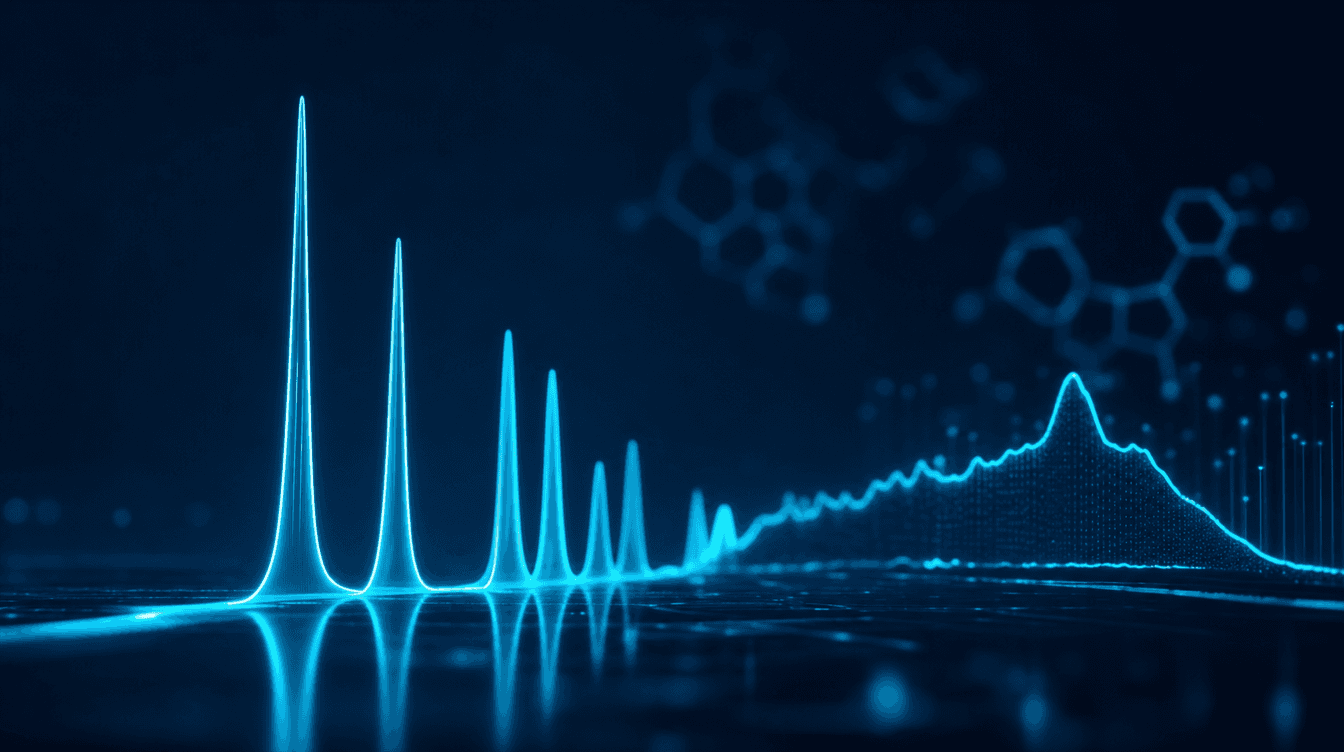
HPLC determines the purity; mass spectrometry confirms the molecular identity. HPLC (High-Performance Liquid Chromatography) separates the components of a sample and quantifies them, so that you obtain a purity percentage. Mass spectrometry then measures the molecular weight and confirms that the molecule is indeed the intended peptide. Together they form the standard for characterising research peptides. Read more about this in our explanation of purity and the COA when buying and on the page about our standard.
How do you check whether a COA is correct?
You verify a COA in four steps. That way you can be sure the report belongs to your material and is reliable.
- 1Match the lot number
Compare the lot/batch number on the COA with the number on the label of your vial. They must be identical.
- 2Read the purity
Find the reported purity percentage — at Peptide Lab this is ≥99%.
- 3Check the methods
A complete COA lists the methods used, such as HPLC and mass spectrometry.
- 4Check the laboratory
Confirm that the report comes from an independent, recognised lab — for example Janoshik Analytical.
A COA says something about the purity and identity of a substance, not about application or safety in humans. All Peptide Lab products are exclusively for laboratory and research purposes — not for human or animal consumption.
Why an independent laboratory matters
An independent COA is more valuable than an in-house claim, because the analysis was not carried out by the seller itself. Peptide Lab has every batch tested by Janoshik Analytical and publishes the certificates openly, linked to the lot number on the label. See a concrete example on the lab certificates page, or start with a popular product such as BPC-157. New to peptide science? First read what peptides are.
Frequently asked questions about the COA
What is a Certificate of Analysis (COA)?
A Certificate of Analysis is a lab report that confirms the identity and purity of one specific batch of a substance. For research peptides it shows, among other things, the purity percentage, the analytical methods used and the batch or lot number, issued by an independent laboratory.
Which elements belong on a COA?
A complete COA lists at minimum: the name of the substance, the batch or lot number, the measured purity percentage, the methods used (such as HPLC and mass spectrometry), the test date and the performing laboratory.
What does ≥99% purity by HPLC mean?
It means that at least 99% of the material is actually the intended peptide, determined with High-Performance Liquid Chromatography (HPLC). Mass spectrometry additionally confirms the molecular identity and the molecular weight.
How do I check whether a COA belongs to my vial?
Compare the lot number on the COA with the lot number on the label of your vial. If they match, the report belongs to that specific batch. If a lot number is missing or does not match, treat the COA as unverifiable.
Who is Janoshik?
Janoshik Analytical is an independent laboratory widely used for testing research peptides. Independent testing is more valuable than in-house claims, because the analysis was not carried out by the seller itself.